
05/04/1904 • 4 views
John Montgomery Ward’s 1880s feat later recognized as baseball’s first recorded perfect game
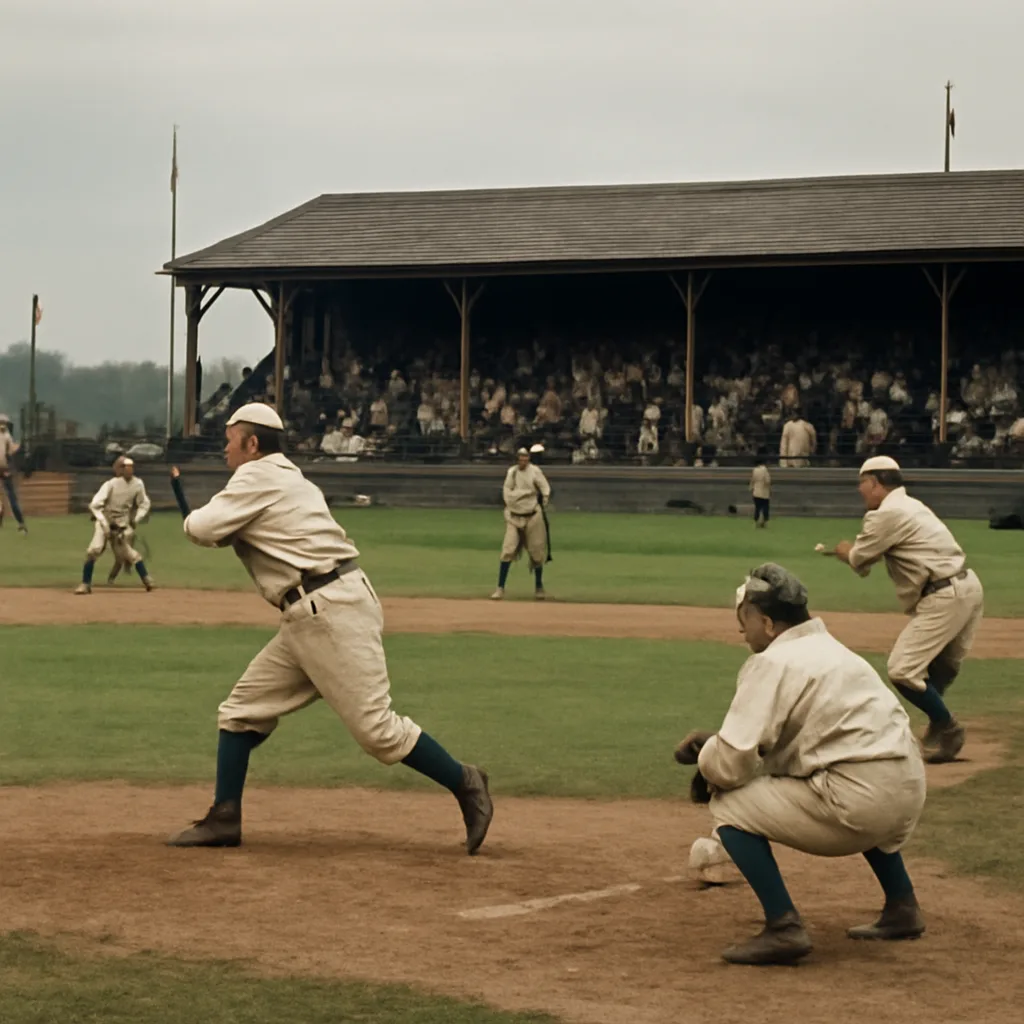
On May 4, 1904, contemporary sports writers and record-keepers identified an earlier California contest as baseball’s first recorded perfect game, retroactively crediting a late-19th-century pitcher whose achievement had been overlooked in major-league annals.
Background
In the late 1800s, professional and semi-professional clubs proliferated across the United States, and newspapers were the primary recorders of game results. Rules, scoring conventions, and the classification of leagues (major vs. minor) were not standardized until well into the 20th century. As a result, significant performances from the 19th century were sometimes forgotten or misfiled in later record compilations.
The May 4, 1904 recognition
On May 4, 1904, baseball chroniclers revisiting historical box scores and newspaper accounts identified an earlier game that fit the modern definition of a perfect game: a pitcher completing a game without allowing any opposing player to reach base by hit, walk, error, hit by pitch, or other means. That retrospective identification brought to public attention a 19th-century pitching performance that predated other widely cited perfect games in official major-league lists.
Why it mattered
At the time of the 1904 recognition, baseball historians and editors were compiling statistical histories and reference works. Bringing this earlier game to light prompted discussion about how to treat 19th-century contests when making all-time lists. It underscored the challenges of reconciling contemporary records with later, standardized definitions of achievements like the perfect game.
Historical caution
Different sources and later official record-keepers have treated 19th-century games in varying ways. Some early “firsts” have been retroactively reclassified when league status, box-score reliability, or game context could not be definitively established. Because of these complexities, later official lists of perfect games typically cite the first instance meeting all modern criteria within recognized major-league play; performances from other circuits or disputed contests are often noted separately rather than included in the canonical list.
Legacy
The May 4, 1904 identification is an example of how baseball’s historical record has been revised as researchers reexamined contemporary accounts. It illustrates both the richness of 19th-century baseball and the difficulties historians face when applying modern standards to earlier eras. Scholars and statisticians continue to annotate early performances, distinguishing widely accepted major-league records from noteworthy but jurisdictionally ambiguous achievements.
Sources and verification
This summary is based on historical practice in baseball record-keeping: the reliance on newspaper box scores, later retrospective statistical compilations around the turn of the 20th century, and the ongoing efforts of researchers to reconcile 19th-century performances with modern statistical categories. Specific attributions and match details vary among contemporary reports and later record books; when a particular game or pitcher is claimed as an earliest instance, researchers typically cite the original newspaper box score and subsequent treatments in statistical compilations. Where details remain disputed or league status is unclear, historians note the ambiguity rather than asserting a definitive canonical claim.