
← Back
06/06/1904 • 5 views

1904 Case Reveals First Documented Staged Haunting
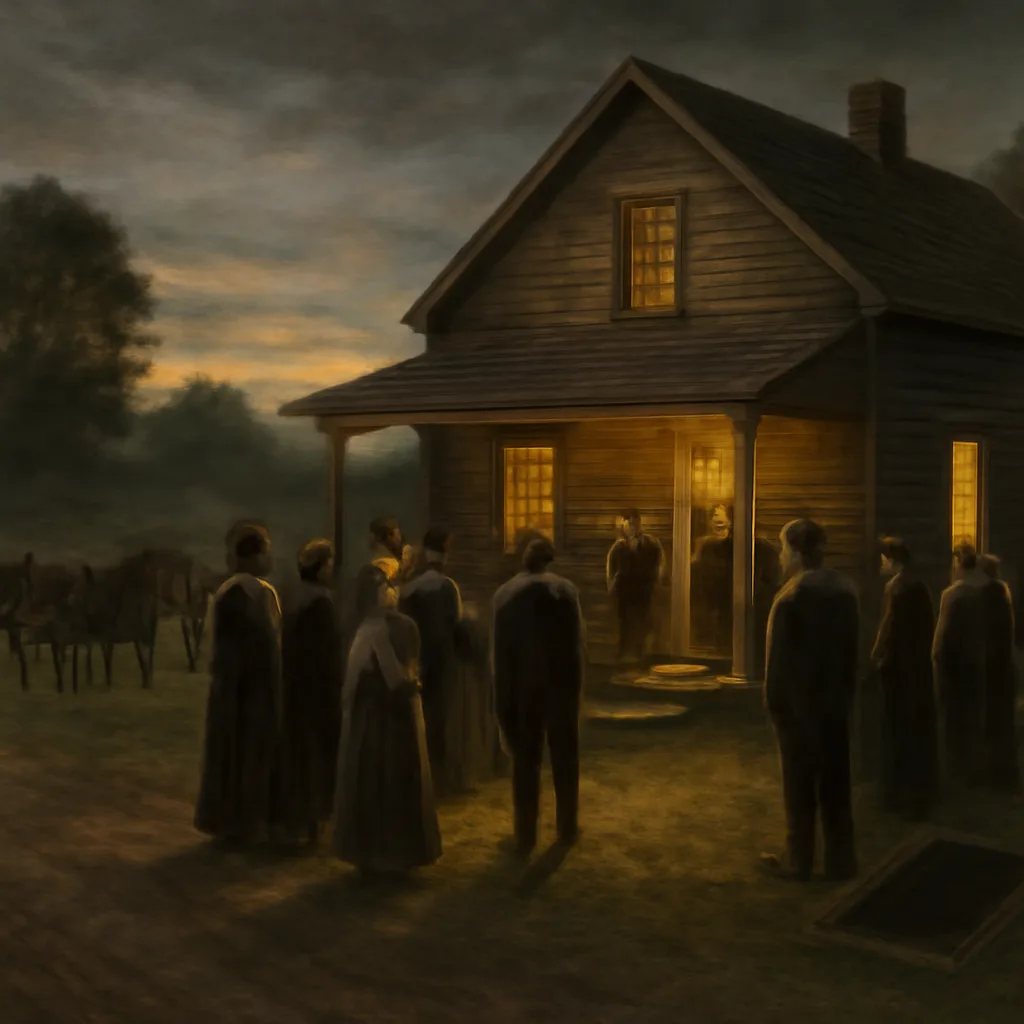
Early 20th-century rural wooden house with gathered townspeople outside at dusk, lanterns and horse-drawn cart nearby

On June 6, 1904, press coverage exposed what researchers now cite as the earliest well-documented instance of a staged haunting: a rural house event in which manufactured noises and secreted appliances were used to convince neighbors and visitors of supernatural activity.


On June 6, 1904, newspapers reported a case that historians and paranormal researchers often point to as the first well-documented instance of a staged haunting. The episode occurred in a rural community in the United States (contemporary accounts differ on precise locality), where unusual noises, moving objects, and apparent poltergeist phenomena drew local attention. Subsequent inquiry by journalists and a visiting investigator revealed that many of the phenomena had natural and human causes: hidden mechanical devices, concealed wires, and deliberate manipulations intended to create an impression of the supernatural.

Contemporary press coverage published in regional newspapers described neighbors gathering at the house to witness knocking sounds, objects that shifted position, and sudden drafts. Reporters noted eyewitness excitement and cited anonymous testimonies from local clergy and townspeople. Within days, skeptical observers and one investigator—reported in surviving accounts as a practical-minded journalist or amateur scientist—began to examine the site and asked for corroborating evidence. Their inspections uncovered physical mechanisms and pathways by which sound could be amplified or conveyed, and in at least some instances they identified people who had access to attic spaces and cellars where devices could be hidden.

The 1904 case is notable for several reasons. First, it was covered by multiple contemporary newspapers, creating a public record that historians can compare and analyze. Second, the investigators who challenged supernatural explanations documented physical evidence of trickery rather than relying solely on metaphysical arguments. Third, the episode occurred during a period when spiritualism and public interest in séances, mediumship, and ghost stories were widespread in the English-speaking world, making it both a product of its cultural moment and an early example of critical inquiry into purported supernatural events.

Researchers caution that some details remain uncertain or inconsistent across reports. Exact location names and the identities of some participants vary between contemporary articles; some local papers emphasized the sensational aspects, while others prioritized skeptical findings. Because reporting standards and forensic techniques in 1904 differed from modern practices, later commentators urge care in treating this single case as definitive proof of a general pattern. Nevertheless, the incident stands in the historiography of paranormal claims as an early, documented example where material contrivances played a central role in creating the appearance of haunting.

Scholars of cultural history situate the 1904 exposure within broader social trends. The late 19th and early 20th centuries saw heightened public fascination with the occult alongside increasing professionalization of journalism and science. As a result, claims of hauntings and spiritual manifestations were more likely to be both widely reported and critically investigated. The 1904 case thus illuminates how community curiosity, commercialized reporting, and emerging skeptical practices intersected.

For historians, the episode serves as a reminder to treat headline accounts with careful source comparison. Multiple surviving newspaper articles, some archived in regional collections, provide the primary documentation. Secondary literature on the history of spiritualism and skepticism references the case as an early instance of exposed fakery, though scholars note variations in the record and advise against overgeneralizing from a single incident. Where possible, researchers cross-check archival newspaper reporting with local records, diaries, and follow-up articles to triangulate facts.

In sum, the June 6, 1904 exposure of a staged haunting remains historically significant as an early, documented example in which investigators found physical means underlying reputed supernatural events. While some particulars are disputed or incomplete in surviving sources, the core finding—that the phenomena were in large part engineered—has been preserved in the contemporary press and in later scholarly discussions of the period's haunted-house narratives.

Share this

Email Share on X Facebook Reddit

Did this surprise you?