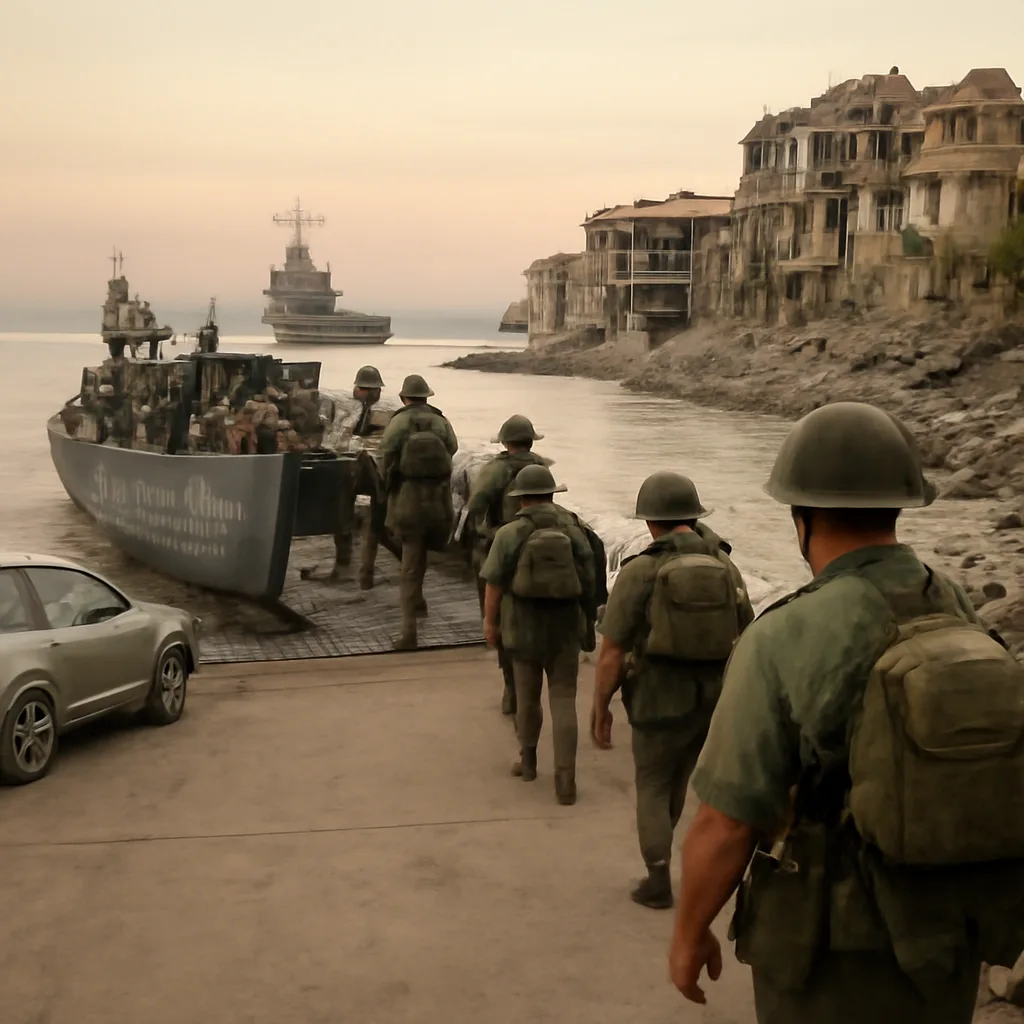
U.S. Marines Land in Lebanon as Civil War Intensifies
U.S. Marines landed in Beirut on August 25, 1982, as part of a multinational force during a marked escalation of the Lebanese Civil War following the Israeli invasion; the deployment aimed to stabilize Beirut and protect evacuations amid deepening sectarian and international tensions.
On August 25, 1982, elements of the U.S. Marine Corps landed in Beirut as part of a multinational peacekeeping and evacuation effort amid a major escalation of the Lebanese Civil War. The deployment followed Israel’s June 1982 invasion of southern Lebanon and the subsequent advance on Beirut, which produced widespread displacement, casualties, and a chaotic security environment that drew increased international attention and intervention.
The United States joined a multinational force that included French, Italian, and British contingents, among others. The initial U.S. mission focused on facilitating the withdrawal of foreign nationals and providing security for key evacuation and humanitarian operations in and around Beirut’s port and airport. U.S. officials characterized the deployment as limited and temporary, aimed at creating a secure environment for diplomacy and relief rather than direct intervention in Lebanon’s internal conflicts.
The landing came amid a complex web of actors in Lebanon: Christian and Muslim militias, Palestinian armed groups, Syrian forces in parts of the country, and Israeli military operations. Beirut itself was divided along sectarian lines, and the city had already seen heavy fighting and sieges. International mediators were attempting to negotiate cease-fires and political settlements while humanitarian needs mounted.
The presence of U.S. Marines and other multinational troops was controversial from the start. Supporters argued the forces could help protect civilians and enable diplomatic solutions; critics warned that foreign troops risked becoming entangled in a multifactional civil war with unclear objectives and no enduring political settlement.
In the weeks after the landing, multinational forces played a visible role around Beirut’s ports and airport and in providing security during the withdrawal of the Palestine Liberation Organization (PLO) from the city after a negotiated agreement. Yet the fragile calm proved temporary: violence flared repeatedly, and the multinational presence increasingly faced security threats from armed factions opposed to foreign intervention or aligned with rival local and regional interests.
The situation deteriorated further in the following months. Notably, in October 1983, the U.S. contingent suffered a devastating suicide-bomb attack on its barracks in Beirut, killing 241 American service members—an event that profoundly affected U.S. policy and public opinion regarding the deployment. That attack and subsequent violence led to the withdrawal of the multinational force from Lebanon by early 1984.
Historically, the August 1982 landing of U.S. Marines is remembered as a consequential but contested episode in U.S. involvement in Lebanon: an effort intended to stabilize a worsening crisis that became enmeshed in the complexities of a protracted civil war and regional rivalries. Historians and contemporaries continue to debate the wisdom and impact of the deployment, the limits of multinational peacekeeping amid active civil conflict, and the lessons drawn for future interventions.