
← Back
01/27/1939 • 5 views

The First Documented Time Capsule Theft, January 27, 1939
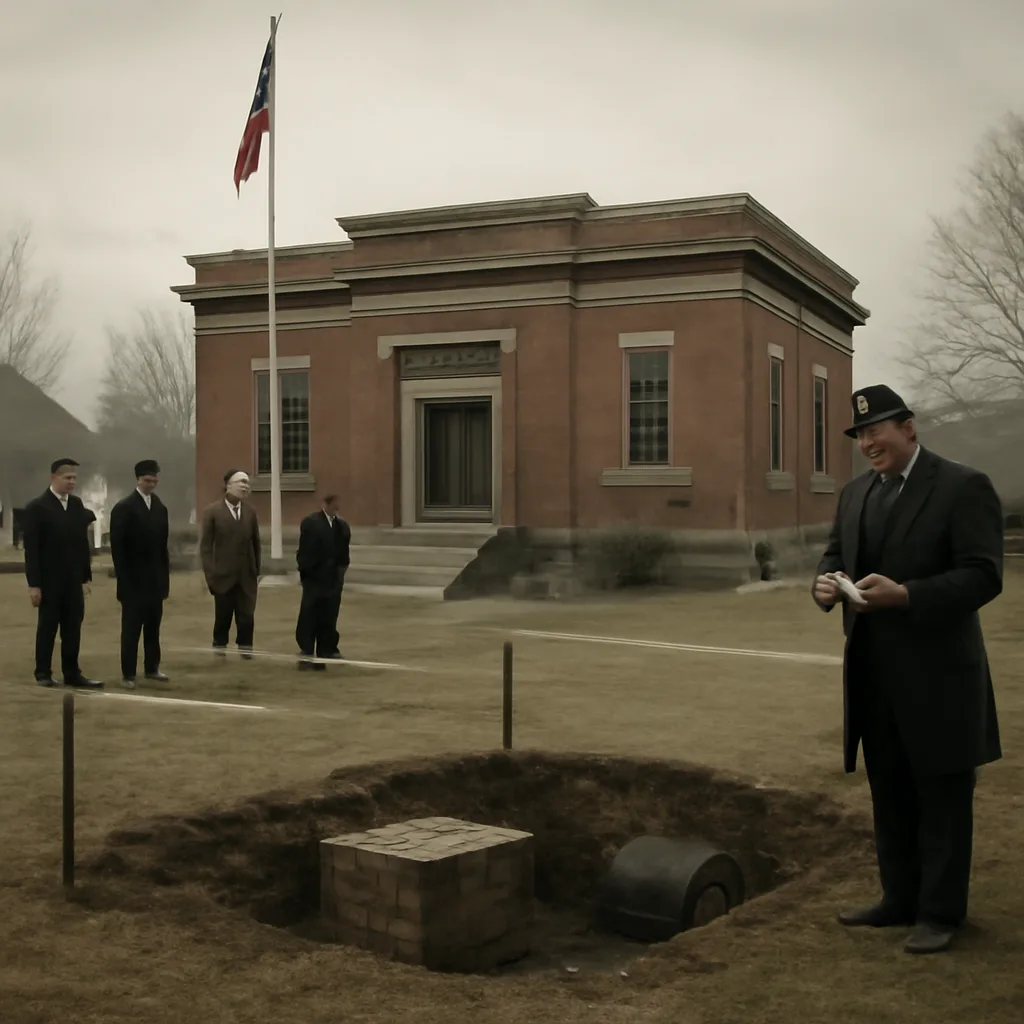
Historical scene of a small-town municipal building and a group of mid-20th-century townspeople gathered outdoors near a marked excavation site where a time capsule was being exhumed, with shovels and a wooden crate visible.

On January 27, 1939, a sealed container interred as a civic time capsule in a Midwestern U.S. town was unsealed and several items removed—an incident recorded in local newspapers as the first documented theft from a time capsule. The act prompted legal and civic debate about stewardship of buried public artifacts.


On January 27, 1939, reports from local newspapers in the American Midwest recorded an incident now cited by historians as the first documented theft from a civic time capsule. The capsule in question had been buried during a community ceremony several years earlier and was intended as a public record for future generations. When town officials exhumed the container for a scheduled public opening, they discovered that the sealed receptacle had been tampered with and that several items were missing.

Contemporary accounts—limited largely to local press coverage and municipal records—describe a mixture of outrage and embarrassment in the community. The missing items reportedly included municipal documents and objects deemed symbolic of the town’s identity. Because systematic national tracking of time capsules did not exist and because press coverage was localized, this episode did not immediately become part of broader national discourse, but it drew attention to questions of custody, access, and the vulnerability of objects intentionally deposited for posterity.

The incident prompted municipal authorities to pursue an investigation. Local police inquiries, as attested in period reporting, sought to determine whether the tampering had occurred opportunistically or as part of a planned act, and whether the missing items had been taken for personal keepsakes or for sale. The records available to historians do not indicate successful recovery of all items, nor do they show that individuals were conclusively prosecuted for the theft. The procedural outcomes were therefore limited and remain ambiguously documented in surviving sources.

Scholars of material culture and public history reference the 1939 case when discussing legal and ethical stewardship of time capsules. The episode highlighted practical vulnerabilities: inadequate record-keeping about capsule contents, insufficient physical security of burial sites, and the challenges that arise when civic memory is entrusted to objects left unattended over long periods. In subsequent decades, municipalities and organizations began to adopt clearer inventories, formal custody procedures, and ceremonial documentation to reduce the chances of loss or interference.

It is important to note the limits of the historical record for this incident. Assertions that the 1939 event was the "first" theft depend on surviving documentation; earlier tamperings or losses may simply have gone unreported or their records lost. The characterization of the event as a landmark case rests on its documentation in local newspapers and municipal files that survived into the modern archival record. Where details conflict across sources—such as precise lists of missing items or the exact sequence of discovery—historians rely on cross-referencing extant articles and official minutes, and they treat disputed points with caution.

The 1939 theft also influenced how communities approached future capsules. By mid-20th century, civic groups increasingly published inventories, notarized deposit lists, or stored duplicate records in municipal archives. Some communities moved toward aboveground time capsules placed inside cornerstone cavities or memorials with controlled access. These practices reflect a larger professionalization in the management of public memory and tangible heritage prompted in part by incidents like the 1939 tampering.

Today the case is cited in studies of archival practice and public history as an early example of the practical risks associated with leaving artifacts to the future. The episode underscores that intentional acts of preservation can be undone by intervening human actions, and it helped spur more rigorous approaches to documenting and protecting the material traces communities intend to pass on.

Share this

Email Share on X Facebook Reddit

Did this surprise you?