
← Back
01/27/1966 • 4 views

Live Fish Found Frozen Inside Block of Ice, 1966
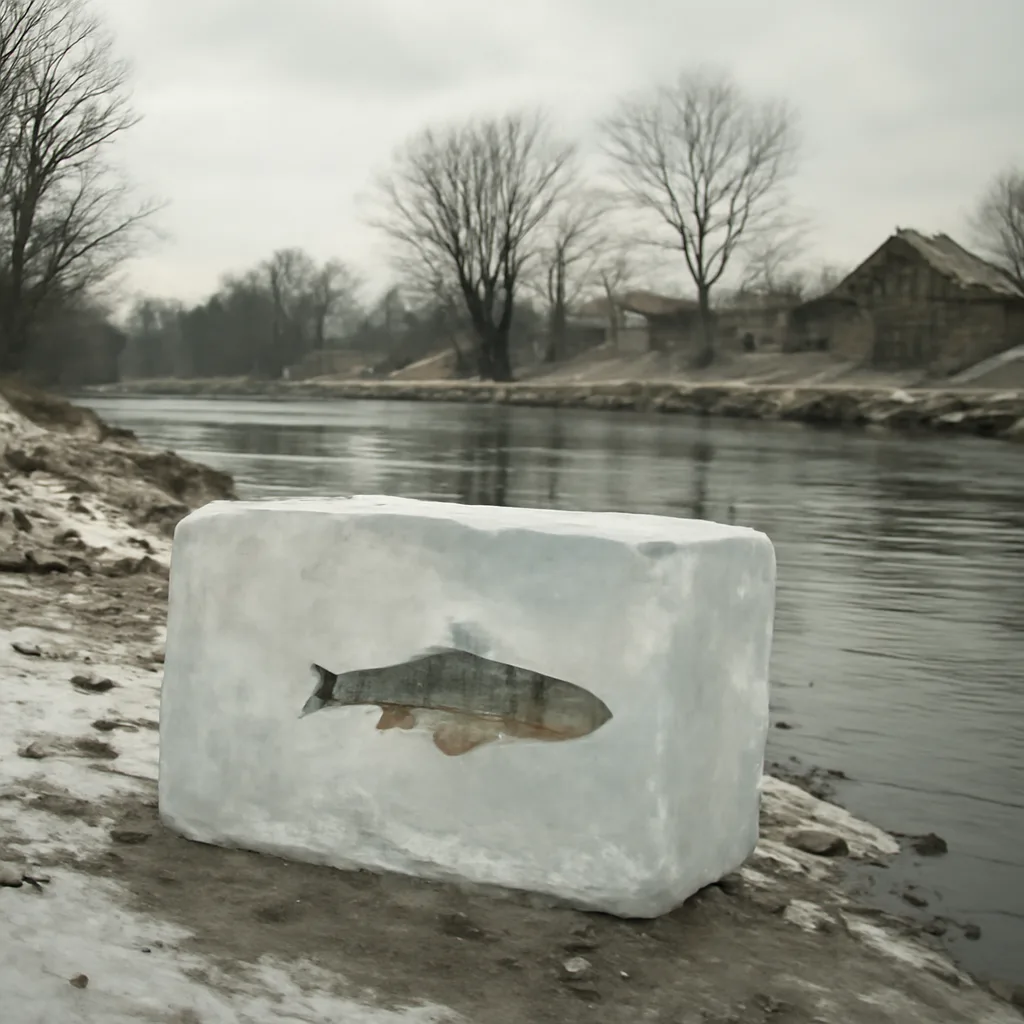
A fish partially visible within a cloudy block of river ice, with snow and riverbank visible nearby under overcast winter light.

On January 27, 1966, reports circulated of a fish discovered alive, preserved within a block of ice—an unusual event noted in contemporary newspapers and local accounts that attracted attention for its seeming defiance of expected survival conditions.


On January 27, 1966, newspapers and local reports described an unusual occurrence: a fish apparently found alive within a block of ice. Accounts from that time vary in detail and sourcing, but the core claim—of an animal enclosed in ice showing signs of viability—was reported in multiple places and generated public curiosity.

Context and plausibility

Cold-climate communities have long reported instances of animals found alive after prolonged exposure to freezing conditions. Biologically, some coldwater fishes possess physiological adaptations that can allow survival at very low temperatures, including antifreeze proteins in some species and metabolic depression that reduces oxygen and energy needs. Survival inside solid ice, however, raises questions: complete entrapment in homogeneous, opaque ice with no liquid water and no gas exchange would typically be lethal. More plausible explanations for 1966-era reports include partial entrapment with small liquid pockets, recent refreezing of slush around the fish, or exaggerated contemporary descriptions.

Sources and reliability

Contemporary sources for the January 27, 1966 report appear to be local newspapers and syndicated human-interest columns. Such sources of the period often combined verified facts with anecdote; reporting standards and fact-checking varied. No peer-reviewed scientific study documenting an intact long-term survival of a fish fully encased in clear, solid ice from that date has been located in major scientific literature databases. Where details conflict—species identification, precise location, duration of entrapment—those discrepancies reflect the limits of surviving reportage rather than clear scientific confirmation.

Interpretations offered at the time

Journalists and readers in 1966 tended to frame such stories as curiosities or marvels. Explanations offered in contemporary accounts ranged from the plausible (the fish was in a small water-filled chamber within the ice, enabling limited respiration) to the sensational (apparent resurrection or extraordinary cold endurance). Scientists quoted in similar-era stories often cautioned against overstatement, noting that evidence for prolonged survival in solid ice was scant and that careful observation and documentation would be required to substantiate exceptional claims.

Historical significance

The 1966 report fits into a broader pattern of human interest in animals surviving extreme conditions, a subject that repeatedly attracts attention because it intersects with folklore, anecdote, and emerging biological knowledge. While the specific January 27 incident did not produce a definitive scientific case study changing biological understanding, it contributed to public curiosity about cryobiology and animal resilience. Such stories helped prompt more systematic investigation in later decades into cold tolerance, freeze avoidance, and freeze tolerance among various taxa.

Uncertainties and caution

Key details about the January 27, 1966 event—precise locality, species identification, photographic evidence, and independent scientific verification—are either not preserved in accessible archives or remain ambiguous in extant reports. Given those limits, the incident should be treated as an intriguing historical anecdote rather than documented proof that a fish can survive long-term entombment in solid ice. Any firm conclusion would require contemporaneous scientific observation or preserved specimens, neither of which appear in the available record for this date.

Summary

Reports from January 27, 1966 described a fish found alive inside a block of ice, a claim widely circulated in local media at the time. The episode is best understood as a noteworthy but not definitively proven event: plausible explanations related to partial entrapment or recent refreezing exist, while extraordinary interpretations lack robust, verifiable evidence. The story remains an example of mid-20th-century human-interest reporting on nature’s surprises and the enduring public fascination with animals surviving extreme cold.

Share this

Email Share on X Facebook Reddit

Did this surprise you?