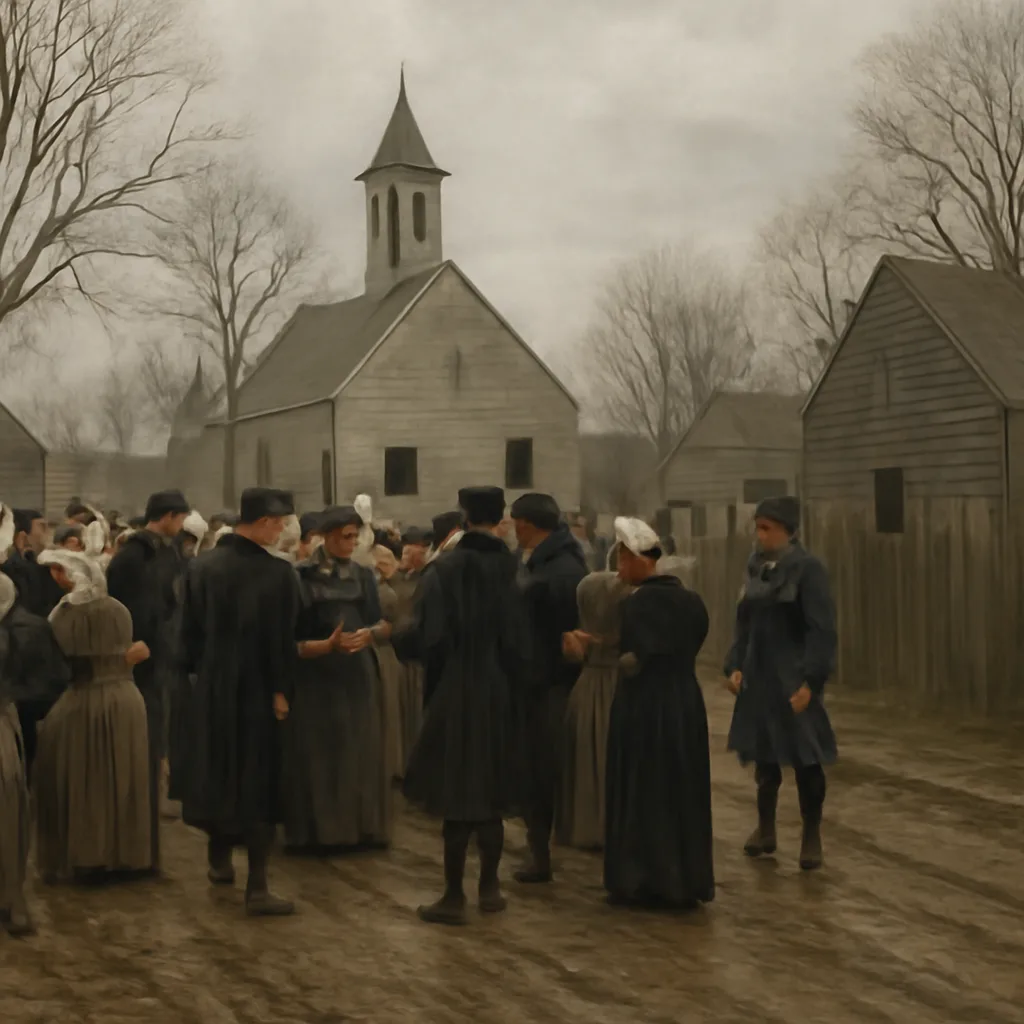
Executions at Salem Increase Amid 1692 Witchcraft Panic
On March 19, 1692, prosecutions and executions in the Salem witch trials intensified as additional accused were held and some condemned, reflecting escalating fear, legal changes, and social tensions in colonial Massachusetts.
By March 19, 1692, the witchcraft panic in Salem and surrounding communities had moved from isolated accusations to an expanding legal and social emergency. What began with complaints by a few young women in early 1692 had, by mid-March, produced a growing list of accused, multiple arrests, and a shift in how authorities handled allegations—contributing to an increase in convictions and executions over the following months.
Early accusations and arrests
Accusations first surfaced in January and February 1692 as several girls in Salem Village exhibited fits and accused neighbours of afflicting them by witchcraft. Local magistrates—most notably Deputy Governor Thomas Danforth, Magistrate John Hathorne, and Judge Jonathan Corwin—began hearings in February and March. The legal process then relied heavily on spectral evidence (testimony that the accused’s spirit or specter appeared to the afflicted) and on the testimony of the afflicted themselves. Arrest warrants were issued for dozens across Salem Village, Salem Town, and nearby towns.
Escalation by mid-March
By March 1692, the numbers of arrested and indicted had increased. The provincial government and local authorities, alarmed by the spread of accusations and the disorder they produced, moved to systematize proceedings. The Court of Oyer and Terminer, later established in May by Governor William Phips, would formalize trials; but in March the community was already experiencing heightened imprisonment, multiple examinations before magistrates, and determinations of guilt that in some cases led to execution orders.
Legal and social dynamics
Several factors contributed to the rising number of condemned. Communities were small and interwoven by kinship, economic competition, and church divisions; longstanding local grievances often surfaced in accusations. The weight given to spectral evidence and the deference paid to the emotional testimony of the afflicted lowered the threshold for conviction by contemporary standards. Additionally, the colonial legal framework offered limited protections for the accused: counsel was not appointed for defendants, and appeals processes were constrained.
Consequences and aftermath
The intensification of trials in March foreshadowed the executions that would shock New England. Between June and September 1692, nineteen people were executed in Massachusetts for witchcraft, and at least five more died in prison. The events prompted later reflection and regret among many contemporaries; by the early 18th century, the validity of the trials and evidence used—including spectral evidence—was widely questioned. In 1711 the Massachusetts legislature passed a bill reversing attainders for some victims and granted financial restitution to their heirs, acknowledging the miscarriages of justice.
Historical context and caution
Modern historians place the Salem events within broader contexts: Puritan religious beliefs about the devil and witchcraft, the legal culture of colonial New England, frontier conflict with Indigenous peoples, and local social tensions. While records from 1692—court records, depositions, and contemporary letters—provide substantial detail about arrests, examinations, and executions, some aspects remain debated: exact motives behind specific accusations, the relative influence of physical illness or social stress among the afflicted, and the full extent to which political and economic rivalries shaped individual cases.
The events of March 19, 1692, therefore represent a moment when accusations transitioned into an expanding campaign of legal action. That escalation set the course for the subsequent convictions and executions that have made the Salem witch trials one of early America’s most enduring and troubling episodes.