
06/06/1979 • 5 views
Skeleton Found with Medieval Chastity Belt in 1979 Burial
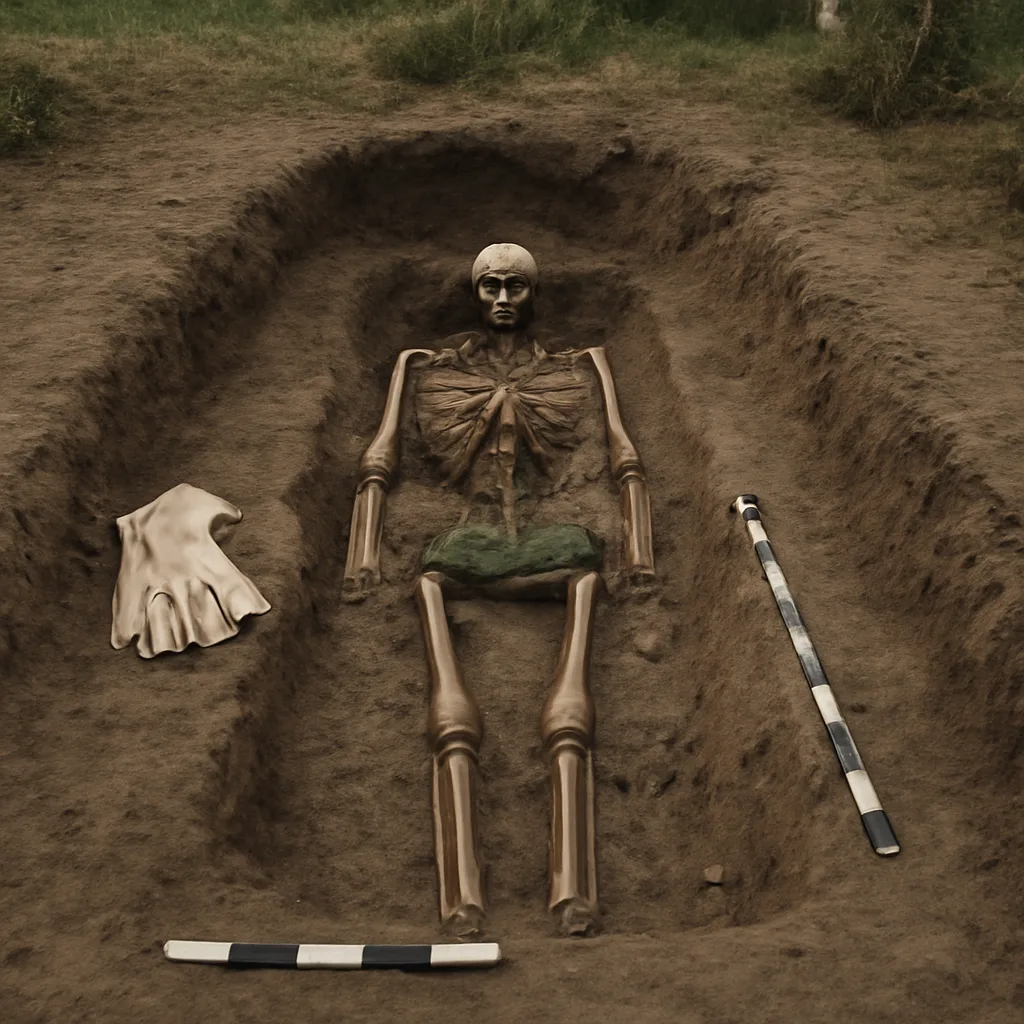
In June 1979 archaeologists reported a human skeleton recovered with a metal device interpreted as a medieval chastity belt; subsequent study has emphasized dating, context, and caution about assumptions regarding purpose and rarity.
Archaeological context and dating
Published information about the context and precise provenance of the 1979 discovery is limited in contemporary accessible sources; the find is often cited in secondary discussions of chastity-belt claims rather than in full excavation monographs. Metal pelvic plates and straps have been recovered from a variety of contexts across Europe, and rigorous interpretation depends on stratigraphy, associated grave goods, radiocarbon dates, and metallurgical analysis. For many purported "chastity belt" finds, later analyses have shown wide chronological ranges for the components, with some parts medieval or early modern and other elements clearly modern or of uncertain date.
Form and function
Devices labeled as chastity belts typically consist of a metal plate or shield positioned over the genitals, sometimes with straps or hinges. Scholars emphasize that such devices can have multiple possible functions: medical supports, post-mortem restraints, folk-protective amulets, or Victorian-era constructions meant to entertain or moralize. The material condition matters: heavily corroded metal fixed to skeletal remains can indicate antiquity of association, but disarticulated or loose components can be intrusive or later additions.
Scholarly caution and historiography
The modern narrative of widespread medieval use of chastity belts largely stems from 19th-century sensationalism and museum displays. Academic historians and archaeologists now argue that genuine, regularly used medieval chastity belts are unlikely; better-documented uses of locking devices for chastity are scant in medieval documentary sources. When human remains are found with metal genital shields, specialists typically recommend a suite of analyses—radiocarbon dating of the burial, metallurgical study of the metal, and careful taphonomic assessment—to establish contemporaneity and function.
Public reception and legacy
The 1979 report contributed to the persistent public image of chastity belts as medieval instruments, but it also prompted debate within the academic community about evidence and interpretation. In the absence of detailed published excavation results readily available from that specific case, it remains difficult to confirm whether the device found in 1979 was a contemporaneous medieval object intended for bodily restraint, a medical or ritual object, or a later object introduced into the burial.
What can be said confidently
- A skeleton associated with a metal pelvic device was recorded in June 1979 and reported in public accounts.
- Objects resembling chastity belts have been found in multiple contexts, but their interpretation varies.
- Current scholarship treats claims of widespread medieval use with skepticism and calls for scientific analyses to determine age and function.
Further research
Definitive conclusions about the 1979 find would require published excavation records, radiocarbon dates for the burial, and metallurgical analysis of the device. Where such materials have been published for similar finds, they often complicate simplistic narratives and show a range of possible explanations rather than a single, sensational function.