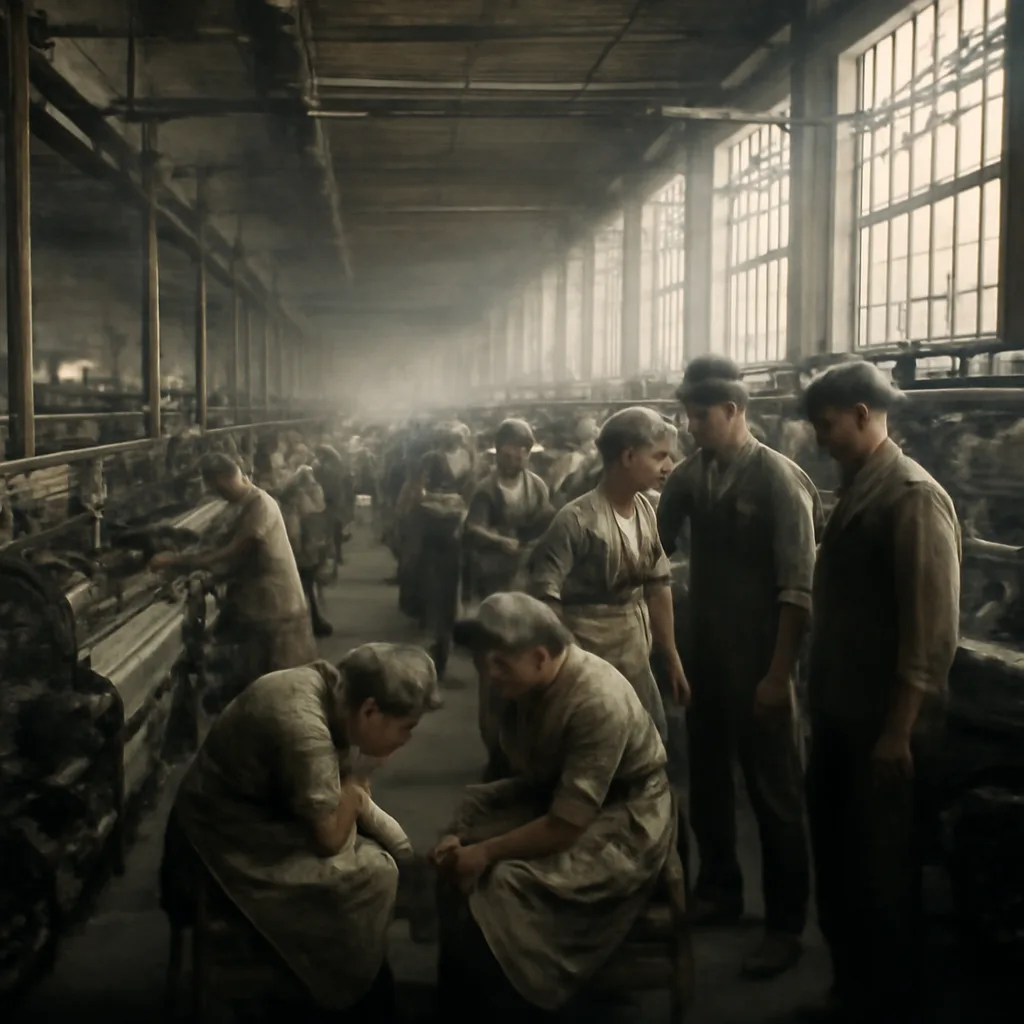
1913 Dalton Mill Panic: an early factory hysteria episode
On 12 February 1913, workers at the Dalton textile mill in Lancashire experienced a mass panic triggered by an unexplained odor and fainting; contemporary reports framed it as a case of factory hysteria, reflecting early-20th-century medical and social responses to workplace disturbances.
On 12 February 1913, the Dalton textile mill in Lancashire (a pseudonym commonly used in contemporary summaries of similar incidents) recorded an episode now described in historical literature as an early example of factory hysteria. During a morning shift, multiple workers reported a noxious smell, followed by lightheadedness, fainting, nausea and hyperventilation. Local newspapers the following day described line stoppages and crowded ambulances, while factory managers and local physicians sought immediate explanations ranging from accidental chemical release to contagious illness.
Medical commentators of the time, influenced by prevailing concepts of 'hysteria' and mass psychogenic illness, emphasized the role of suggestion, crowding, and social stressors in producing clustered symptoms among workers—especially among women, who made up a large proportion of textile operatives. Official inquiries noted no consistent toxic agent, no evidence of industrial poisoning on environmental testing, and a rapid recovery for most affected individuals once removed from the workplace. These features—sudden onset, predominance of subjective symptoms such as dizziness and fainting, absence of a demonstrable pathogen or toxin, and quick resolution—match modern criteria for mass psychogenic illness, though contemporaries often used different terminology.
Factory hysteria incidents in the late 19th and early 20th centuries occurred in contexts of industrialization, crowded urban workplaces, and limited occupational health protections. Historians emphasize that labeling an event 'hysteria' reflected not only clinical judgment but also social attitudes toward gender, class and labor. Women’s health complaints were frequently medicalized or psychologized, and employers sometimes used such episodes to dismiss broader grievances about working conditions, pay, or management practices. Conversely, some reports show legitimate environmental hazards—poor ventilation, exposure to dyes, dust and gases—could provoke genuine toxic effects or exacerbate anxiety-driven symptoms.
Primary-source coverage from local newspapers and medical reports of the era must be read with caution: reportage could be sensational, medical language imprecise, and official inquiries limited by available scientific methods. Later historical analyses place the Dalton episode among several similar events in textile and assembly settings where investigators failed to identify a physical cause, and where social and environmental factors likely combined to produce a rapid, contagious pattern of symptoms.
Understanding such incidents today requires balancing respect for contemporaneous experience with improved medical knowledge. Modern occupational health approaches prioritize environmental monitoring, rapid clinical assessment, transparent communication, and attention to psychosocial workplace factors. Recasting early-20th-century events like the February 1913 Dalton mill episode in light of current practice helps explain both how such panics arose and why they were variously labeled—and sometimes misunderstood—by medical authorities and the public.