728x90 Ad Slot (paste ad code here)
← Back
12/26/1862 • 1 views

The Dakota 38

dakota 38

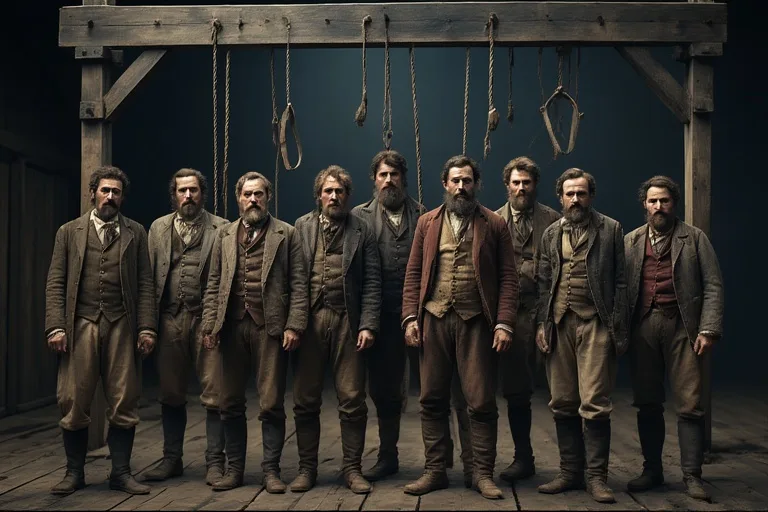
The execution of the Dakota 38 on December 26, 1862, is a somber and pivotal chapter in American history. It remains the largest mass execution ever conducted by the United States government.


The execution of the Dakota 38 on December 26, 1862, is a somber and pivotal chapter in American history. It remains the largest mass execution ever conducted by the United States government.

To understand how it happened, it’s important to look at the broken promises that led to the war and the controversial trials that followed.
The Causes: Broken Treaties and Starvation

By 1862, the Dakota people in Minnesota were pushed onto a small strip of land along the Minnesota River. The U.S. government had failed to honor treaty obligations, including the payment of annuities (money and food) that the Dakota relied on for survival.

The "Starving Winter": After poor harvests and a lack of wild game, the Dakota faced starvation.

The Infamous Remark: When the Dakota asked for credit to buy food, a local trader named Andrew Myrick reportedly said, "If they are hungry, let them eat grass."

The Outbreak: Tensions boiled over in August 1862. What began as a local skirmish escalated into a six-week war between Dakota warriors and white settlers/militia, resulting in hundreds of deaths on both sides.

The Trials and Lincoln’s Review

After the Dakota surrendered, a military commission was formed to try them. The process was widely criticized, even then:

The Trials: Nearly 400 Dakota men were tried. Some "trials" lasted less than five minutes. The accused were not given legal representation and many did not speak English.

The Verdicts: The commission sentenced 303 men to death.

Lincoln’s Intervention: Amidst local calls for blood, President Abraham Lincoln personally reviewed the trial transcripts. He was wary of executing men who had simply fought in battles. He narrowed the list to those proven to have participated in "massacres" of civilians or crimes of rape.

The Final List: Lincoln commuted the sentences of 264 prisoners but authorized the execution of 39 (one was later reprieved, leaving 38).

The Execution

On the morning after Christmas, 1862, in Mankato, Minnesota, the 38 men were led to a specially constructed square scaffold.

The Scene: A crowd of roughly 4,000 spectators watched as the men, holding each other's hands and singing their death songs, were hanged simultaneously.

The Aftermath: The bodies were buried in a shallow grave, but most were exhumed and stolen that same night by local doctors who wanted them for "anatomical study."

Legacy and Healing

Today, the event is remembered through the Dakota 38+2 Memorial Ride, where riders travel 330 miles on horseback from South Dakota to Mankato to arrive on the anniversary of the hangings. The "+2" refers to two additional Dakota leaders who were captured and hanged in 1865.

This event happened just days before Lincoln signed the Emancipation Proclamation.