
← Back
05/12/1974 • 5 views

College Baseball Team Completes Game Before Noticing Scoreboard Error
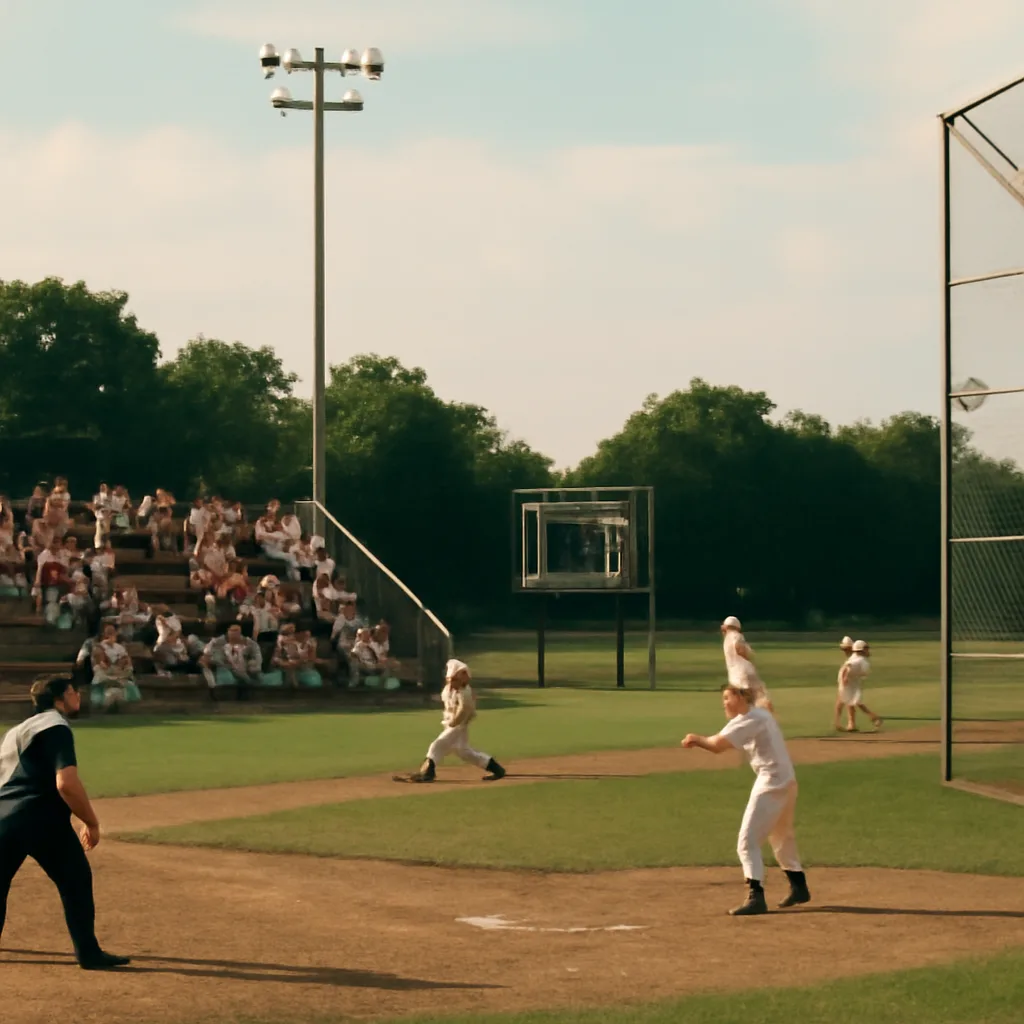
Outdoor college baseball field in the 1970s with a manual scoreboard showing numbers and a small crowd in simple clothing seated on metal bleachers.

On May 12, 1974, a college baseball game proceeded to completion while players and officials did not realize the public scoreboard displayed the wrong score; the error was discovered only after the final out.


On May 12, 1974, a small-college baseball game became an oddity of local sports history when the teams and many spectators completed the contest without anyone noticing that the public scoreboard showed an incorrect score. The game, played during an era when manual scoreboards and limited press coverage were common at amateur and collegiate venues, highlights how human-operated systems could produce conspicuous but unnoticed errors.

Contemporary reports and retrospective accounts agree on the basic sequence: a routine contest in which a mis-set or malfunctioning scoreboard displayed a score that did not match the actual runs recorded by scorers and umpires. Because official scoring and the umpire’s count of outs and runs determine the game result, the on-field participants were governed by those records rather than by the public display. Spectators relying on the scoreboard were therefore misinformed until the discrepancy was noticed after the final out.

Manual scoreboards of the period were typically updated by volunteers or stadium staff who moved numbered panels or flipped digits. Common causes of such discrepancies included human error when changing a digit after a half-inning, delayed updates during busy innings, or equipment faults that left a previous number in place. In smaller venues in the 1970s, there were fewer staff and less redundant verification than in major-professional stadiums, increasing the chance a scoreboard could lag behind the actual game state.

Umpires and official scorers maintained the authoritative record. Rules of baseball designate the on-field umpire and the official scorer as the final arbiters of outs, runs and the game’s conclusion; the scoreboard is a convenience for fans, not the determinant of outcome. In the incident on May 12, 1974, that principle prevailed: the official result was recorded based on the scorers’ book and umpire rulings, even though some in attendance consulted the incorrect public display.

Reactions varied. Players and coaches, focused on play, typically rely on the on-field umpiring crew and their own scorebooks; they rarely depend solely on the scoreboard for situational awareness. Fans who noticed the error expressed surprise or annoyance; some local reports from similar incidents at the time documented mild confusion and talk among spectators but no formal protest, since the official processes were followed.

This episode is emblematic of pre-digital sports operations, when manual processes could produce visible but ultimately non-communicative errors. It also underscores how advancements in automated displays, electronic scoring, and broader media coverage in later decades reduced the frequency and impact of such mismatches between what was shown to the crowd and the official game record.

While this particular May 12, 1974 incident is a footnote rather than a watershed event, it serves as a reminder of the contingency of sporting spectacle on human labor and equipment. The official result stands with the scorers’ records; the erroneous scoreboard remains a quirk recounted in local memory and in oral histories of small-college sports from that era.

Share this

Email Share on X Facebook Reddit

Did this surprise you?