
← Back
02/21/1931 • 9 views

February 21, 1931: The First Documented Airplane Hijacking
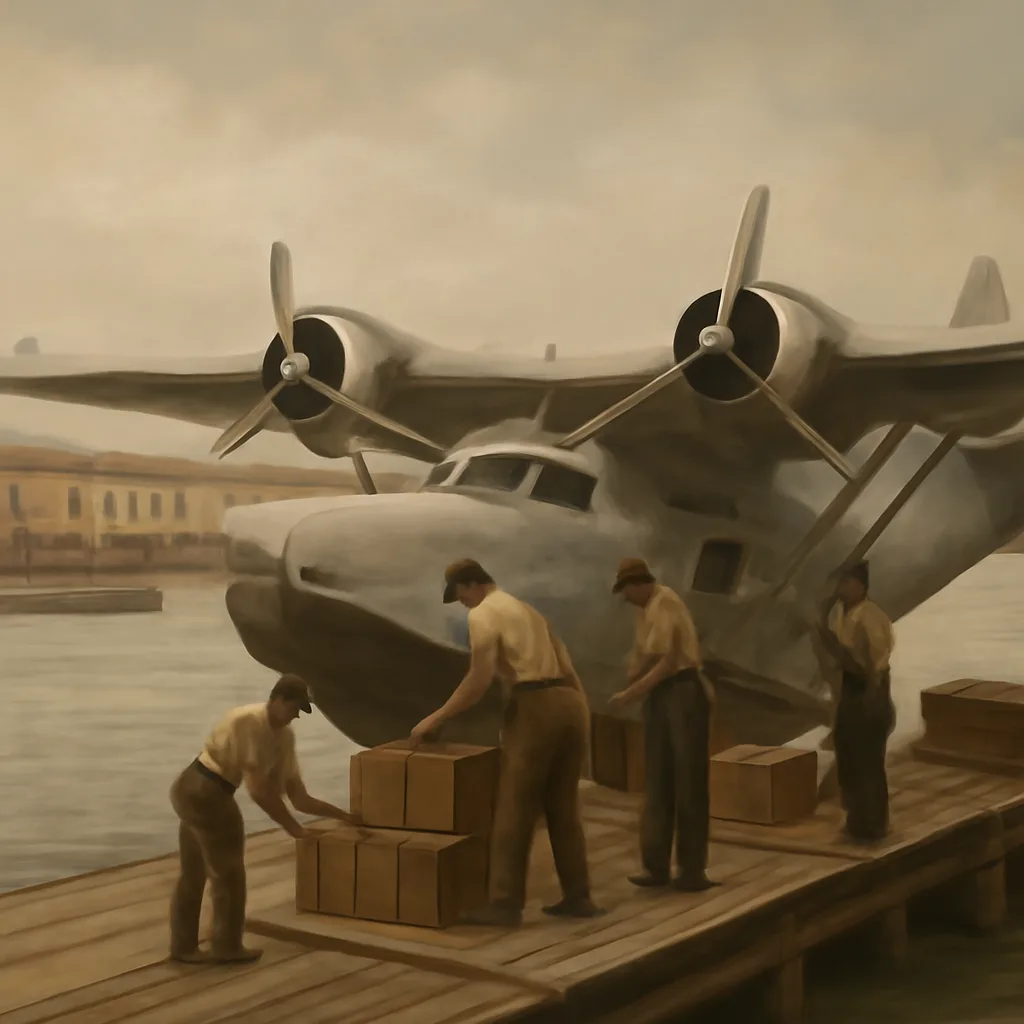
A 1930s Pan American amphibious mail plane on water beside a wooden dock in the Caribbean, with crew and small cargo crates on deck; moored near low-rise colonial buildings under a cloudy sky.

On Feb. 21, 1931, a Cuban bandit diverted a Pan American mail plane to Havana in what historians consider the first recorded instance of an airplane hijacking, signaling a new security challenge for early commercial aviation.


On 21 February 1931 a flight carrying mail and a single passenger was forcibly diverted in what is commonly cited as the first documented airplane hijacking. The incident involved a Pan American Airways Consolidated Commodore flying from Key West, Florida, to Havana, Cuba. According to contemporary news reports and later historical summaries, a Cuban bandit boarded the aircraft under the pretense of travel or access, then compelled the pilot to land in Havana, seizing the mail cargo. The episode drew immediate attention because it exploited the limited security measures of early civil aviation, which had been designed for speed and practicality rather than for prevention of criminal interference.

Aviation in the late 1920s and early 1930s was in transition from a pioneering era to nascent commercial operation. Aircraft like the Consolidated Commodore were large flying boats or amphibious types used on international routes in the Caribbean and Latin America. Cabins were open by modern standards, passenger lists were small, and ground procedures rarely included searches or identity checks. That context helps explain how a single determined individual could commandeer an aircraft with relatively little resistance.

Contemporary newspaper coverage reported the diversion and the seizure of mail; later aviation historians have treated the event as the first recorded hijacking because it matches the key elements—use of coercion to redirect a flight and seizure of aircraft cargo or control. Sources vary in detail about the perpetrator’s identity and motives. Some accounts describe the act as an attempted theft of valuable mail; others suggest a politically motivated act or an opportunistic criminal act. Records from Pan American and official Cuban or U.S. authorities are fragmentary, and some specifics remain disputed or unclear in secondary accounts.

The incident had several consequences. It exposed vulnerabilities in international airmail operations and contributed to evolving discussions about airline security, passenger screening, and the legal frameworks governing crimes committed aboard aircraft. Over the following decades, as air travel expanded and aircraft grew faster and carried more passengers and cargo, governments and airlines progressively tightened procedures, though effective, standardized aviation security measures would take many years to develop.

Historians treat the 1931 diversion as a landmark largely because documented cases of similar coercion before that date are scarce or poorly recorded. It is important to note that earlier episodes of interference with aircraft—ranging from forced landings to attacks—occasionally appear in disparate records, but the February 1931 case stands out in aviation literature for its documentation and the attention it received from contemporary media and later scholars.

Because primary source material is limited and sometimes inconsistent, aspects of the event—such as the hijacker’s precise identity, detailed motive, and the full chain of official responses—remain partially unresolved. Researchers rely on surviving newspaper reports, airline records when available, and governmental correspondence. Where sources conflict or omit facts, historians flag those uncertainties rather than invent specifics.

While later decades would see hijackings for political, criminal, or suicidal reasons become a widely recognized threat to civil aviation, the 1931 case is remembered as the earliest clearly recorded instance that brought the possibility of forcible diversion to public and official attention. It occupies a cautious place in aviation history: a documented first that also highlights the limits of the historical record and the gradual evolution of airline security.

Share this

Email Share on X Facebook Reddit

Did this surprise you?