
02/21/1931 • 7 views
1931: First Recorded Airplane Hijacking in Peru
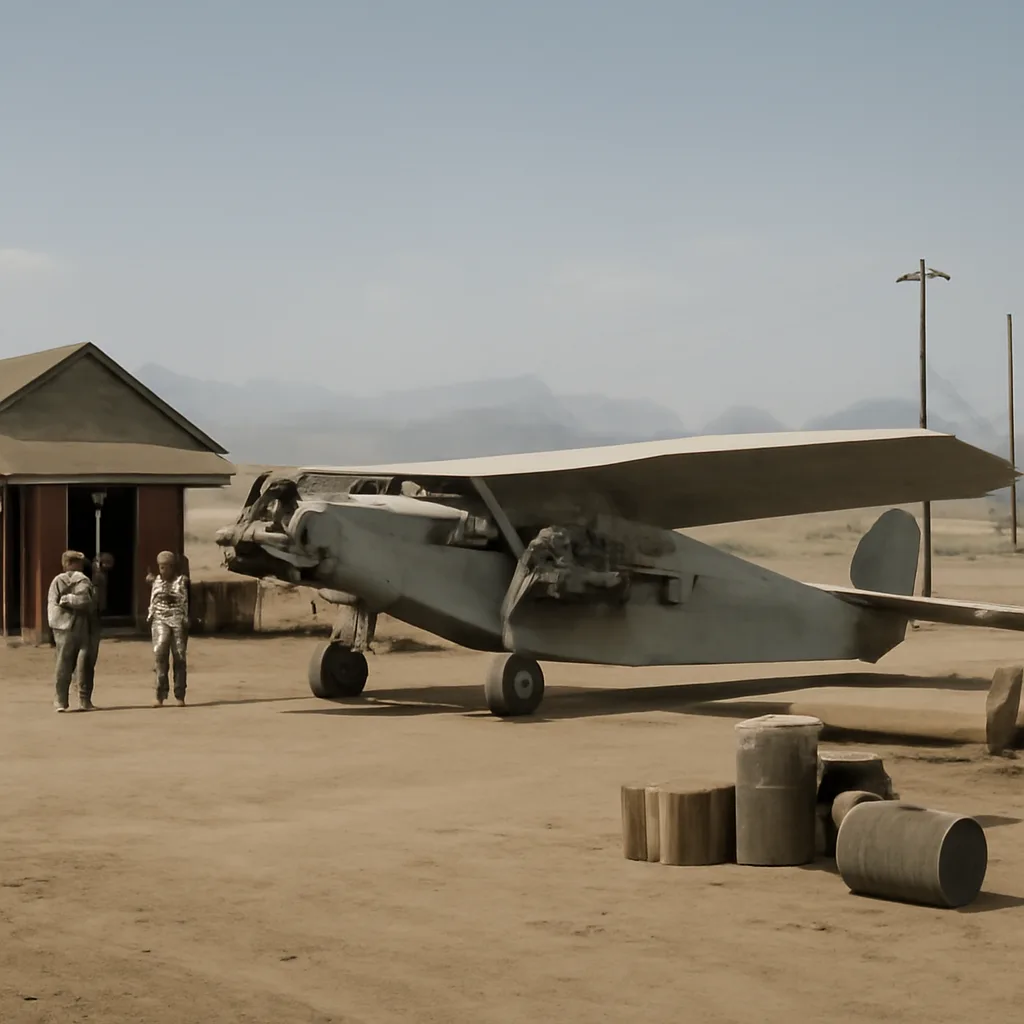
On February 21, 1931, Peruvian bandit Gregorio S. Flores and accomplices seized a Ford Tri-Motor flying between Lima and Arequipa, marking the earliest documented instance of an aircraft hijacking; the incident exposed security vulnerabilities in early commercial aviation.
The context helps explain how such an event could occur. Commercial aviation in the late 1920s and early 1930s was still developing: aircraft were smaller, airfields rudimentary, passenger screening minimal or nonexistent, and law enforcement coordination limited. The Ford Tri-Motor was a common sturdy airliner of the era, carrying a handful of passengers and crew on domestic routes in many countries, including Peru. That vulnerability, coupled with the relative ease of boarding and the lack of en route security, made early aircraft attractive targets for criminals seeking quick transport or leverage.
Contemporary Peruvian press and later aviation histories record that the hijackers boarded before takeoff or during an unscheduled ground stop, brandished weapons, and compelled the crew to change course. The flight ended without large-scale loss of life; accounts emphasize that the hijacking’s immediate practical outcome was the bandits’ temporary escape and an ensuing manhunt. Exact details—such as the number of passengers aboard, the precise sequence of maneuvers, and the ultimate fate of all perpetrators—vary among sources and are sometimes inconsistent. Some reports give different spellings for names and slightly differing timelines, so certain particulars remain subject to archival interpretation.
The 1931 incident had consequences beyond the immediate criminal episode. It drew attention to the need for greater oversight and safety procedures in commercial aviation. Governments and airlines gradually introduced stricter controls on access to aircraft, better vetting of personnel, and improved communication between airports and law enforcement. Over subsequent decades these incremental changes evolved into the comprehensive security regimes familiar today.
Historians treating early aviation crime typically cite the 1931 Peruvian case as the earliest well-documented hijacking, while acknowledging that undocumented or poorly recorded events may have occurred elsewhere. The claim rests on contemporaneous newspaper reporting and later secondary accounts in aviation histories. Where reporting diverges, scholars note uncertainties rather than inventing specifics: different sources offer variant spellings of names and slightly different descriptions of locations and movements. That caveat is important when reconstructing early incidents from limited archival material.
In sum, the 21 February 1931 seizure of a Ford Tri-Motor in Peru is widely regarded as the first recorded airplane hijacking. Its significance lies not only in the criminal act itself but also in how it revealed vulnerabilities in nascent commercial aviation and contributed to the slow development of aviation security practices around the world.