
08/13/1961 • 5 views
Berlin Wall Erected Overnight, Dividing East and West Berlin
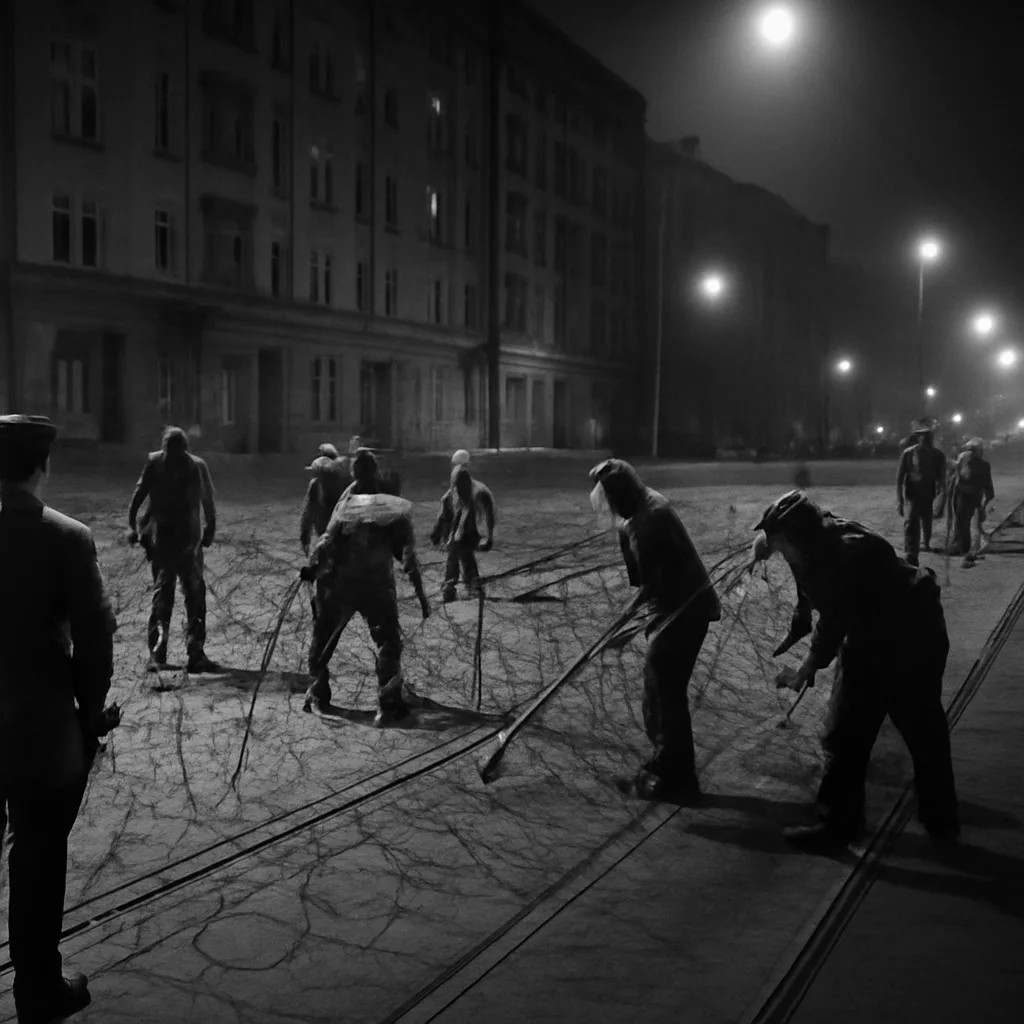
In the early hours of August 13, 1961, East German authorities began building fortified barriers across Berlin, severing streets and families and marking the start of a concrete division between East and West.
Background
Postwar Berlin was a city partitioned among the Allied powers but located deep within Soviet-occupied East Germany. By the late 1950s and early 1960s, the GDR faced a steady outflow of citizens fleeing to West Berlin and onward to West Germany, including skilled workers and professionals. The refugee crisis strained the East German economy and undermined the regime’s credibility. Soviet and East German leaders sought to stop this migration without a formal alteration of postwar boundaries that might provoke the West.
Decision and secrecy
The decision to close the border and install physical barriers was taken at the highest levels of the East German leadership with Soviet acquiescence. Planning was carried out in secrecy to minimize the chance of mass evasion. In the early hours of August 13, soldiers, police, and construction crews moved into position, sealing streets and demolishing apartment doorways that opened onto different sectors. Many West Berliners and even some residents of East Berlin learned of the action only as it was underway.
Immediate effects
The first phase used concertina wire and makeshift barricades to stop pedestrian crossings and vehicle traffic. Checkpoints were closed, and West Berliners found previously open avenues blocked. Families and neighbors who lived on streets straddling the border were suddenly separated. For thousands trying to cross into West Berlin that night and in the days after, the border closure meant abrupt disruption of work, school, and family life.
Construction and fortification
What began as barbed wire quickly became a fortified border system. Over subsequent months and years the GDR replaced temporary barriers with a complex defensive installation: multiple concentric walls and fences, a cleared “death strip,” minefields at some stages, patrol roads, floodlights, and watchtowers staffed by border guards. The inner wall directly closed off West Berlin, while the outer wall and additional obstacles aimed to prevent escape from the East.
International reaction
The sudden closure alarmed Western powers and Berliners in the West. The United States, United Kingdom, and France protested the action diplomatically and increased their military and political attention to Berlin, but they did not intervene militarily to reopen the crossings. The Wall became a focal point of Cold War tensions and a potent symbol used by both sides: the West highlighted the Wall as evidence of Communist repression, while the GDR defended it as a necessary anti-fascist protective measure.
Human consequences
The Wall’s construction separated families, disrupted lives, and set the stage for a decades-long human tragedy. While many adapted to the new reality through legal channels and West-to-East visits that were later regulated, others attempted escape. Some succeeded; others were captured or killed attempting to cross. The exact number of people who died trying to cross the Berlin Wall is the subject of historical research and varies with method and source, but the Wall unquestionably caused loss of life and long-lasting social hardship.
Legacy
The overnight construction of the Berlin Wall on August 13, 1961, crystallized the division of Europe and became one of the most enduring images of the Cold War. The Wall stood—constantly modified and expanded—until political changes in East Germany and the Eastern Bloc led to its opening beginning in November 1989. Remnants of the Wall and numerous memorials now mark its history and the lives affected by nearly 28 years of division.