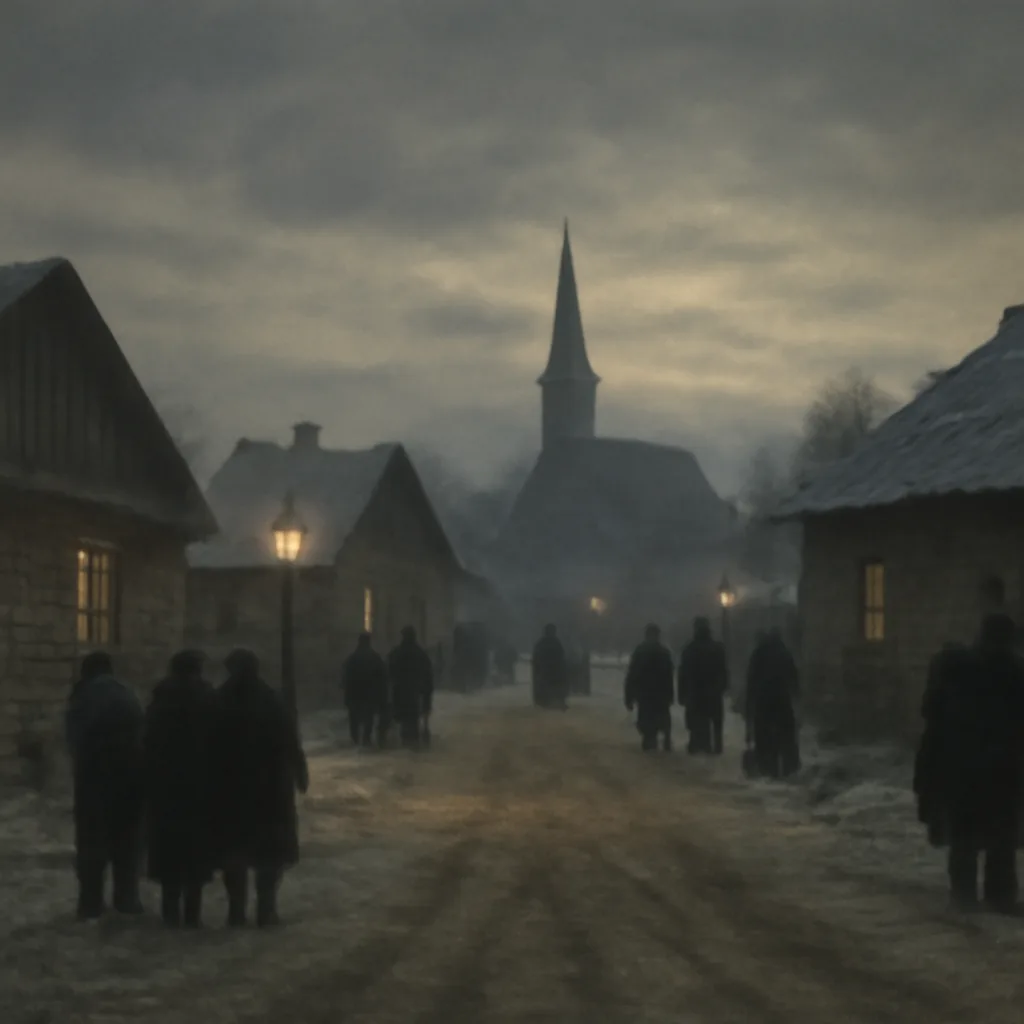
1938 Reported Mass Hallucination in a Polish Village
On February 12, 1938, newspapers and local reports described a collective visual and auditory phenomenon affecting residents of a small Polish village; contemporaneous accounts framed it as a mass hallucination, though explanations ranged from psychological contagion to suggestibility and environmental factors.
On 12 February 1938, several Polish newspapers and local observers reported that numerous residents of a rural community experienced simultaneous vivid sensory events—sightings and sounds—that were framed at the time as a mass hallucination. The reports, circulated in regional press and later summarized by historians of paranormal and sociocultural phenomena, depict multiple witnesses describing similar visions and auditory impressions occurring within a short time window.
Contemporary context
The late 1930s in Poland were marked by social strain: economic hardship, political tensions, and strong religious traditions shaping communal life. In such settings, extraordinary events could spread rapidly through conversation and improvised reporting. Rural communities relied on local clergy, teachers, and press to interpret unusual occurrences, and those authorities often provided the primary framing for what had been seen or heard.
What was reported
Accounts from the period describe several villagers claiming to see luminous shapes or figures and to hear unexplained sounds. The number of people involved and the exact content of their perceptions vary between reports; some accounts emphasize visual phenomena, others auditory, and some a combination. Local authorities and clergy interviewed witnesses and circulated summaries to regional papers. No authoritative scientific investigation with surviving documentation established a definitive physical cause at the time.
Possible explanations and later interpretations
Scholars and commentators who have examined this and similar episodes suggest several nonexclusive explanations: collective suggestion (a contagion of expectation or interpretation spreading through conversation), misinterpretation of natural stimuli (atmospheric lights, distant train or factory noises), mass stress reactions, and the role of religious or cultural frameworks that predispose observers to interpret ambiguous events as supernatural.
Psychological explanations emphasize how groups can align their perceptions and memories when expectations, rumors, or authority figures assert that something extraordinary is occurring. Sociologists of religion note that communities with strong shared symbolic systems are more likely to produce consistent narratives about unusual events. Environmental hypotheses remain plausible in rural settings where lighting, meteorological conditions, and sound propagation can produce striking but natural effects.
Limitations and sources
The episode of 12 February 1938 lacks comprehensive contemporaneous scientific documentation publicly available today. Surviving material consists largely of press reports, local testimony reported secondhand, and later summaries by writers interested in paranormal phenomena or social history. Because of the fragmented and journalistic nature of the sources, details such as the precise number of witnesses, the exact sequence of events, and firm physical measurements are either absent or inconsistent across accounts.
Why it matters
Even without a definitive physical explanation, the 1938 episode illustrates how communities interpret and transmit unusual sensory experiences. It shows the interplay of social context, media, and belief in shaping public understanding of anomalous events. Historians and social scientists treat such cases as valuable for studying perception, rumor dynamics, and the cultural mechanisms used to make sense of the unexplained.
Conclusion
The 12 February 1938 event remains best characterized as a reported mass hallucination in contemporary accounts—a cluster of shared sensory reports documented in press and local testimony—while open to multiple plausible nonparanormal explanations. Because primary investigative records are limited, modern assessments emphasize sociocultural and psychological mechanisms rather than asserting a single definitive cause.