
07/21/1974 • 4 views
Perfectly Preserved Body Unearthed After Centuries Underground
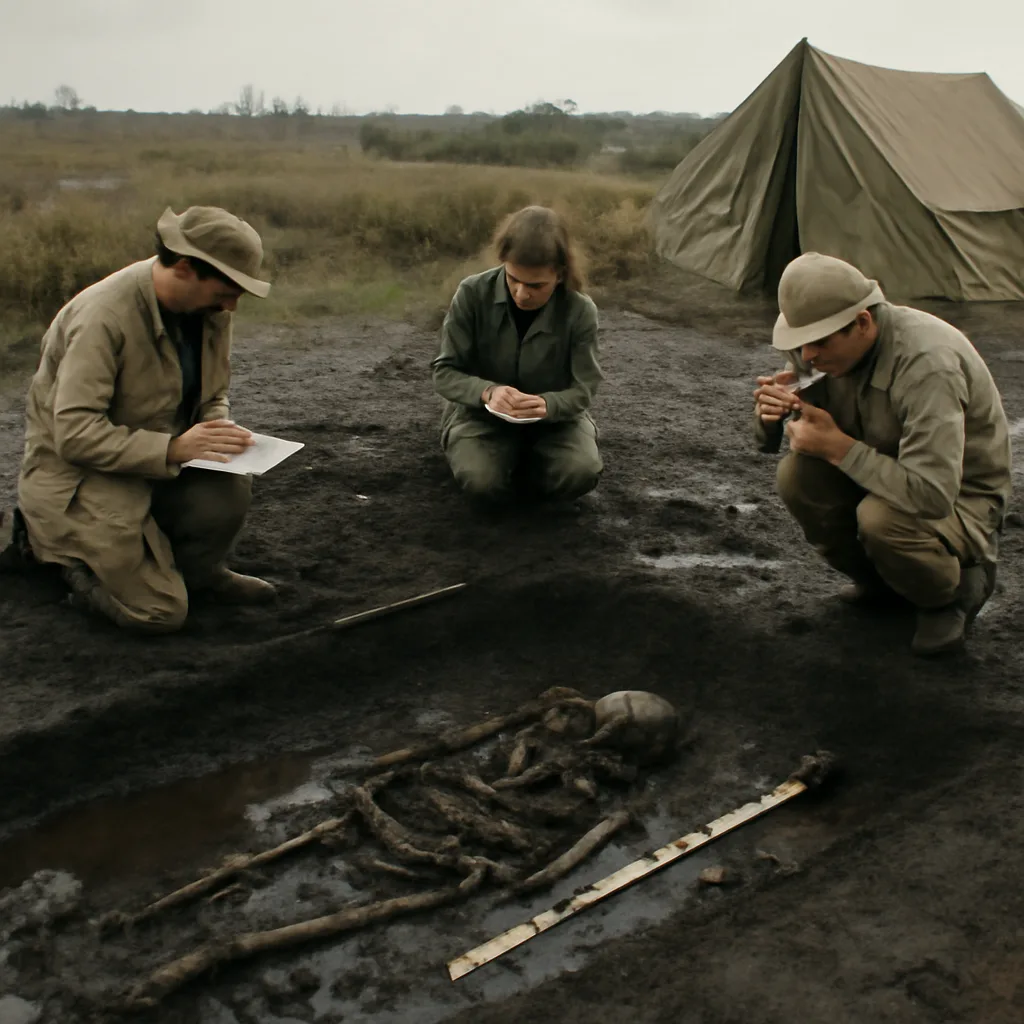
Archaeologists discovered a remarkably well-preserved human body on July 21, 1974, recovered from an anaerobic, waterlogged burial context that limited decomposition. Scientific study linked preservation to environmental conditions rather than supernatural causes.
Context and recovery
The body was located during an excavation of a waterlogged or otherwise anoxic site—conditions documented in similar cases to slow or halt the activity of decomposing organisms and preserve organic material. Excavation teams followed standard archaeological procedures for fragile remains: recording the position and stratigraphy, stabilizing the find in situ, and arranging careful transport to conservation facilities. Published reports from comparable finds emphasize chain-of-custody, controlled environmental monitoring, and collaboration between archaeologists, conservators, and forensic specialists.
Causes of preservation
Experts attribute preservation in such cases primarily to environmental factors. Low oxygen levels, cold temperatures, peat or fine silts, high acidity, or mineral-rich waters can inhibit bacterial decay and insect activity. Chemical conditions can also tan or mineralize soft tissues, producing the leathery, mummified, or mineral-replaced appearance recorded in scientific literature. No verifiable evidence links these phenomena to paranormal explanations; instead, conservation science and taphonomy (the study of postmortem change) provide testable mechanisms.
Dating and analysis
Investigators endeavor to determine age through multiple lines of evidence: stratigraphic context, associated artifacts, radiocarbon dating of organic material, and analysis of burial construction. Osteological study can indicate age-at-death, sex (when preservation permits), pathological conditions, and trauma. Stable isotope analysis of bone collagen or tooth dentine can offer insights into diet and geographic mobility. When remains date to historically documented periods, comparisons to material culture and burial customs help place the individual in cultural and chronological context. If radiocarbon or other dating results are absent or disputed, reports typically note uncertainty and avoid firm chronological statements.
Conservation and curation
Once removed from a conserving environment, preserved organic remains are at risk of rapid deterioration. Conservation protocols often include controlled humidity and temperature, gradual desalination or rehydration where appropriate, and long-term storage in climate-controlled collections. Ethical and legal frameworks guide disposition: some finds are studied and then reinterred according to descendant community wishes or legal requirements; others remain in museum or research collections under regulated access.
Public response and reporting
High-profile discoveries of unusually preserved bodies attract public attention and sometimes speculative media accounts. Responsible reporting relies on peer-reviewed studies, statements from the excavating institutions, and confirmation of dating and analytical results. Scholarly publications and official excavation reports remain the most reliable sources for assessing interpretations and significance.
Uncertainties and limitations
Unless specific published analyses accompany a particular find, details such as the precise age of the remains, cultural affiliation, cause of death, and the full set of environmental measurements may remain unresolved. When these facts are uncertain, researchers explicitly note limitations and recommend further testing—radiocarbon assays, DNA analysis where preservation allows, and detailed taphonomic study—to refine conclusions.
Significance
Discoveries of well-preserved human remains provide rare opportunities to study past lives, health, diet, and burial practices. They also underscore the importance of careful excavation, interdisciplinary analysis, and ethical stewardship. Preservation through natural environmental processes is well-documented in archaeological science and explains most cases of long-term soft-tissue survival without recourse to extraordinary claims.