
← Back
05/12/1915 • 7 views

First Electric Traffic Citation Issued, May 12, 1915
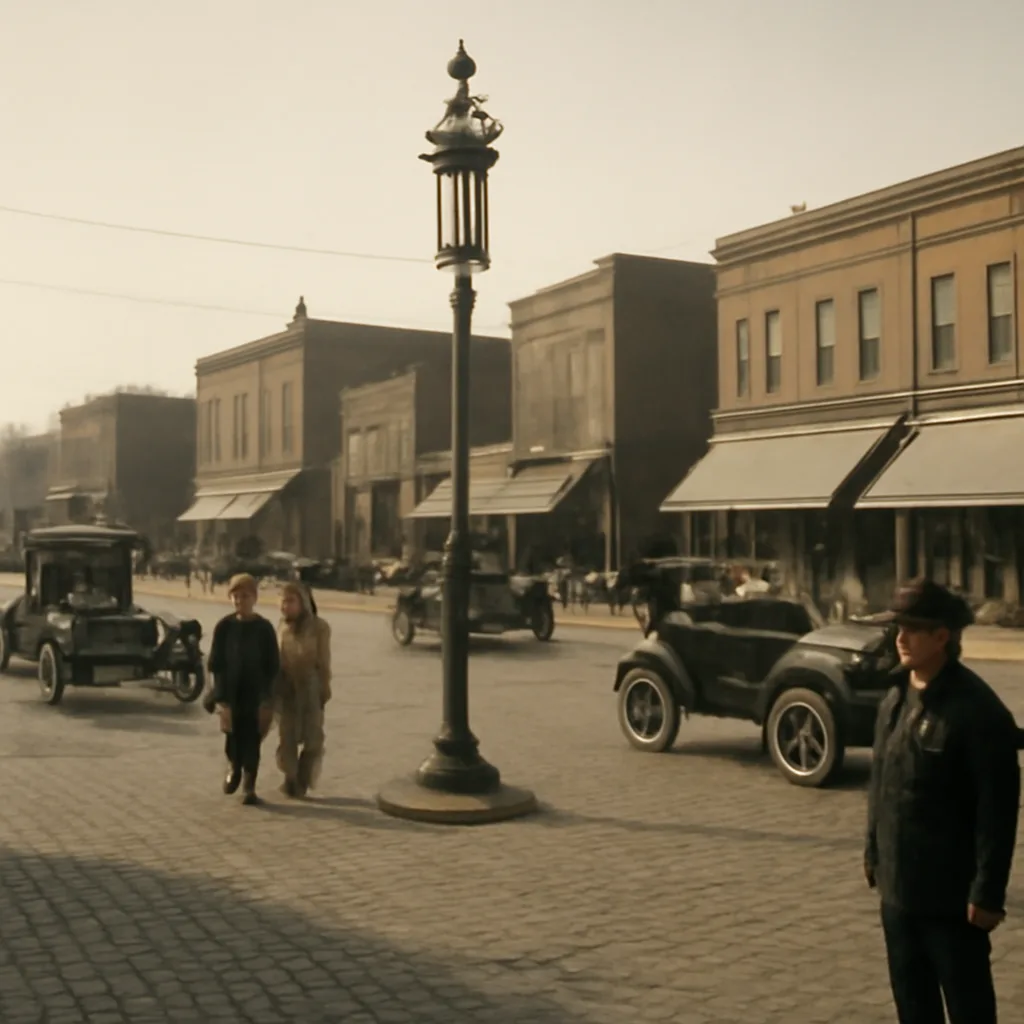
Early 20th-century city intersection with an electrically lit traffic signal device mounted on a pole, period automobiles and pedestrians, and policemen observing; daytime, pre-1920 clothing and signage.

On May 12, 1915, a city police department issued what contemporary reports identified as the first traffic citation generated by an electric traffic control device, marking an early moment in automating traffic enforcement amid rising automobile use.


By the mid-1910s, American cities were grappling with rapid growth in automobile traffic and experimenting with electrical technologies to manage streets. On May 12, 1915, municipal authorities recorded what contemporary newspapers and municipal reports described as the first traffic citation produced with the aid of an electric traffic control device. The device—part of an era of incandescent electric signaling and automated timing mechanisms—was installed at an intersection known for congestion and collisions and used to regulate vehicular movement beyond the capacities of hand signals and policemen posted at corners.

The citation itself arose after an officer or traffic attendant, monitoring the electrically timed signals, documented a driver’s failure to obey the newly installed control. Sources from the period emphasize the novelty not of the offense (traffic violations were already common) but of the role played by an electrical mechanism in creating the conditions for enforcement. Early electric traffic devices ranged from simple electrically lit signs and timed signal lamps to more elaborate semaphore-like mechanisms; municipal archives indicate that cities experimented with various configurations before standardized electric traffic lights became widespread in the 1920s and 1930s.

Context is important. The adoption of electric traffic controls reflected multiple pressures: rapidly increasing car ownership, public demand for safer streets, advances in municipal electrical infrastructure, and a civic interest in applying modern technology to urban problems. Municipal engineering departments, electrical suppliers, and police forces often collaborated on pilot installations. Contemporary accounts sometimes used the phrase "electric signal" or "automatic signal" without precise technical details, so later historians must read those descriptions cautiously.

The 1915 citation should be understood as a symbolic milestone rather than the start of a fully automated enforcement regime. Early electric devices helped structure traffic flow and provided clearer, more consistent signals for drivers and pedestrians, but enforcement still relied on human officers to observe and formally record violations. The transition to automated detection and citation—using sensors, cameras, and computerized processing—would unfold gradually over the following decades and accelerate in the late 20th century.

Historians note some ambiguity in claims about "firsts" from this period: municipal publicity, local newspapers, and manufacturers’ advertisements sometimes inflated novelty for civic pride or commercial advantage. Where possible, scholars cross-reference municipal meeting minutes, police blotters, and local press to verify particular incidents. The May 12, 1915 entry stands in that documentary landscape as an early, well-documented example of an electric traffic device playing a direct role in a recorded traffic citation.

The episode illustrates broader themes in urban history: the negotiation between technology and governance, the adaptation of legal and administrative practices to new infrastructural capabilities, and public ambivalence toward mechanization—seen alternately as progress, nuisance, or a challenge to established authority. While the device involved in the 1915 citation differed materially from modern automated enforcement, the underlying dynamics—using technological systems to regulate increasingly complex urban mobility—are continuous.

For readers interested in primary documentation, local municipal archives, period newspapers, and city engineering reports from the 1910s are the most reliable sources. Because contemporary accounts vary in technical detail, exact specifications of the device used in the May 12 incident are not always clear in surviving records. The significance of the date is therefore best read as emblematic: an early recorded instance of electric traffic control intersecting with routine police enforcement during a formative period in urban transportation history.

Share this

Email Share on X Facebook Reddit

Did this surprise you?