
← Back
12/11/2001 • 6 views

China Joins the World Trade Organization
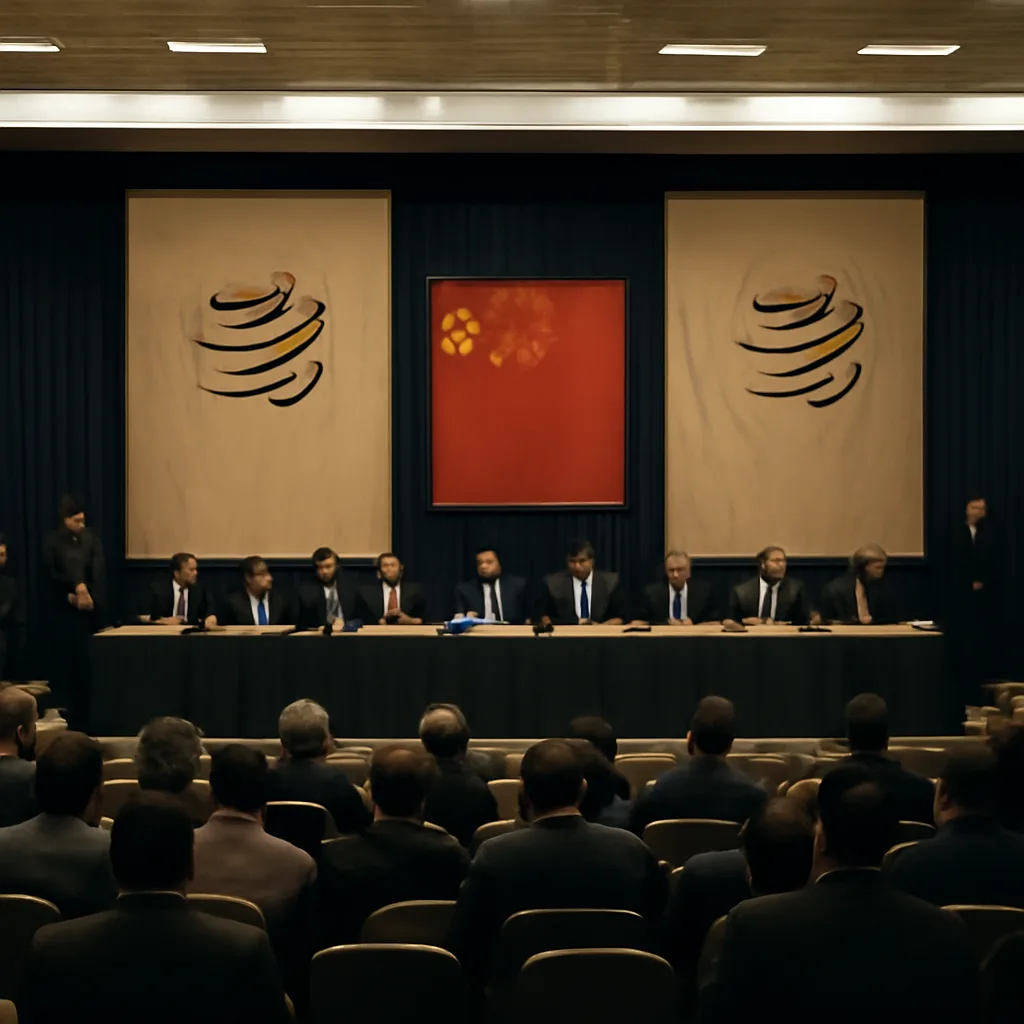
Chinese and WTO symbols represented by flags and a conference hall: a wide shot of an international trade meeting room with national flags (including China) and banners indicating a WTO accession signing context, attendees at a distance, formal setting.

On December 11, 2001, the People's Republic of China formally became a member of the World Trade Organization, marking a major shift in global trade relations and integrating China more deeply into the rules-based international trade system.


Overview
On December 11, 2001, the World Trade Organization (WTO) accepted the accession of the People’s Republic of China (PRC). After 15 years of negotiations following the end of the Uruguay Round, China’s membership brought the country into the multilateral trade system established by the General Agreement on Tariffs and Trade (GATT) and administered by the WTO.

Negotiation and Terms
China’s accession process began in the mid-1980s and intensified after formal accession negotiations started in 1995 when the WTO was created. Accession required bilateral and multilateral negotiations: China negotiated market access commitments with individual WTO members and adopted a comprehensive package of legal and policy changes to align with WTO rules. Key elements included tariff reductions, limits on subsidies, commitments to open services and banking sectors incrementally, and provisions on intellectual property rights. The accession agreement contained specific transitional periods and exceptions reflecting China’s status as a large developing economy.

Domestic and International Context
Domestically, accession occurred amid rapid economic reform and opening that had accelerated since Deng Xiaoping’s policies of the late 1970s and 1980s. China’s leaders framed WTO entry as a way to lock in reforms, attract foreign investment, and promote export-led growth. Internationally, members viewed China’s entry as a means to integrate a major trading power into predictable, rule-based dispute settlement and to create bargaining leverage for further reforms.

Immediate Effects
China’s WTO membership had immediate trade implications: tariffs were cut on many goods, customs procedures were reformed, and foreign firms won greater access to Chinese markets in specified sectors. Trade with WTO members expanded quickly as China became more integrated into global supply chains.

Longer-term Impacts and Debates
Over the following decades, China’s accession reshaped global trade and production. The country became a central node in international manufacturing and a leading exporter of a wide range of goods. Economists note that WTO membership reduced trade barriers and provided a predictable framework that facilitated foreign investment and export growth.

However, debates persist about the consequences. Supporters argue WTO rules helped discipline protectionism and fostered global economic integration that benefited many countries through lower consumer prices and expanded markets. Critics contend that liberalized trade contributed to manufacturing job losses in some advanced economies and that China did not immediately or fully adopt the market-economy behaviors expected by all members—raising disputes over state-owned enterprises, subsidies, industrial policy, and enforcement of intellectual property rules. Numerous WTO disputes have involved China since accession, reflecting tensions over compliance and interpretation of commitments.

Legal and Institutional Significance
China’s accession strengthened the WTO’s claim to universality but also tested its mechanisms. The accession package included detailed schedules of commitments and transitional arrangements intended to be enforceable through WTO dispute settlement. Over time, members and analysts have used both the WTO forum and bilateral measures to address specific grievances.

Legacy
China’s 2001 entry into the WTO stands as a pivotal moment in early-21st-century economic history: it helped accelerate globalization, reconfigured global supply chains, and raised enduring questions about how multilateral trade rules handle large, state-influenced economies. The accession’s outcomes are judged differently across countries and constituencies, and assessment depends on economic, political, and social perspectives.

Sources and Verification
This summary is based on established historical records of WTO accession processes, contemporaneous reporting, and subsequent economic and policy analyses. Specific claims about negotiation timelines, the accession date, and broad impacts are documented in WTO accession documents and widely cited economic literature.

Share this

Email Share on X Facebook Reddit

Did this surprise you?