United States Signs Kyoto Protocol on Climate Change
On December 11, 1997, U.S. negotiators participated in the adoption of the Kyoto Protocol at the UN climate conference in Kyoto, Japan; the United States signed the protocol the same day, committing to international talks though later domestic politics prevented U.S. ratification.
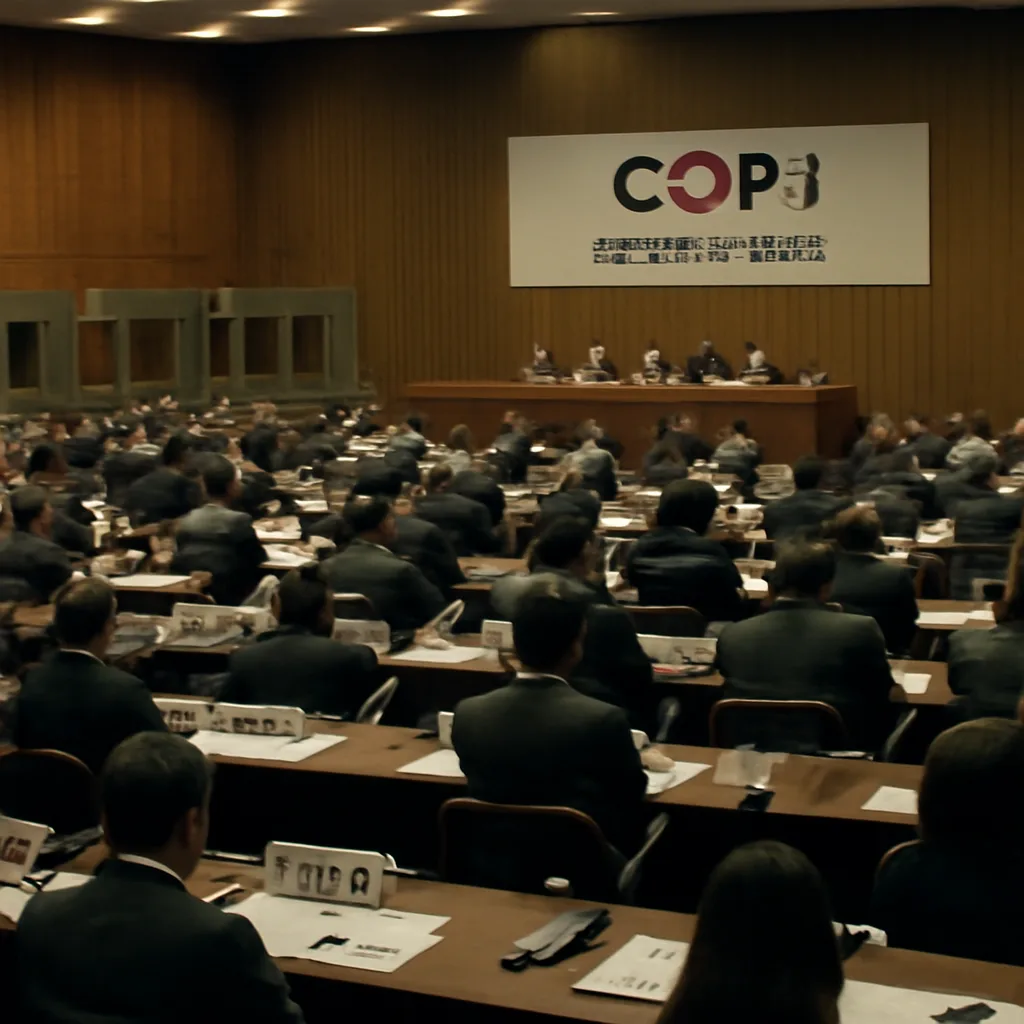
On December 11, 1997, representatives from nearly 200 countries concluded the Third Conference of the Parties (COP3) to the United Nations Framework Convention on Climate Change in Kyoto, Japan, producing the Kyoto Protocol. The agreement set legally binding greenhouse gas emissions reduction targets for many industrialized countries, aiming to reduce overall emissions of six gases linked to global warming. Delegates had spent two weeks negotiating targets, timetables and mechanisms such as emissions trading, joint implementation and the Clean Development Mechanism to provide flexibility in meeting national commitments.
The United States delegation, led by then-Under Secretary of State for Global Affairs Tim Wirth and chief negotiator Stuart Eizenstat (a U.S. official in the Clinton administration), participated actively in the negotiations. On December 11, senior U.S. officials signed the protocol along with representatives of other nations. Signing a treaty at the conclusion of a diplomatic conference is a formal expression of intent to consider ratification; it does not itself make the treaty U.S. law. Under the U.S. constitutional process, a treaty requires the advice and consent of the Senate, followed by ratification by the president, to become binding on the United States.
Domestically, the Kyoto Protocol was politically contentious. While the Clinton administration supported the treaty and signed it in Kyoto, key members of the U.S. Senate voiced strong opposition to binding emissions targets that excluded developing countries such as China and India. In March 1997, prior to Kyoto, the Senate passed the Byrd–Hagel Resolution (95–0), which warned against any climate agreement that would harm the U.S. economy or exempt developing countries from emissions limits; the resolution signaled likely Senate resistance to Kyoto-style commitments.
After the U.S. signature in December 1997, subsequent years saw shifting U.S. engagement. The Clinton administration did not submit the protocol to the Senate for ratification before leaving office. In 2001, the incoming Bush administration formally withdrew the United States from the protocol’s negotiation process and announced that it would not seek ratification, citing concerns about economic impact and the protocol’s treatment of developing nations. As a result, the United States never ratified the Kyoto Protocol and therefore was not legally bound by its targets, although some U.S. states, cities and private actors pursued emissions reductions through other programs.
Internationally, the Kyoto Protocol went into force in 2005 after enough countries had ratified it to meet the treaty’s entry-into-force criteria. It established the first large-scale, legally binding framework for reducing greenhouse gas emissions and influenced subsequent climate diplomacy, even as debates continued over burden-sharing between developed and developing nations and over the effectiveness of its market mechanisms. The protocol’s limitations and the absence of U.S. ratification remained focal points in later negotiations that produced the Paris Agreement in 2015, which adopted a different architecture relying on nationally determined contributions rather than top-down binding targets.
Historical assessments view the U.S. signature in Kyoto as a pivotal diplomatic moment that highlighted both international willingness to address climate change and domestic political obstacles to binding U.S. commitments. The event underscored the complexities of crafting global environmental agreements that align international ambition with national political realities.