Vietnam War Protests Escalate into Violence on U.S. College Campuses
On September 15, 1967, antiwar demonstrations at multiple American universities intensified, producing clashes between students, police and administrators that reflected deepening national divisions over the Vietnam War.
On September 15, 1967, protests against the Vietnam War on several U.S. college campuses escalated into confrontations that underscored rising tensions between the student antiwar movement and local authorities. Throughout 1967, opposition to the conflict in Southeast Asia had grown from small teach-ins and rallies to more organized demonstrations. By mid-September, students at institutions including Columbia University, the University of California campuses, and others across the country were staging sit-ins, marches and attempts to shut down campus operations.
Many actions in 1967 were inspired by earlier mass protests and by the draft lottery system, troop escalation, and increasingly graphic media coverage of the war. On the specified date, reports from campus newspapers and local press documented incidents in which demonstrations met resistance: police were called to disperse crowds, arrests were made for unlawful assembly or obstruction, and scuffles occurred as authorities sought to clear buildings or reopen facilities. On some campuses administrators attempted negotiation, while on others they coordinated with municipal police forces.
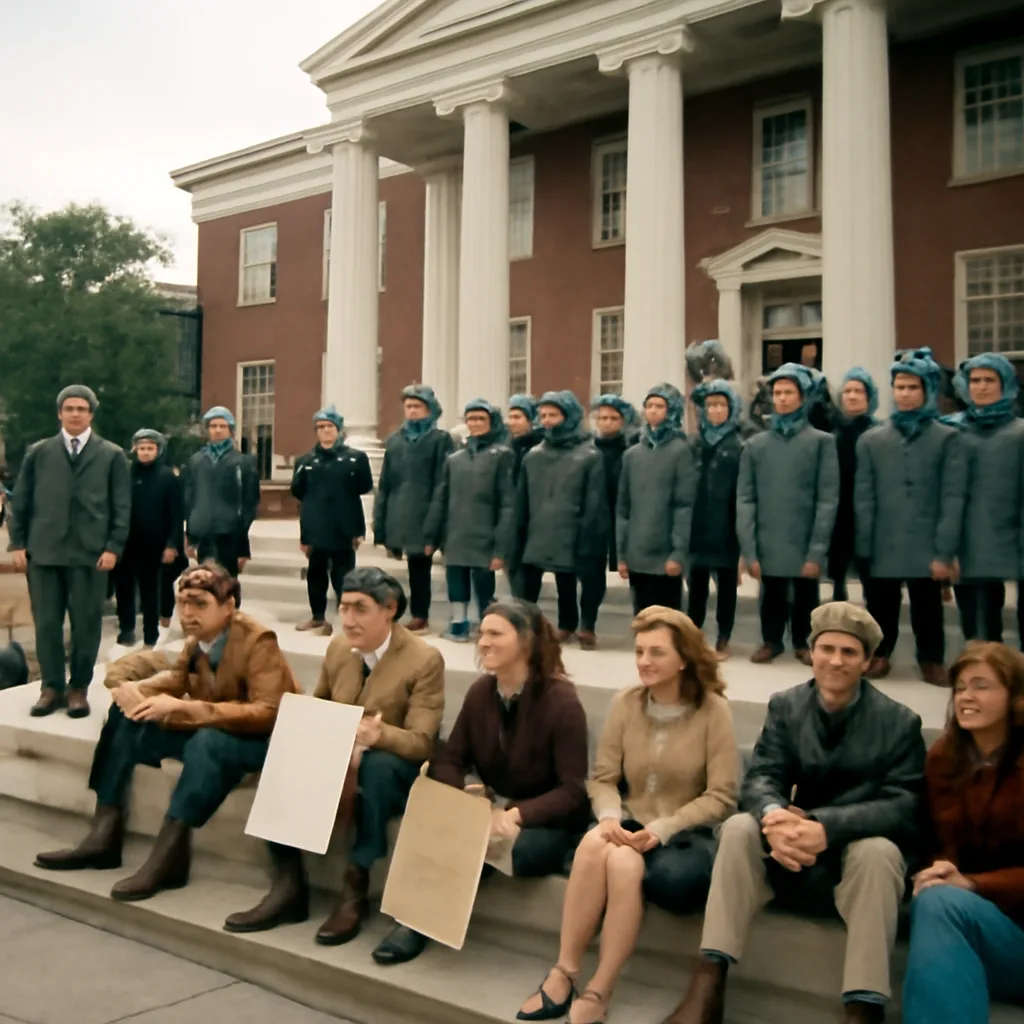
The confrontations varied by location. In some cases, campus demonstrations were largely peaceful until police moved in to enforce court orders or campus regulations; in others, a minority of protesters engaged in property damage or attempted to occupy buildings, provoking a forceful response. Photographs and news accounts from the period show students seated in building entrances, chaining doors, and surrounding administrators’ offices, while law enforcement used batons, shields and arrests to remove them. Injuries were reported in certain incidents, and the arrests and punitive measures—suspensions or expulsions—heightened controversy.
These clashes were not isolated to a single campus or region but reflected a nationwide pattern. The events fed broader public debate about civil disobedience, free speech on campus, and the appropriate response to dissent. Supporters of the protesters argued that students were exercising constitutional rights and drawing necessary attention to an unpopular war. Critics contended that occupations and disruptions interfered with academic life and public order.
University administrations faced difficult choices: some sought to mediate through dialogue and concessions, while others prioritized restoring normal operations and security. Municipal authorities, sensitive to political pressures and local ordinances, sometimes adopted aggressive tactics that prompted further criticism and solidarity actions at other schools. The arrests and physical confrontations on September 15 helped galvanize the antiwar movement, contributing to larger and more coordinated protests the following year, including the mass demonstrations of 1968.
Historical accounts emphasize that the nature and scale of violence differed by incident; much scholarly work distinguishes between organized nonviolent civil disobedience and episodes in which clashes turned physical. Contemporary reporting and later histories also note the role of police tactics, campus policies, and student organizations—such as Students for a Democratic Society (SDS) and other groups—in shaping events.
While the September 1967 confrontations did not mark the beginning or end of campus protest, they were part of an escalating cycle of activism and repression that defined much of the late 1960s on American campuses. The fallout influenced university governance, public opinion about the war, and ongoing debates over the limits of protest and the responsibilities of higher education institutions.