
09/15/1988 • 4 views
Mass pileup during 1988 horse race kills multiple horses
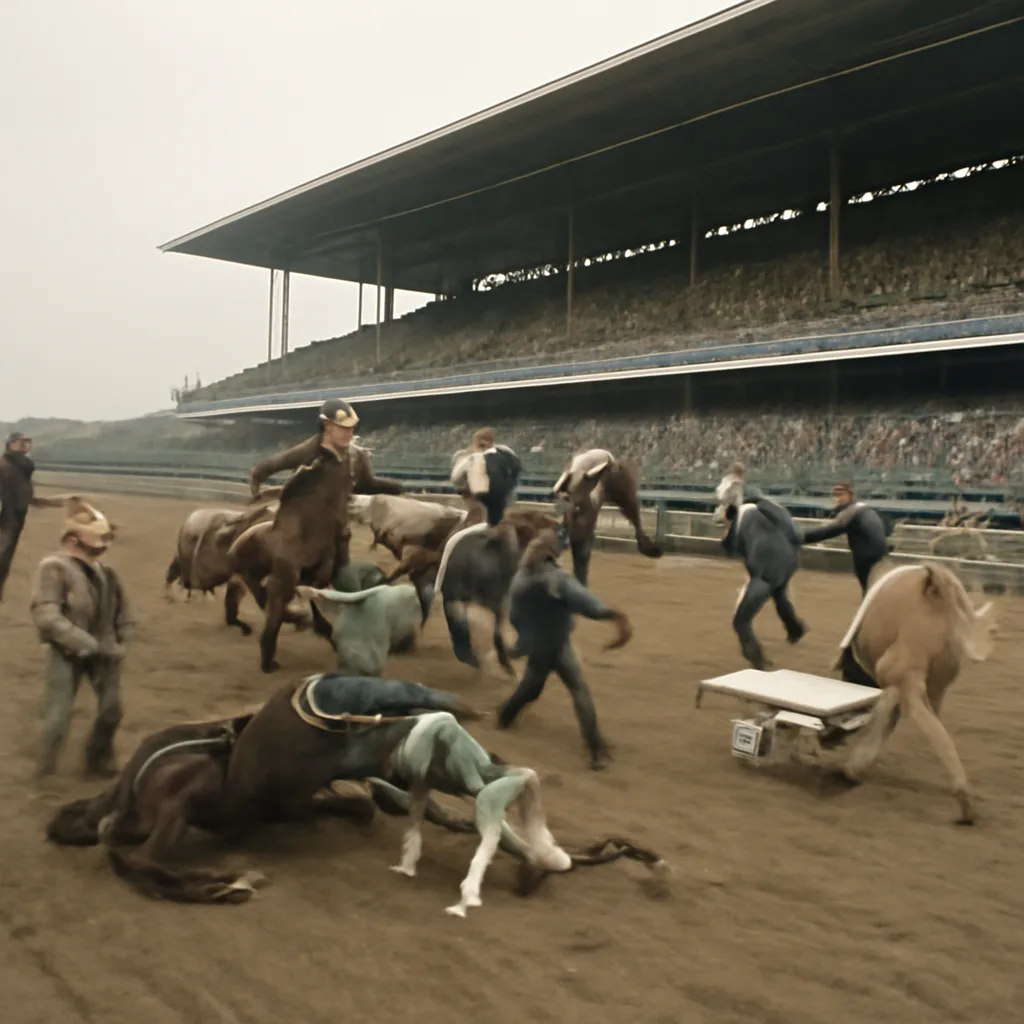
A multi-horse pileup during a horse race on September 15, 1988, resulted in the deaths of several horses and raised questions about safety and track procedures. Investigations and contemporary reports examined causes and responses to the incident.
Contemporary newspaper accounts and industry statements from the days following the event focused on the immediate aftermath: veterinary teams and track staff worked to attend to injured animals, and racing officials halted further races while the situation was assessed. Exact counts of fatalities reported at the time varied between sources; some cited three or four equine deaths, while others reported differing totals as injured animals were later euthanized. This discrepancy was noted in press coverage and official communications as the full toll became clearer over subsequent hours and days.
Eyewitness descriptions in period reporting emphasized the suddenness of the collapse and the difficulty track personnel faced in disentangling horses from each other and from equipment. Jockeys who remained mounted had to bring mounts under control amid the chaos; several riders were reported hurt but the primary human concern in contemporary coverage was the well-being of the horses. Veterinary responders and track veterinarians were dispatched immediately; some animals were treated on-site while others were transported to veterinary facilities. Where injuries were judged to be irreparable, euthanasia was carried out as a humane measure.
The incident intensified scrutiny of factors that can contribute to pileups in horse racing: track surface condition, field size and spacing, visibility, race pace, and the physical interactions that occur when large groups of horses concentrate at turns or in tight quarters. Racing regulators, track management, and animal welfare advocates referenced such factors in their reactions. In some jurisdictions and after similar events, regulators have considered or implemented measures such as limits on field size, improved veterinary pre-race screening, changes to starting gate procedures, and enhanced track maintenance standards to reduce risk.
Investigations and industry reviews following the September 1988 pileup examined whether track conditions or procedural failures played a role. Official findings reported to the public were used to inform any immediate operational changes at the hosting track and contributed to wider discussions in the racing community about ongoing safety improvements. Media coverage at the time included calls from animal welfare organizations for stronger protections and from some industry voices for balanced assessments that weighed the inherent risks of the sport against steps that could reduce catastrophic incidents.
The 1988 pileup is remembered as one of the notable tragic incidents in late-20th-century racing because of the number of equine fatalities and the public attention it drew to race safety. It reinforced ongoing debates within the sport about how best to protect both horses and riders without fundamentally altering competitive racing. Historical records from newspapers, archived racing authority releases, and contemporaneous veterinary statements provide the primary documentary basis for accounts of the event; exact details such as the precise number of equine fatalities reported can vary across those sources.
In the years since, the racing industry has continued to pursue safety measures—improvements in track surfaces, veterinary protocols, and regulatory oversight—often citing past incidents as part of the rationale for reform. The September 15, 1988 pileup remains part of that historical record and a reminder of the severe consequences that can follow when multiple horses are involved in an on-track accident.