
← Back
04/23/1902 • 4 views

First Purpose-Built Motion Picture Theater Opens to the Public in 1902
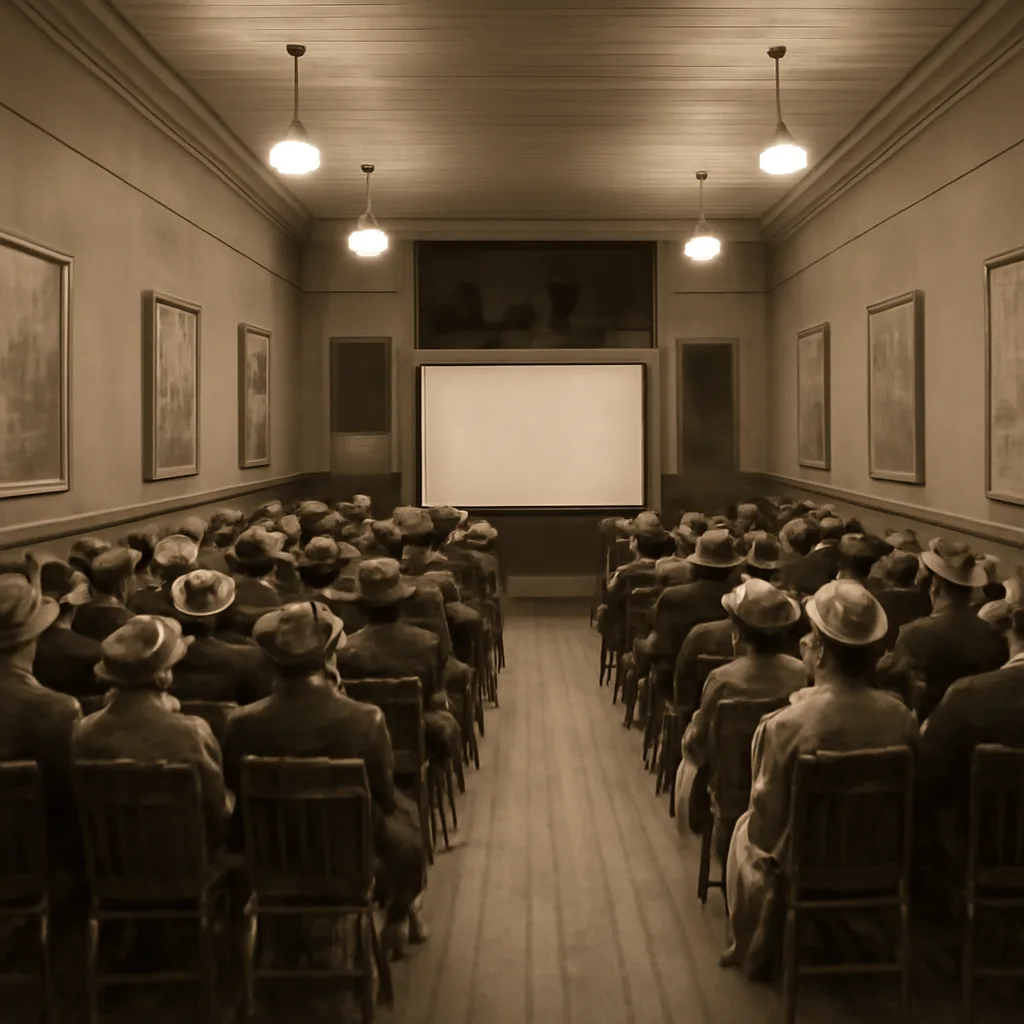
Early 20th-century interior of a public exhibition room with rows of simple wooden seats facing a projection screen area, gas or early electric lighting, and period-dressed patrons gathered for a motion picture screening.

On April 23, 1902, the Eden Musee in New York City opened its new Kinetoscope-style theater — often cited as among the first purpose-built motion picture theaters accessible to the public — marking an early move from nickelodeons and peep-show machines toward communal film exhibition.


On April 23, 1902, an early motion picture venue opened to the public in New York City that is frequently identified in film histories as one of the first purpose-built theaters devoted to motion pictures. At the turn of the twentieth century, film exhibition in the United States was dominated by short peep-show devices (such as the Kinetoscope) and by vaudeville bills that included film as one act among many. The emergence of spaces designed specifically to present projected moving images marked a shift toward communal viewing and the cinema as a distinct entertainment form.

The venue often associated with this date is the Eden Musee’s film exhibition room in Manhattan. The Eden Musee was already known as a popular leisure destination, offering curiosities, waxworks, and other entertainments. In 1902 managers installed projection apparatus and scheduled regular film screenings for paying audiences. Contemporary press reports and later film histories note this installation as an early example of a theater room arranged specifically for showing motion pictures to a seated audience, rather than individual peep-show machines.

Context helps explain why the date and venue attract attention. In the 1890s and early 1900s, technological advances—longer, more stable film stock, better projectors, and improved exhibition practices—enabled longer programs and larger audiences. Nickelodeons (small storefront theaters charging a nickel for admission) began to appear in the mid-1900s, and by the 1910s they proliferated into a national phenomenon. The Eden Musee’s 1902 screening room sits in this transitional period: it predated the large-scale nickelodeon boom yet demonstrated the viability of dedicated film exhibition.

It is important to note that film historians debate precise “firsts.” Earlier exhibitions of projected films occurred in other cities and venues, and some temporary or traveling exhibition spaces were explicitly built to show films before 1902. Additionally, the definition of a “motion picture theater” can vary—whether one requires a purpose-built structure, a room adapted for projection, regular scheduled programming, or a particular seating arrangement. Because of these definitional differences, multiple sites and dates are sometimes cited as the first.

Primary sources from the period include newspaper notices, theater advertisements, and trade publications that describe film programs and exhibition practices. Secondary historical surveys of early cinema—by scholars specializing in film technology and exhibition—place the Eden Musee’s film room within a broader evolution from individual viewing devices and mixed-program variety entertainments toward dedicated cinematic spaces.

The longer-term significance of venues like the Eden Musee’s screening room lies in their role in shaping audience expectations and business models. They helped establish practices such as scheduled showtimes, fixed-admission seating, and the presentation of multiple films in a single program. These conventions carried forward into the nickelodeon era and ultimately into the larger picture palaces of the 1910s and 1920s.

In summary, April 23, 1902, marks an early, well-documented example of public exhibition in a room organized for motion pictures, often cited in histories of cinema as a notable step toward the modern movie theater. Because earlier and contemporaneous exhibition sites and differing definitions of what constitutes a “first” exist, historians treat such claims with caution and contextualize them within the gradual development of film exhibition.

Share this

Email Share on X Facebook Reddit

Did this surprise you?