
05/20/1962 • 4 views
Club Fined for Releasing Carrier Pigeons During 1962 Match
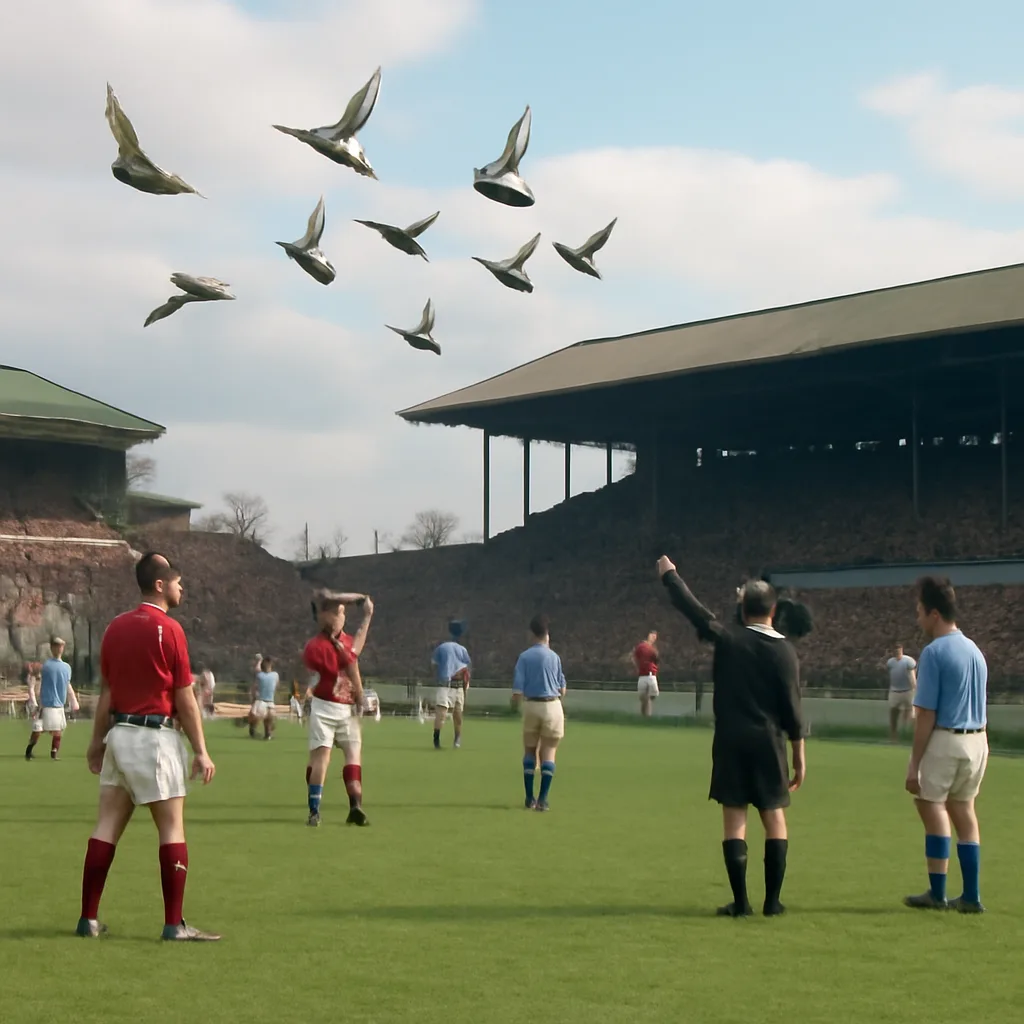
In a May 20, 1962 match, a soccer club released carrier pigeons from the pitch, prompting officials to fine the club for breaching stadium regulations and causing a temporary stoppage of play.
Match reports from the day indicate the release occurred mid-game and that referees stopped play until the birds had left the immediate area of the pitch. The governing body responsible for discipline reviewed the incident and determined the club had violated stadium and competition rules related to maintaining order and ensuring player and spectator safety. The fine was described in period accounts as a disciplinary measure intended to discourage similar future episodes rather than as a severe punitive precedent.
Rules in most national associations and league competitions historically gave match officials authority to suspend play for safety reasons and empowered disciplinary committees to sanction clubs for conduct that brought the game into disrepute. In this case, the fine reflected the governing body's view that releasing animals onto a playing surface constituted an avoidable interference with the match. Contemporary commentary framed the episode as an oddity: some observers treated it as a publicity-minded stunt gone awry, while others saw it as poor judgment by those responsible for the club’s match-day arrangements.
There is limited detailed documentation available in digitized archives about the precise motivations behind the release and the identity of the individual(s) who made the decision. Newspaper coverage from the period varies in emphasis—some accounts focused on the immediate disruption, others on the disciplinary outcome. No reliable sources attribute the action to a specific club tradition or an organized animal-related ceremony; likewise, records do not indicate any injuries to players, officials, or spectators resulting from the incident.
The club’s fine illustrates mid-20th century sporting authorities’ balancing act between tolerating novel or attention-grabbing behavior and enforcing standards of conduct to preserve the integrity and safety of matches. While modern regulations around animals, signage, pyrotechnics, and similar intrusions have become more detailed and strictly enforced, the 1962 case stands as an early example of a governing body using financial penalties to address non-play disruptions.
Because surviving contemporaneous primary sources are limited and sometimes inconsistent in detail, certain aspects of the incident—such as the club’s motive, the number of birds released, and any subsequent internal disciplinary response—remain unclear or disputed in the historical record. What is verifiable is the date of the incident (20 May 1962), that carrier pigeons were released during play, and that a fine was imposed by match authorities in response to the disruption.