
← Back
08/15/1947 • 5 views

India Marks Independence from British Rule on August 15, 1947
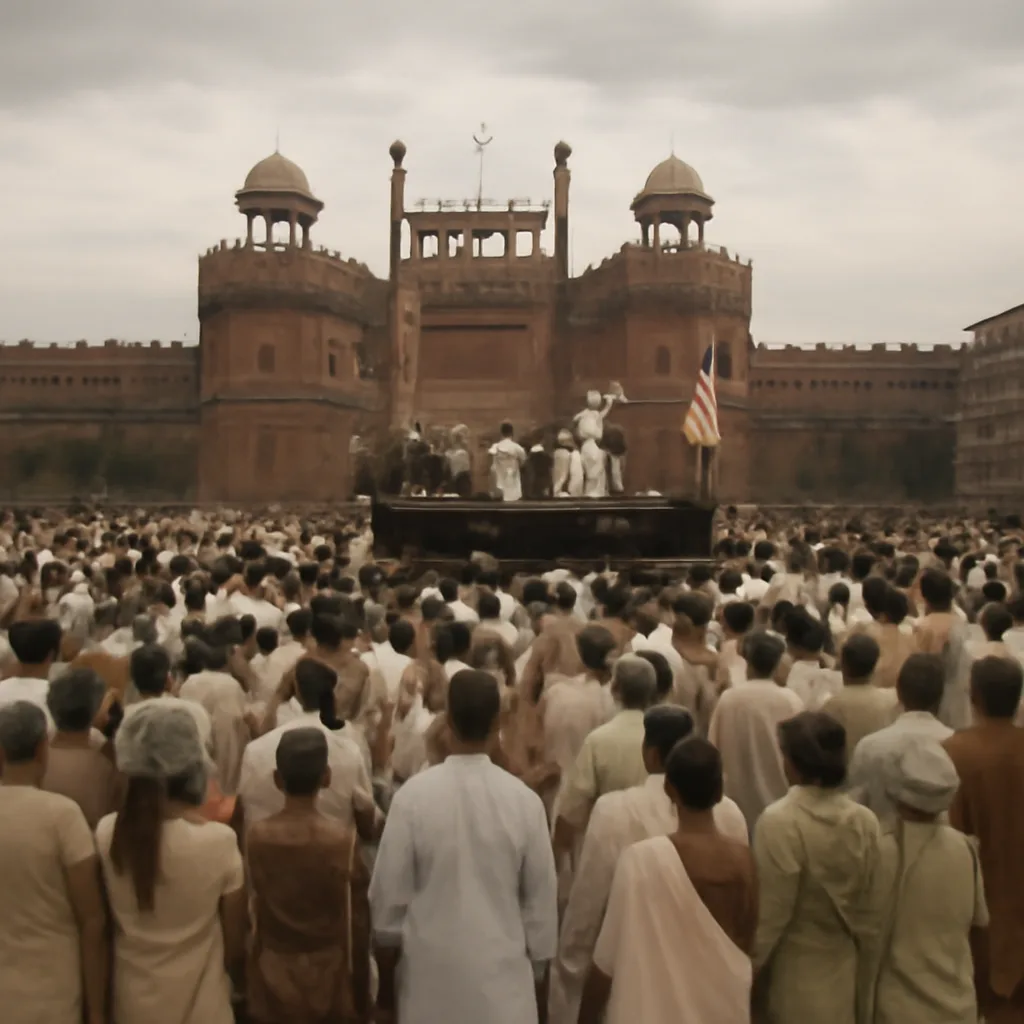
Crowd and flag-raising ceremony at New Delhi’s Red Fort on 15 August 1947, marking transfer of power from British rule to independent India (historic scene, non-identifiable faces).

On 15 August 1947, British colonial rule in most of India formally ended with the transfer of power that created two independent dominions, India and Pakistan, following decades of nationalist struggle and World War II–era negotiations.


On 15 August 1947, the Indian Independence Act 1947 came into effect, ending British sovereignty over most of British India and creating two independent dominions: the Union of India and the Dominion of Pakistan. The date followed prolonged political negotiations, wartime pressures, and sustained mass movements for self-rule led by the Indian National Congress, the All-India Muslim League, and numerous regional and social organisations.

Background

British presence in the Indian subcontinent had grown over centuries from trading posts to direct colonial administration under the British Crown after 1858. In the early 20th century, organized political movements pressed for constitutional reforms and ultimately full self-government. The struggle for independence combined constitutional negotiation, parliamentary politics, and mass nonviolent campaigns—most prominently those led by Mohandas K. Gandhi—alongside communal politics and occasional violence. World War II weakened Britain economically and politically, and the postwar Labour government in Britain signalled willingness to decolonise.

Negotiations and Partition

Attempts to reach a single constitutional settlement broke down amid competing visions for the subcontinent’s future. The All-India Muslim League, led by Muhammad Ali Jinnah, advanced the demand for a separate Muslim-majority state—Pakistan—arguing that Muslims would not have secure rights in a Hindu-majority independent India. The Indian National Congress largely sought a united, secular India but was divided internally on details. Mounting communal tensions, political deadlock, and widespread violence in 1946–47 convinced British authorities that partition was the only practicable path to a transfer of power.

Implementation

The British Parliament passed the Indian Independence Act in July 1947. That legislation set 15 August 1947 as the date when British suzerainty would end and sovereignty would pass to the two dominions. Lord Louis Mountbatten, the last Viceroy, oversaw the final administration and the hurried drawing of boundaries by the Boundary Commissions for Punjab and Bengal. The Radcliffe Line—the partition boundary—was announced just days before independence, precipitating large-scale population movements and communal violence.

Consequences

Independence brought the end of direct British rule, the establishment of new governments, and the start of independent constitutional development. India adopted a republican constitution in 1950, while Pakistan initially retained dominion status and later became a republic. The partition displaced an estimated 10–15 million people and coincided with communal violence that caused significant loss of life; scholarly estimates of fatalities vary and remain a subject of research and debate.

Legacy

15 August 1947 is commemorated in India as Independence Day, a national holiday marked by official ceremonies, including the Prime Minister’s address from New Delhi’s Red Fort, flag hoisting, and public remembrance. The events of 1947 continue to shape politics, society, and memory in South Asia—fueling narratives of nationhood, debates about minority rights, and scholarship on decolonisation, migration, and violence.

Notes on sources and uncertainties

This summary synthesises widely documented historical facts: the date and legal instrument (Indian Independence Act 1947), the creation of two dominions, and the major political actors and consequences. Numbers for migration and casualties around partition vary across studies; exact totals remain debated among historians.

Share this

Email Share on X Facebook Reddit

Did this surprise you?