
08/15/1945 • 5 views
Japan Announces Surrender, Ending World War II Fighting
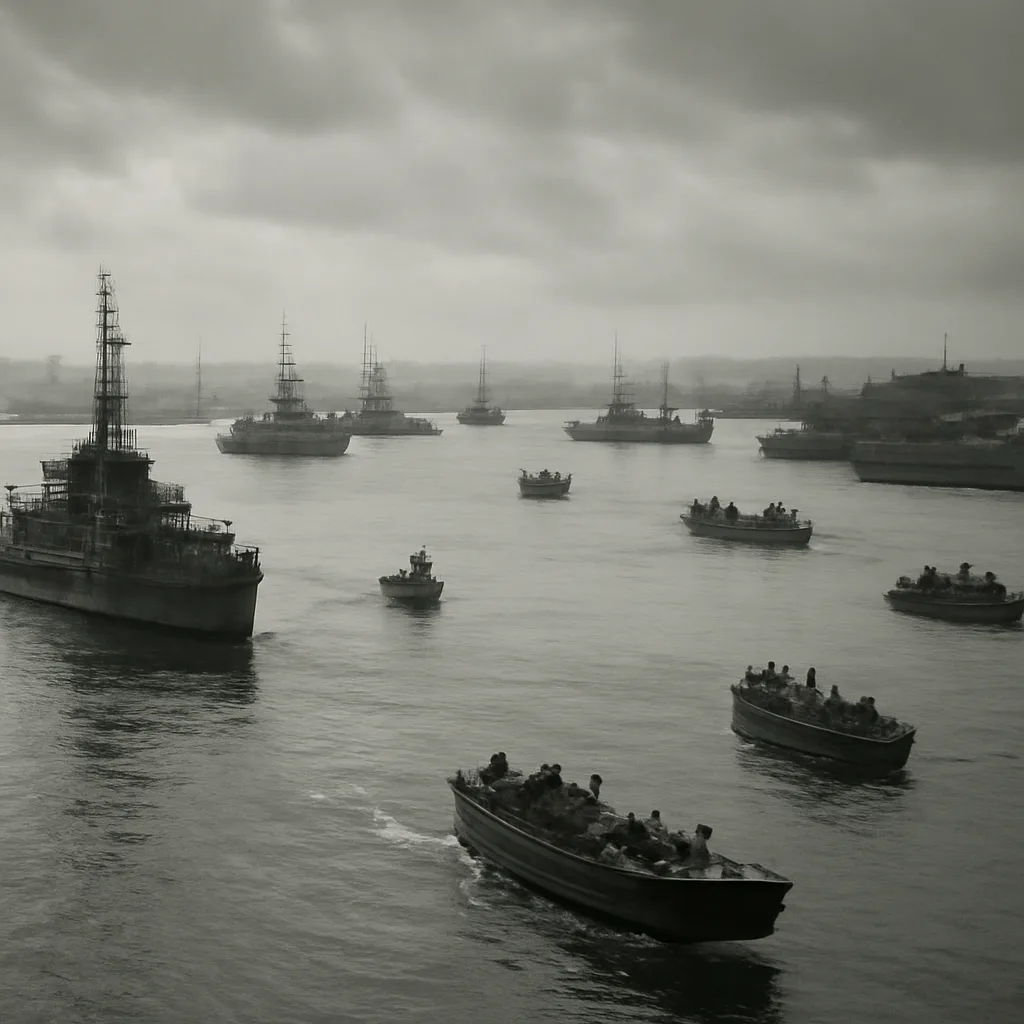
On August 15, 1945, Japan formally announced its surrender to the Allied powers, signaling the effective end of World War II fighting after years of global conflict and the atomic bombings of Hiroshima and Nagasaki.
The Emperor’s recorded address—unusual in Japan because it marked one of the few times his voice was heard publicly—framed surrender as necessary to “endure the unendurable” and to prevent further suffering. Though the broadcast signaled an immediate halt to planned offensive operations, the formal legal capitulation required additional steps. On August 14–15 (Allied dates vary by time zone), the Japanese government communicated its decision to the Allies. Allied leaders—President Harry S. Truman, British Prime Minister Winston Churchill (and later Clement Attlee after the Labour victory), and others—declared V-J Day (Victory over Japan Day) in response.
After the August announcement, the process of formal surrender continued: on August 28 Japan’s government ordered ceasefires and the dissolution of military resistance in many areas, but isolated fighting, confusion, and delays occurred in some regions and aboard ships. The official instrument of surrender was signed aboard the U.S. battleship USS Missouri in Tokyo Bay on September 2, 1945, by representatives of the Japanese government and the Supreme Commander for the Allied Powers, General Douglas MacArthur, along with delegates from Allied nations. That ceremony completed the legal and diplomatic process of Japan’s unconditional surrender and began the Allied occupation of Japan, which oversaw demilitarization, war crimes trials, and political and economic reforms.
The surrender ended nearly six years of Pacific and Asian war for Japan following its 1937 invasion of China and the wider conflict after the attack on Pearl Harbor in December 1941. The decision to surrender remains a subject of extensive historical study and debate, particularly regarding the relative influence of the atomic bombings, the Soviet entry into the war, internal Japanese politics, and strategic calculations by Japanese leaders. The consequences were profound: the loss of Japan’s overseas empire; Allied occupation and reconstruction; significant civilian and military casualties across Asia and the Pacific; and the beginning of postwar political realignment in East Asia.
Commemorations of August 15 vary by country and perspective. In Japan the day is remembered with reflection on wartime suffering and a focus on peace and reconciliation. Internationally, the surrender is marked as the close of the deadliest conflict in human history and a turning point that shaped the late twentieth century, including the emergence of the United States and the Soviet Union as superpowers and the onset of the Cold War.
Historians continue to examine primary sources—diaries, official records, diplomatic communications, and testimonies—to refine understanding of the decision-making that led to the surrender. While the Emperor’s broadcast on August 15 is widely accepted as the key public announcement that hostilities would end, the full process included subsequent military orders, the September 2 signing aboard USS Missouri, and the lengthy implementation of surrender terms across vast territories.