
08/15/1969 • 5 views
British troops intervene as Belfast sectarian rioting escalates
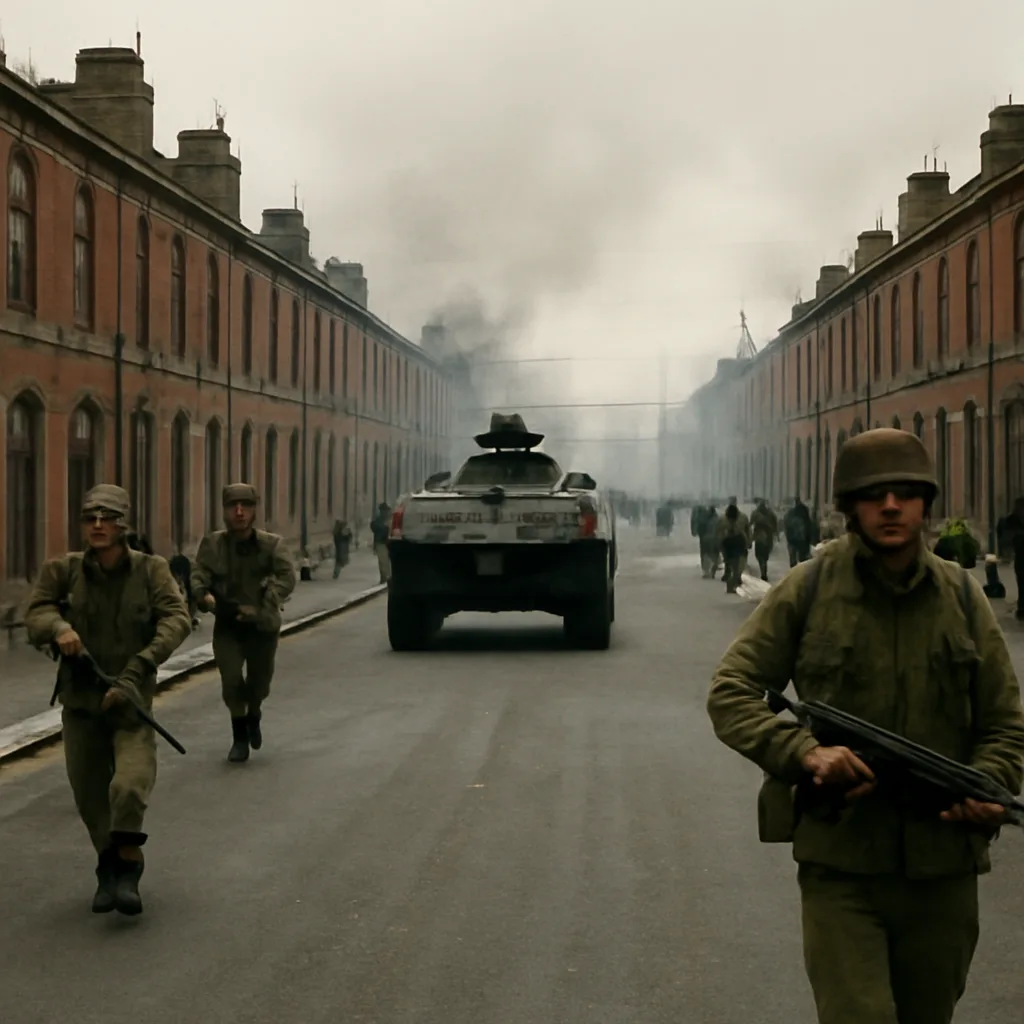
On 15 August 1969 British soldiers and armored vehicles moved into Belfast after days of sectarian clashes between Catholic and Protestant communities, marking a major escalation in the security response to Northern Ireland's communal violence.
The disturbances of August 1969 followed a summer of increasingly confrontational street activity. Civil rights marches demanding equal housing, voting rights and an end to gerrymandering had met with opposition and sometimes violent counter-protests. In early August, confrontations around marches and local flashpoints—especially in and around areas such as the Falls Road and Shankill Road in Belfast—had produced clashes between protestors and the Royal Ulster Constabulary (RUC), as well as episodes of communal violence between Protestant and Catholic residents.
The immediate trigger for the mid-August escalation included clashes during marches and attacks on homes and businesses. Reports from the time documented attacks and reprisals, petrol-bombings and the burning of houses, which prompted large-scale displacement of residents in several neighborhoods. The RUC struggled to contain the violence, and local authorities appealed for additional resources. In response, the British government ordered military troops to the city. Armored cars and soldiers patrolled streets, guarded key installations and assisted in evacuations and the protection of vulnerable communities.
The arrival of the British Army had mixed effects. For some residents—particularly Catholics who had experienced violence and felt unprotected by local police—the troops provided a measure of security and helped prevent further immediate attacks. For many Protestants, and others who feared an expanded military presence, the deployment was seen as controversial and alarming. The Army’s presence did not instantly restore calm: violence and tensions persisted in the weeks and months that followed, and the operation highlighted deeper political and social failures that contributed to the crisis.
The events of August 1969 are widely regarded as a turning point in Northern Ireland’s modern history. The deployment of British forces, initially framed as a temporary measure to restore order, preceded a much longer-term security role that lasted for decades. The August disturbances and the government's response intensified debates about policing, discrimination, and political representation in Northern Ireland and helped precipitate a period commonly referred to as the Troubles.
Historical accounts emphasize several enduring consequences: large-scale displacement of families, increased sectarian segregation in urban neighborhoods, and heightened mistrust between communities and between communities and state institutions. Contemporary sources and later historical studies document contested narratives about responsibility for violence, the adequacy of policing, and civilian experiences during the deployment. While the Army temporarily reduced some forms of street violence, it also became entangled in the wider conflict and its presence remained a subject of grievance and controversy for years to come.
Modern scholarship treats the August 1969 deployment as both an immediate response to urban disorder and a marker of deeper structural problems in Northern Irish society. Researchers point to housing and electoral inequalities, strained policing relations, and polarized political leadership as factors that shaped the crisis and the response. The complexities of that summer are reflected in a range of primary-source reports, eyewitness testimonies and later historical analyses that continue to be studied to understand the origins and escalation of the Troubles.