
← Back
02/22/1934 • 5 views

FBI Adds John Dillinger to First Most Wanted List
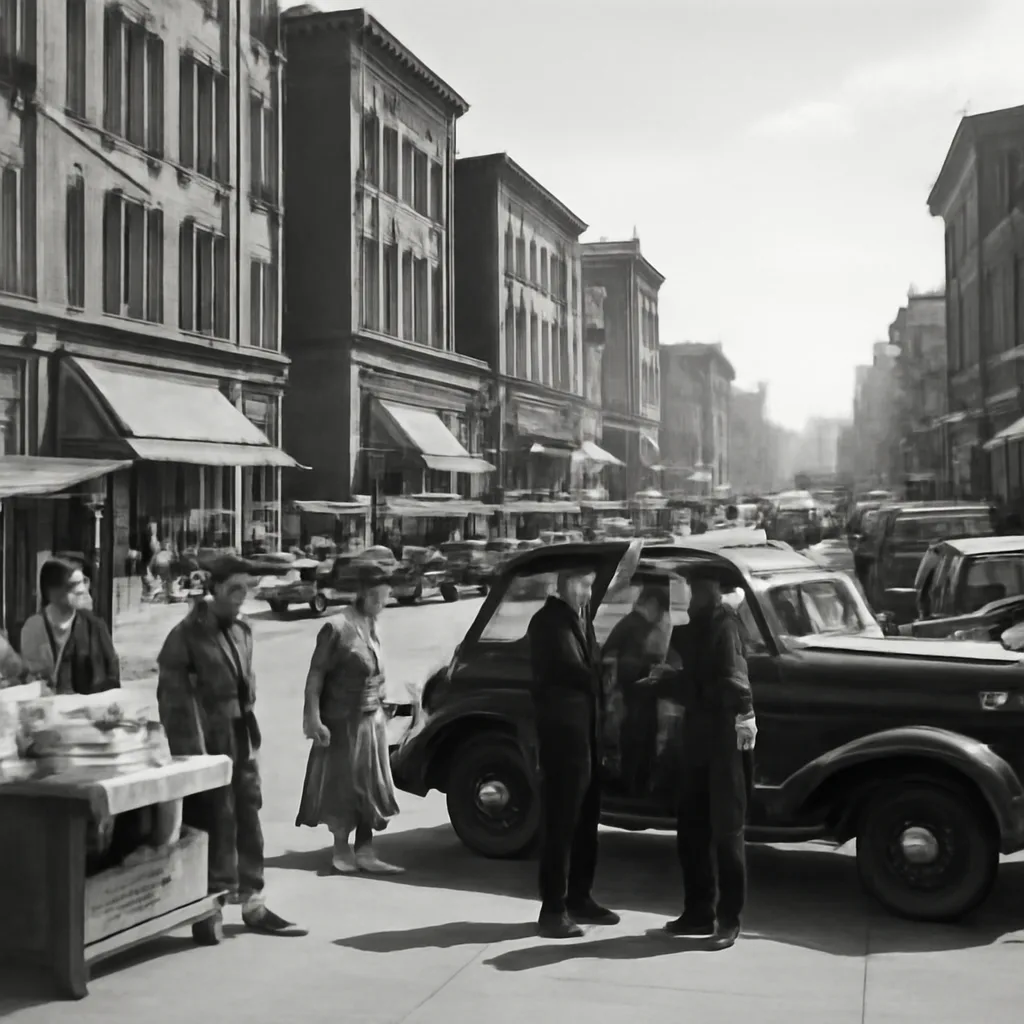
A 1930s Midwestern street scene with police cars and newspapers stacked at a vendor’s stand headlined about a bank robber; period automobiles and signage, no identifiable faces.

On Feb. 22, 1934, the FBI publicly placed John Dillinger on its inaugural Ten Most Wanted list, marking a new federal effort to enlist public help in capturing notorious Depression-era fugitives.


On February 22, 1934, the Federal Bureau of Investigation took the significant step of publicly identifying John Dillinger as one of the nation’s most dangerous fugitives. Dillinger, a Midwestern bank robber whose headline-making crimes and repeated prison escapes had captivated—and alarmed—the public during the early 1930s, became a focal point for a newly assertive federal law-enforcement strategy.

Context
By the early 1930s the United States was in the grip of the Great Depression. High-profile criminals such as Dillinger, Bonnie and Clyde, and other organized gangs committed bold bank robberies, jailbreaks, and violent confrontations with police. These incidents exposed limits in local law enforcement and prompted increased federal involvement. The FBI, under Director J. Edgar Hoover, expanded its investigative reach and sought ways to coordinate nationwide manhunts and to mobilize public assistance.

Dillinger’s notoriety
John Herbert Dillinger emerged from a series of escalating crimes. Convicted in Indiana in 1924 and again in 1929, he was sentenced to prison terms from which he escaped in 1933, after which he formed a gang and led a string of robberies across the Midwest. Dillinger’s methods—fast getaways, stolen cars, and dramatic prison escapes—received extensive press coverage, contributing to his reputation as a folk antihero to some and a dangerous criminal to others. The scale and mobility of his crimes made him a natural candidate for national attention.

The decision to list Dillinger
The FBI’s decision to include Dillinger on its list reflected both practical and symbolic aims. Practically, listing fugitives centralized information about their crimes and whereabouts, distributed to law-enforcement agencies and the public. Symbolically, placing well-known outlaws on a national wanted list showed the bureau’s determination to assert federal authority over interstate crime. The publicizing of Dillinger’s status invited citizens to report sightings, thereby extending investigative reach beyond the bureau’s personnel.

Impact and consequences
Public exposure increased pressure on Dillinger and his associates. The attention likely constrained his ability to remain hidden while also heightening sensational media coverage. Within months of being publicized, Dillinger was tracked and ultimately killed on July 22, 1934, outside the Biograph Theater in Chicago after an encounter involving federal agents and local law enforcement—an outcome historians link in part to the intensified nationwide efforts following his listing.

Historical significance
Placing Dillinger on a national wanted roster marked an early example of modern federal publicity-driven policing. The practice foreshadowed later formalized programs, including the FBI’s later Ten Most Wanted Fugitives list (officially established in 1950), which institutionalized the use of public appeals and mass publicity to capture suspects. The 1934 listing of Dillinger reflects both law-enforcement adaptation to interstate crime and the evolving relationship among the FBI, media, and the public during a turbulent era.

Notes on sources and certainty
Contemporary newspapers, FBI records, and later historical studies document Dillinger’s crimes, escapes, and the bureau’s efforts to publicize and pursue him. Some details of internal decision-making within the FBI reflect institutional priorities under J. Edgar Hoover and are drawn from available archival materials; where specifics of internal discussions are not preserved, historians rely on correspondence, memos, and later agency histories to reconstruct motivations. No fabricated quotes or invented documents are used in this summary.

Share this

Email Share on X Facebook Reddit

Did this surprise you?