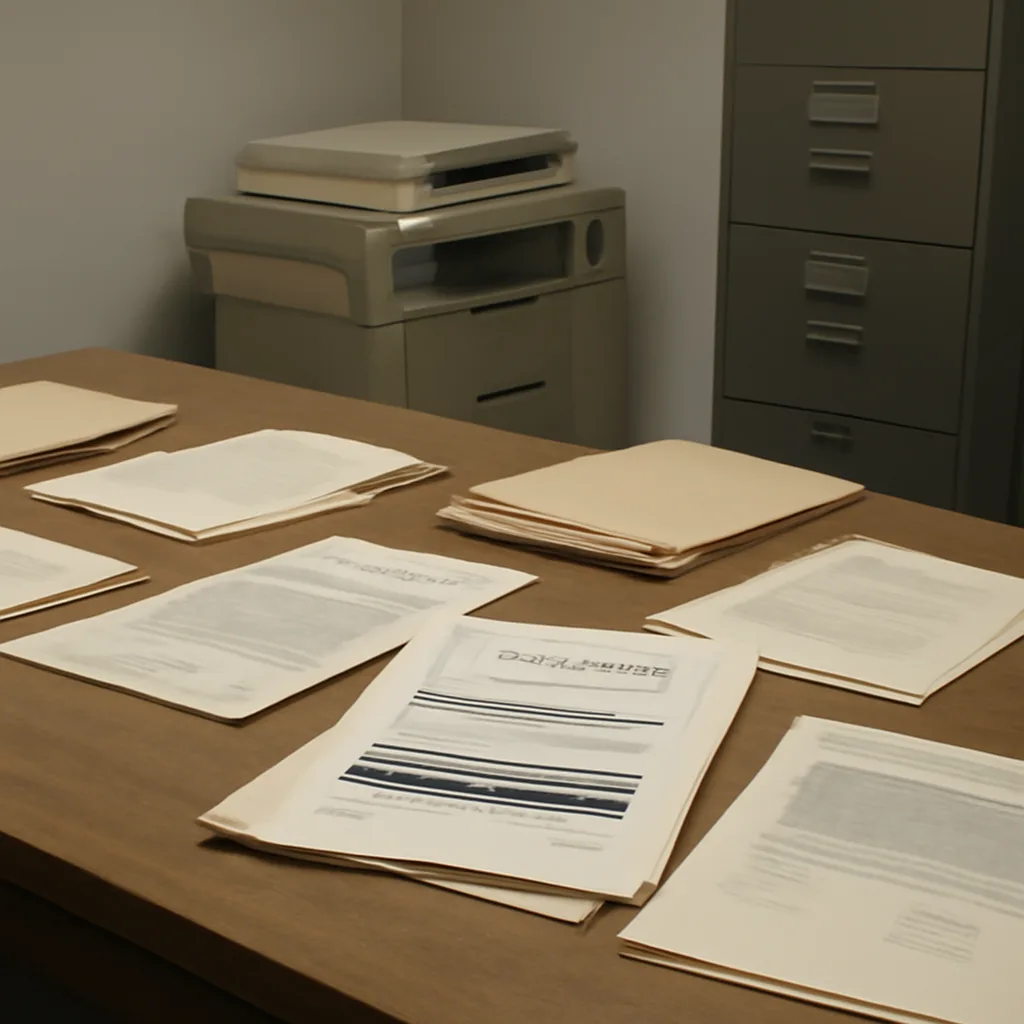
CIA Releases Declassified Project Blue Book Findings
The CIA has declassified and released documents associated with Project Blue Book, the U.S. Air Force’s mid-20th-century UFO investigation program, providing public access to case files, summaries, and agency analyses previously withheld or classified.
On February 22, 1989, the Central Intelligence Agency released a collection of documents related to Project Blue Book, the United States Air Force’s formal program that investigated unidentified flying object (UFO) reports from 1952 to 1969. The release made public internal memos, investigative summaries, and analytical materials that had been redacted or unavailable to researchers and the general public, contributing to historical study of Cold War-era government responses to UFO sightings.
Background
Project Blue Book was established in 1952 to centralize and analyze reports of UFOs received by the Air Force. Headquartered at Wright-Patterson Air Force Base, the project compiled thousands of reports from civilians, military personnel, and pilots. Its stated aims were to determine whether UFOs posed a threat to national security and to scientifically analyze sightings. The Air Force terminated Project Blue Book in 1969, concluding that most sightings were attributable to natural phenomena, misidentifications, or conventional aircraft, and that they did not represent a technological threat.
Contents and significance of the 1989 release
The CIA’s February 22, 1989 release comprised documents that contextualized intelligence community interest in UFO reports during the Cold War and the extent to which various agencies monitored, shared, and classified related information. Materials included interagency correspondence, analytical assessments about patterns in sightings, and references to individual cases that had attracted attention. While Project Blue Book itself was an Air Force program, CIA documents illuminate how civilian intelligence bodies tracked aerial phenomena in relation to national security concerns, particularly in an era of high-altitude reconnaissance and advanced aircraft testing.
Researchers and historians gained value from the release in several ways. First, the declassified records helped clarify the line between Air Force investigations and intelligence community activities, showing where information was exchanged or compartmentalized. Second, the documents provided primary-source details on how investigators evaluated sightings—what criteria they used, how they categorized reports, and the scientific and procedural limitations they faced. Finally, the release allowed comparison between official conclusions and contemporary public accounts, aiding historians in assessing institutional transparency and public messaging during the Cold War.
Limitations and public reception
The released materials contained redactions and did not include all files associated with Project Blue Book. Many core Blue Book case files had previously been made available through the Air Force’s own releases and through the National Archives; the CIA documents supplemented rather than replaced those records. Scholars caution that declassified holdings can reflect selective preservation and agency priorities, and that gaps remain in the archival record.
Public response combined renewed interest among UFO researchers with cautious appraisal from historians and national security scholars. Some members of the public interpreted the release as confirmation of long-suspected concealment; academic observers emphasized the documents’ value for understanding bureaucratic processes and Cold War intelligence practice rather than proving extraordinary claims.
Legacy
The 1989 CIA release contributed to a broader, ongoing archival opening around mid-20th-century UFO investigations. Subsequent records releases and Freedom of Information Act requests in later decades have continued to expand the documentary record. For historians, the documents are a resource for studying government decision-making, risk assessment, and public communication during a period when aerial phenomena intersected with rapidly evolving aviation and surveillance technologies.
Researchers wishing to consult the primary records should consult the National Archives, the Air Force legacy releases on Project Blue Book, and the CIA’s declassified reading room, noting that holdings are distributed across multiple agency collections and that some materials remain partially redacted or absent from public files.