
12/12/2015 • 6 views
NASA Confirms Seasonal Liquid Water Flows on Mars
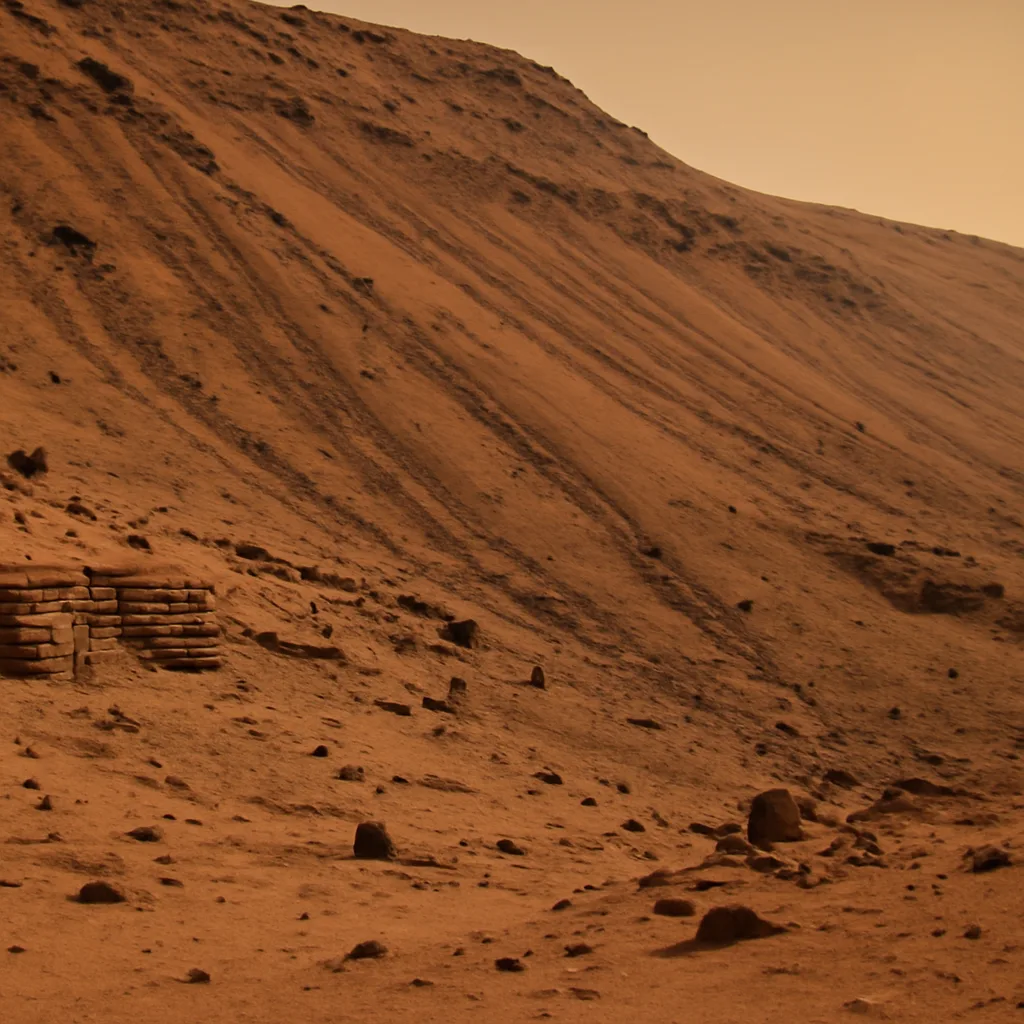
NASA scientists announced evidence that dark streaks on Martian slopes are formed by seasonal flows of briny liquid water, based on recurring slope lineae observations and spectral detection of hydrated salts.
Key data came from instruments aboard NASA orbiters, notably the Mars Reconnaissance Orbiter (MRO). Narrow streaks were monitored over several martian years with the High Resolution Imaging Science Experiment (HiRISE) camera, which documented the seasonal appearance, lengthening, and fading pattern consistent with a flow process. In addition, the Compact Reconnaissance Imaging Spectrometer for Mars (CRISM) detected signatures of hydrated salts—perchlorates and related salts—at several RSL sites. These salts lower the freezing point of water and can deliquesce (absorb atmospheric moisture) or enable brines to remain liquid at the cold, low-pressure conditions on Mars.
NASA framed the result cautiously: the spectral detections were of hydrated salts associated with the dark streaks rather than direct spectroscopic detection of liquid water. The interpretation—that the salts stabilize transient brines which darken and flow downslope—rested on combining morphological, seasonal, and compositional evidence. Alternative explanations, such as dry granular flows triggered by sublimation or other physical processes, have been proposed and discussed within the scientific community. The 2015 announcement emphasized that while the evidence strengthened the case for transient liquid brines, it did not demonstrate large bodies of standing water or permit conclusions about biologically habitable environments.
The implications were immediate for Mars science and exploration policy. Liquid water—even in salty, transient form—affects understanding of current surface processes, the planet’s hydrologic cycle, and potential geochemical niches. For astrobiology, the presence of transient brines raised questions about whether such microenvironments could support microbial life, but scientists stressed that the conditions inferred (high salinity, low temperature, transient duration, and surface exposure) are harsh and not demonstrably habitable.
The finding also influenced planetary protection and mission planning. Sites with RSL were flagged as regions where contamination by Earth microbes from spacecraft should be avoided or tightly controlled. Future missions seeking evidence of extant life or past habitable environments would need to account for the potential mobility of water-related processes and prioritize careful site selection and sterilization protocols.
Subsequent work continued to test and refine the 2015 interpretation. Some later studies questioned whether all RSL are caused by liquid brines, suggesting varied mechanisms across different sites. Others sought higher-quality spectral detections or in situ observations to resolve remaining ambiguities. As of the 2015 announcement, the consensus among the mission teams was that the best available evidence pointed to briny liquid activity on Mars today, while recognizing that definitive, direct detection of liquid water on the surface would require further measurements.
In summary, NASA’s 12 December 2015 announcement marked a significant update: recurrent dark streaks on warm Martian slopes are associated with hydrated salts, supporting the interpretation that transient, salty liquid water forms and flows seasonally in some locations. The result advanced scientific understanding of contemporary Martian processes while prompting careful, ongoing investigation into the exact nature, extent, and implications of those flows.