
← Back
12/12/1965 • 5 views

1965 Soviet Nuclear-Weapon Accident Nearly Escalates into Disaster
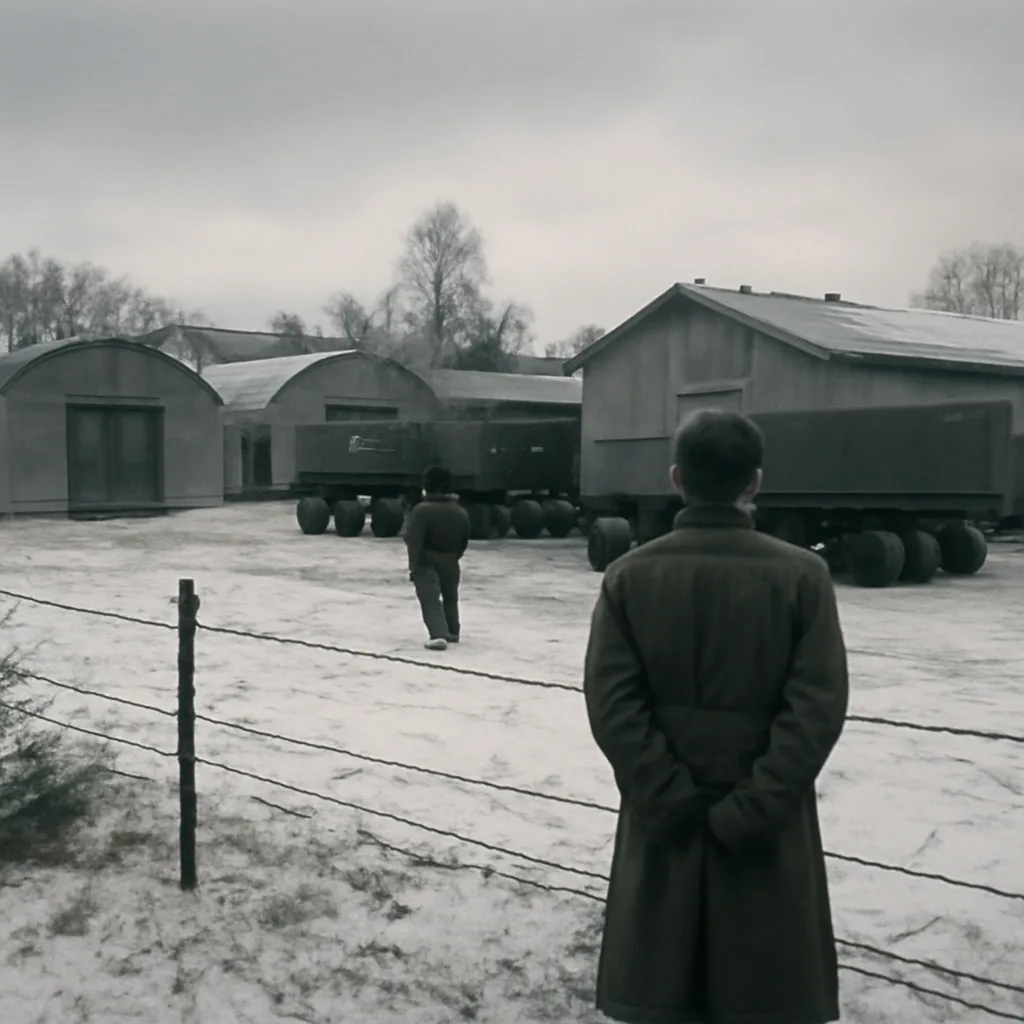
Cold War-era Soviet military storage area with transport trailers and guarded perimeter near missile or weapons depot; overcast sky, snow on ground, sparse conifer trees.

On December 12, 1965, a Soviet missile-related nuclear-weapon accident during storage and handling at a military site nearly led to a catastrophic release or unintended detonation; details remain disputed in declassified records and memoirs.


On 12 December 1965 Soviet military personnel experienced a serious nuclear-weapon accident during handling and storage operations at a missile or weapons depot. Contemporary Western reporting and later declassified and memoir-based Soviet-era sources describe an incident in which conventional explosions, fires, or mechanical failures endangered nuclear warheads. While there is no single definitive official account released publicly by Soviet authorities at the time, multiple fragments of evidence and retrospective research indicate the event posed a real risk of nuclear yield or dispersal of radioactive material.

Context
During the mid-1960s the Soviet armed forces were rapidly expanding and operating large inventories of nuclear warheads for ballistic missiles and tactical systems. Safety practices, transport and storage infrastructure, and human procedures varied across units and facilities. Western intelligence and later archival researchers have documented a number of accidents in the Soviet nuclear complex in the same era, including incidents that involved fires, conventional explosions near warheads, or improper handling—situations that can, in certain circumstances, lead to partial detonation of conventional explosive components in a warhead or to dispersal of radioactive material even when a nuclear chain reaction does not occur.

What reportedly happened
Accounts differ on specifics—sources variously identify the site as a missile base or weapons storage depot and describe triggers such as a fuel fire, a maintenance mishap, or an accidental detonation of conventional explosives associated with a warhead’s firing system. According to later investigative work by Western analysts and by historians of the Soviet nuclear complex, an on-site conventional explosion or intense fire damaged at least one assembled nuclear device or its components. Procedures and emergency responses by Soviet personnel appear to have limited the event’s escalation: damage control and cooling efforts, or the fact that the nuclear core and high explosives were not in a configuration to produce a nuclear yield, prevented a nuclear detonation. Some sources report localized contamination or loss of the damaged device, but the scale and health consequences remain unclear and are disputed.

Uncertainties and sources
No comprehensive, fully declassified Soviet official narrative is available for this December 1965 episode; much of the public record rests on Western intelligence summaries, contemporaneous press reports, memoirs of Soviet engineers and military personnel published after the USSR’s dissolution, and secondary historical analysis. These sources sometimes conflict on the precise location, the number and type of warheads involved, and the level of radioactive release, leaving important questions open. Historians caution against equating conventional explosions or damage to a warhead with a nuclear detonation—Soviet and U.S. weapon designs include safety features that make full nuclear yield from accidental mechanical disturbance unlikely, but accidental dispersal of radioactive materials (a “dirty” accident) has occurred in other documented incidents and remains a serious hazard.

Consequences and legacy
The immediate military response appears to have prioritized containment and secrecy. If contamination occurred, cleanup would have followed established Soviet military protocols, often involving removal, burial or concealment, and internal reporting rather than public disclosure. Long-term implications include contributions to Cold War-era risk assessments by both NATO and Soviet planners and to later efforts—post-Cold War—to catalog and study ‘‘broken arrow’’ and other nuclear-accident incidents worldwide. The 1965 event is one of several Soviet accidents that informed later safety reforms, though the degree to which these specific reforms trace directly to this incident is not fully documented.

Why it matters
The December 1965 accident illustrates persistent dangers posed by nuclear arsenals even when strategic doctrine focuses on deterrence. It underscores how mechanical failure, human error, and conventional explosions can create grave risks distinct from intentional nuclear use. The fragmentary and contested nature of available records also highlights the challenge historians face in reconstructing Cold War nuclear history: secrecy, competing intelligence narratives, and limited archival release mean some episodes remain incompletely understood.

For readers seeking further detail, authoritative discussions of Cold War nuclear accidents can be found in declassified government accident summaries, scholarly histories of Soviet nuclear forces, and compilations of ‘‘broken arrow’’ incidents, always noting where accounts are uncertain or disputed.

Share this

Email Share on X Facebook Reddit

Did this surprise you?