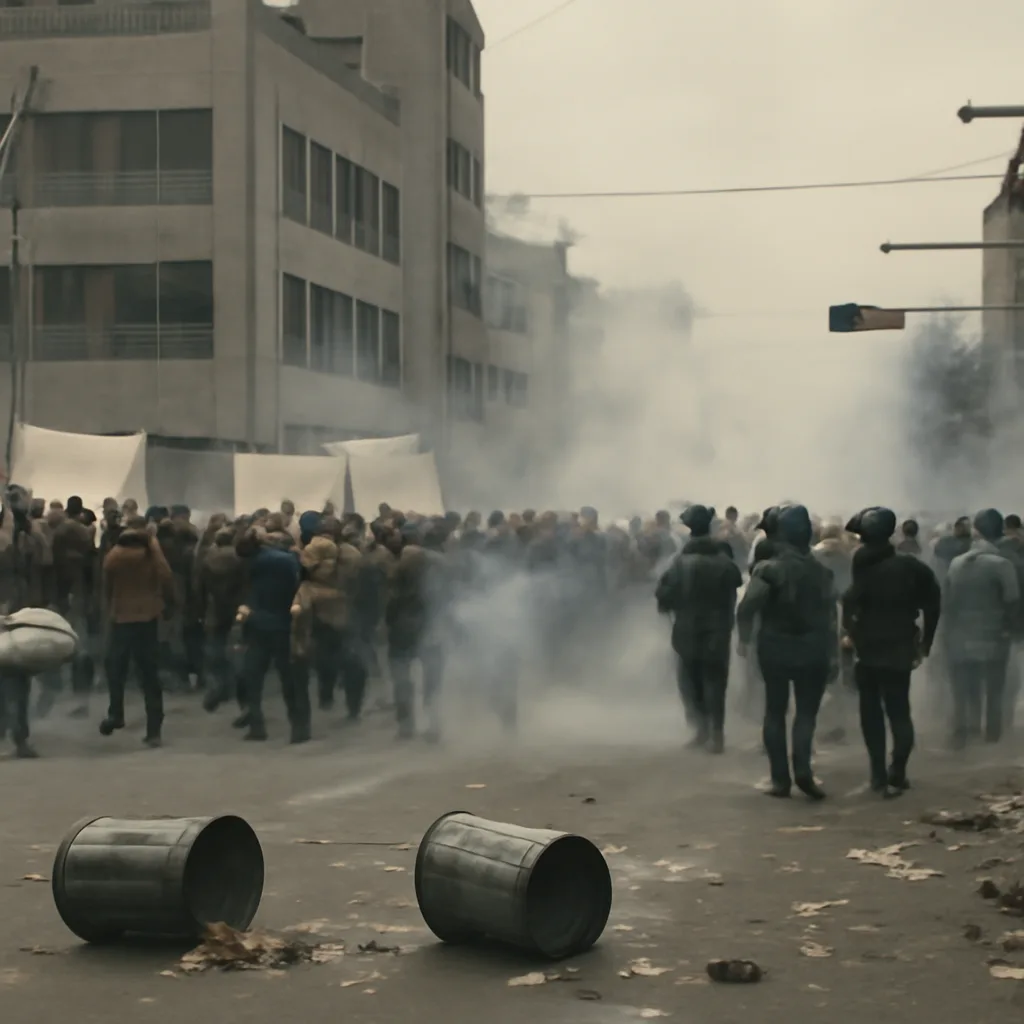
1980 South Korean Military Crackdown Suppresses Mass Protests
In December 1980, South Korea’s ruling military authorities violently suppressed widespread pro-democracy demonstrations, most notably in Gwangju earlier that year and continuing unrest nationwide, resulting in deaths, arrests, and long-term political repercussions.
In December 1980, South Korea remained under strict military-dominated rule following a year of political upheaval that included the May–June 1980 Gwangju uprising. After the assassination of President Park Chung-hee in 1979, power struggles culminated in a military coup led by Chun Doo-hwan. Throughout 1980, the regime tightened security, imposed martial law in extended regions at different times, and sought to stamp out opposition. December saw continued enforcement actions against remaining protest activity, labor strikes, student demonstrations, and political dissent.
The junta used a combination of legal measures, mass arrests, and forceful dispersals to quell public demonstrations. Security forces detained thousands of activists, student leaders, journalists, and suspected dissidents in broad rounds of arrests that human rights groups later criticized for lacking due process. Martial law courts and emergency regulations were used to sentence many detainees swiftly. Official casualty figures from the period vary by source; independent investigations, eyewitness accounts, and human-rights organizations documented fatalities, injuries, and reports of torture and ill treatment in detention, while exact numbers remain contested in historical records.
The crackdown aimed to eliminate organized opposition, reassert central control, and stabilize a regime that feared popular mobilization. Economic concerns, Cold War geopolitics, and domestic elites’ desire for order shaped the junta’s approach. International responses were mixed: some governments expressed concern about human-rights violations and urged restraint, while geopolitical considerations — including anti-communist alignment — complicated concerted pressure on the Seoul government.
December 1980 and the broader suppression of that year had significant political and social consequences. The repression intensified anti-regime sentiment among students, workers, and intellectuals, fueling clandestine organizing and strengthening pro-democracy networks that persisted through the 1980s. Over time, domestic opposition, combined with changing economic conditions and international pressure, contributed to South Korea’s gradual transition toward democratization, culminating in direct presidential elections and broader political reforms in the late 1980s.
The events of 1980 remain a sensitive and contested chapter in South Korean history. Investigations, memorials, and scholarship in subsequent decades have sought to document abuses and honor victims, but precise casualty counts and details of specific incidents continue to be debated among historians, survivors, officials, and families. Contemporary South Korea recognizes the significance of this period in its democratic development, while legal and historical efforts to clarify and adjudicate past abuses have continued into the 21st century.