
← Back
12/06/1956 • 7 views

‘Blood in the Water’: Hungary vs. USSR, 1956 Melbourne Olympics Water Polo Match
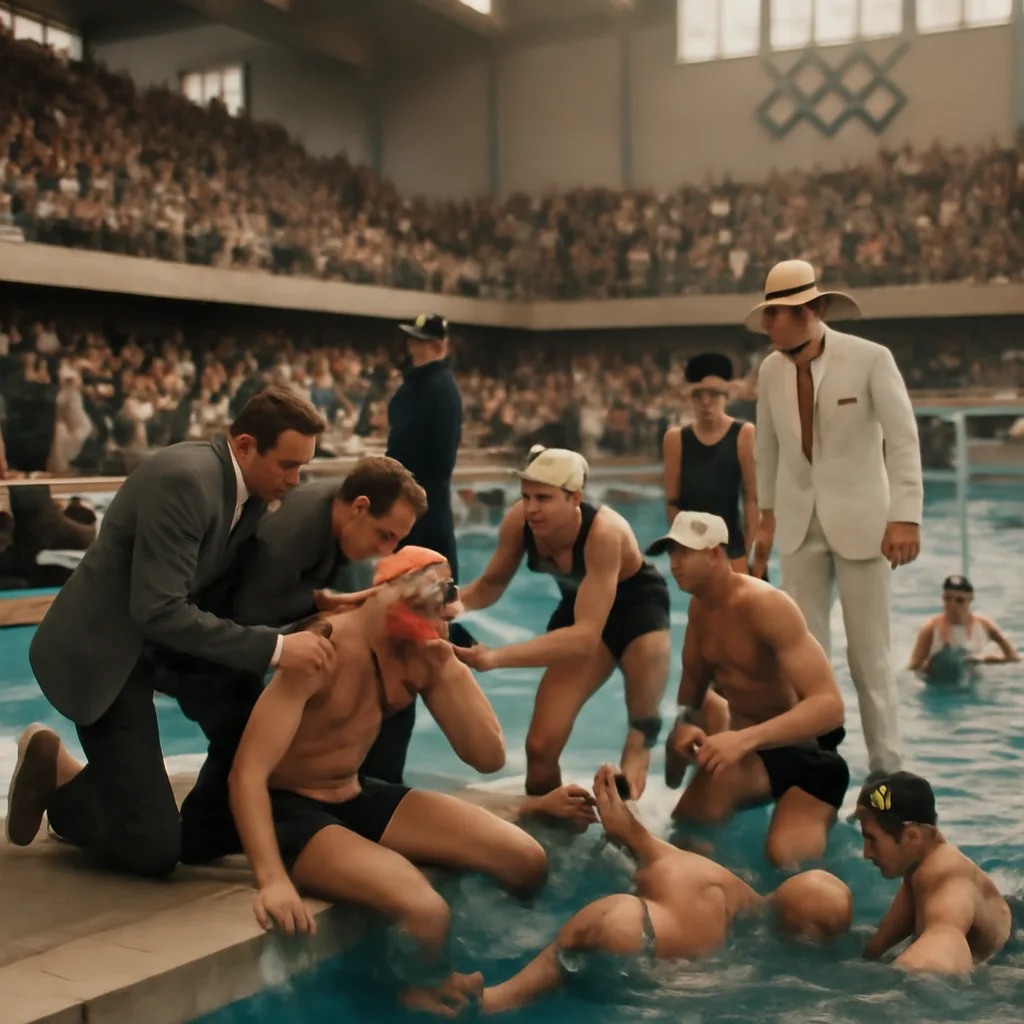
Poolside view of a crowded 1950s Olympic indoor swimming arena during a water polo match, with players in mid-play and a visible cut forehead on a Hungarian player exiting the pool.

At the Melbourne Olympics on December 6, 1956, Hungary defeated the Soviet Union 4–0 in a water polo semi-final that turned violent after the recent Soviet suppression of the Hungarian Revolution; a match became emblematic of Cold War tensions and remains known as the 'Blood in the Water' game.


On December 6, 1956, less than three weeks after Soviet forces crushed the Hungarian Revolution, Hungary and the Soviet Union met in the water polo semi-final at the Melbourne Olympic Games. The match, played before an emotionally charged international audience, escalated beyond sport and became a potent symbol of the political and psychological fallout of the uprising and its suppression.

Context
The Hungarian Revolution began in late October 1956 as a nationwide revolt against Soviet control and the communist government in Hungary. Soviet forces moved in during early November to suppress the uprising. News of the crackdown reverberated through the Olympic Village in Melbourne, where many Hungarian athletes were present amid uncertainty about friends and family back home. The Hungary–USSR water polo match occurred in this fraught atmosphere and was widely viewed as more than a contest for a place in the final.

The match
Hungary led 4–0 when tensions boiled over late in the game. Physical play, hard fouls and confrontations between players became increasingly common throughout the match, but a notorious incident occurred in the closing minutes when Hungarian player Ervin Zádor was punched by a Soviet opponent, opening a cut above his eye. Photographs and news reports showing Zádor bleeding and exiting the pool circulated widely, which led contemporary press to dub the contest the “Blood in the Water” match. The match was called off early to prevent further violence and Hungary advanced to the final, where they won the Olympic gold medal.

Aftermath and significance
The match resonated far beyond the pool. For many observers, the Hungarian victory and the violent episode were viewed through the lens of the recent political events: a sporting assertion of national pride and defiance against the Soviet state. Several Hungarian athletes chose not to return to Hungary after the Games; some sought asylum in Western countries. The incident entered Cold War cultural memory and has been recounted in sports histories, documentaries, and journalism as an example of how international sport can reflect and amplify geopolitical conflict.

Historical notes and cautions
Contemporary accounts and later histories generally agree on the basic facts—date, score, Zádor’s injury and the political context—but some details in reporting at the time were shaped by highly polarized perspectives. While the episode has been widely dramatized, primary sources and photographic evidence support the core narrative without endorsing exaggerated or fictionalized elements. The match remains notable both for its direct physicality and for the symbolic weight it carried amid one of the Cold War’s sharpest confrontations.

Share this

Email Share on X Facebook Reddit

Did this surprise you?