
12/04/1997 • 6 views
Man Survives After Being Crushed Between Two Trains
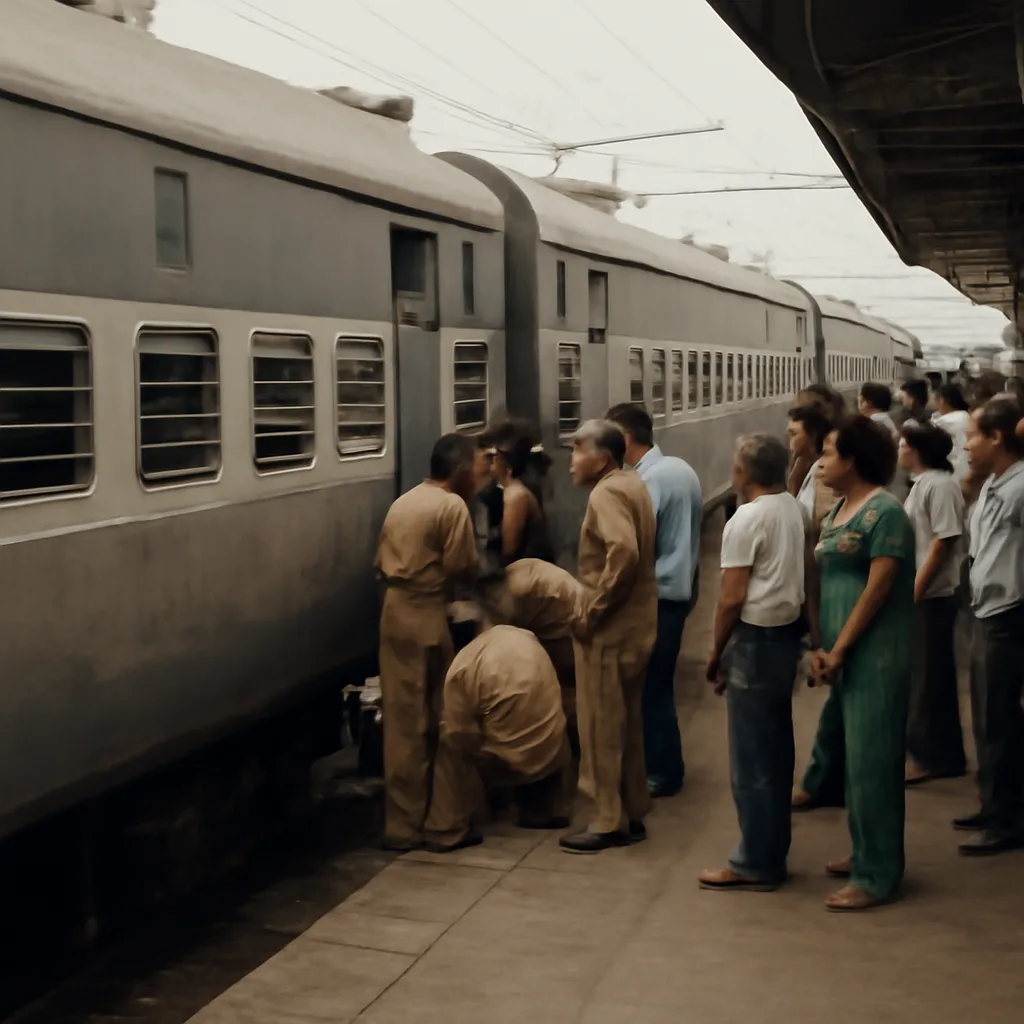
On December 4, 1997, a man in India survived being trapped and crushed between two trains after falling from a carriage; he was rescued by railway workers and taken to hospital with serious injuries but later recovered. Reports at the time highlighted both the rarity of the survival and concerns about platform safety and crowding.
Medical and emergency details were limited in public reports, but journalists on the scene noted that the man suffered severe crushing injuries and fractures consistent with being compressed between two heavy, moving vehicles. Local hospitals treated him for those injuries; subsequent updates indicated he survived, though recovery required extended medical care. Exact information about his identity, long-term condition, and whether he had permanent disability was either not published or remained unclear in contemporaneous reporting.
The incident drew attention to recurring safety challenges on India's rail network in the 1990s, including overcrowding, passengers traveling on footboards or hanging from doors, and insufficient platform management at busy stations. Advocacy groups and some media outlets used the episode to call for better enforcement of boarding rules, improved platform crowd control, and investment in passenger education. Railway officials responding to press inquiries emphasized efforts to increase patrols and improve station procedures, while noting the difficulty of fully preventing falls or accidents when passengers ignore safety warnings.
Eyewitness descriptions varied: some reported that the man lost his balance while boarding or alighting and fell into the small space between the two trains, possibly as one train began to move; others suggested he may have slipped from a footboard or between cars. Such discrepancies were common in chaotic incidents involving moving trains and crowded platforms, and available public reports did not settle the exact sequence of events.
Survival after being crushed between trains is rare but documented in isolated cases; medical outcomes depend on factors including the weight and speed of the trains, the duration of compression, immediate availability of rescue, and quality of emergency care. In this 1997 case, the relatively rapid extrication by railway personnel and local responders likely improved the man’s chances compared with scenarios in which victims remain trapped for longer periods.
The episode remains an example cited in discussions of rail safety from that period. It underscored the human cost of systemic issues such as overcrowded services and inconsistent enforcement of safety measures. While later reforms and continued investment have aimed to reduce similar incidents, accidents involving falls from trains and entrapment have persisted sporadically in India and elsewhere, often prompting renewed calls for infrastructure upgrades, better passenger information, and stricter station management.
Because contemporary reporting did not provide a full medical or legal follow-up in the public record, several details about the victim’s identity, long-term outcome, and any subsequent policy changes directly tied to this single incident remain uncertain or unverified in accessible sources.