
12/13/1918 • 6 views
Germany Signs Armistice Documents, Ending World War I Hostilities
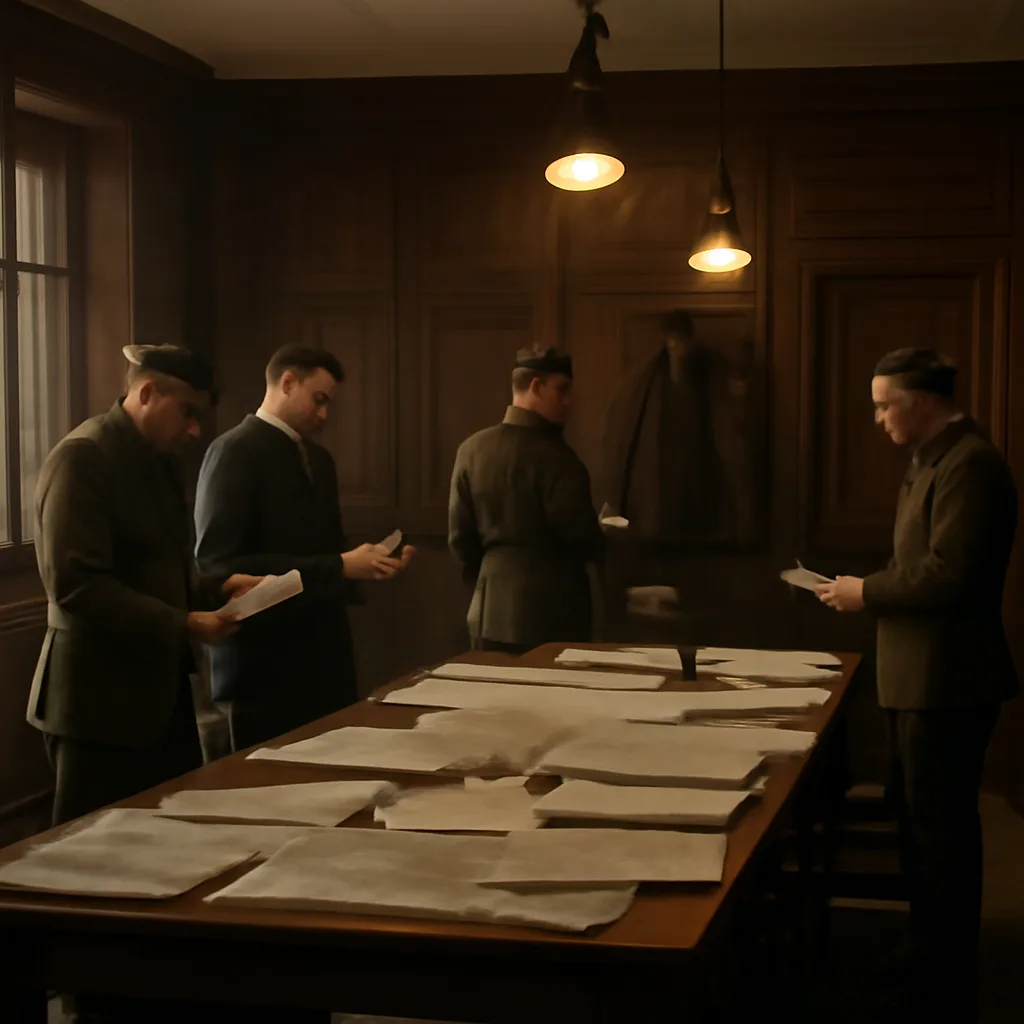
On December 13, 1918, German representatives signed armistice documents formalizing the cessation of large-scale hostilities from World War I after the November 11 ceasefire, marking a step toward negotiated peace and the postwar settlement.
Background
By late 1918 the German military situation had become untenable. A series of Allied offensives, combined with internal unrest, shortages and collapse of German political cohesion, led the German government to seek an armistice. On November 11, 1918, Germany and the Allied Supreme War Council reached an armistice at Compiègne, France, which specified cessation of hostilities and conditions for withdrawal, disarmament and the release of prisoners.
The December 13 documents
The paperwork executed on December 13 addressed procedural, administrative and legal formalities needed to implement the armistice terms across occupied areas, transport lines and demobilizing units. Such documentation codified aspects like timetables for withdrawal from occupied territories, the handing over of military matériel, the treatment and repatriation of prisoners of war and the supervision mechanisms to ensure compliance. These formal instruments were part of the process that prepared the ground for subsequent negotiations leading to the Treaty of Versailles in 1919.
Immediate consequences
Although the armistice had already ended major combat, the December formalization helped stabilize conditions on the ground by clarifying responsibilities for occupation zones, restoring certain civilian functions, and facilitating the movement of troops and relief supplies. It also provided a legal basis for the Allies to monitor German compliance and to address violations. For Germany, the documents represented further steps in a difficult transition from imperial war governance to a civilian-led republic coping with military disarmament and political upheaval.
Wider significance
The armistice documents of late 1918—both the initial agreement of November 11 and follow-up formalizations such as those on December 13—set the terms for the cessation of hostilities and the conditions under which a formal peace would be negotiated. They left unresolved many political and economic questions that later surfaced in the Treaty of Versailles and in postwar German politics. The period marked the end of four years of industrialized warfare in Europe and the beginning of a fraught and contested peacemaking process.
Notes on sources and interpretation
Contemporary records, diplomatic correspondence and military documents from late 1918 show that a series of administrative and legal steps followed the November armistice to implement its provisions. Specific phrasing and the exact contents of administrative documents varied by theatre and issuing authority; historians rely on archives of the Allied and German governments, military dispatches and contemporary press reports to reconstruct those formalizations. Where documentary detail is sparse or contested, historians note differences in interpretation rather than assert unverifiable specifics.