
← Back
04/17/1917 • 6 views

Pioneering Facial Reconstruction Surgery Performed on April 17, 1917
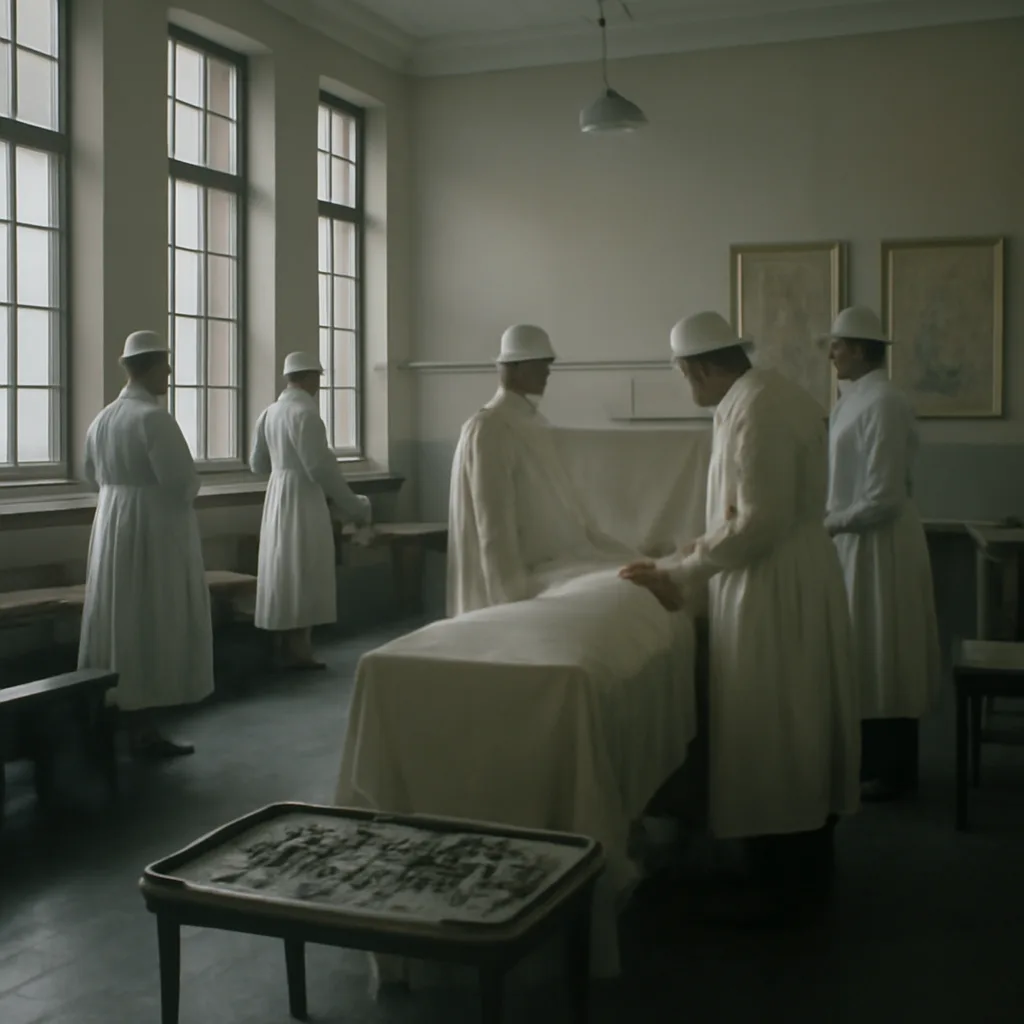
Early 20th-century hospital ward with medical staff attending to a patient and surgical instruments on a tray; period-appropriate uniforms and equipment, no identifiable faces.

On April 17, 1917, surgeon Harold Gillies performed one of the first documented successful facial reconstruction operations on a British soldier disfigured in World War I, marking a turning point in plastic surgery and wartime medical care.


On April 17, 1917, New Zealand-born British Army surgeon Harold Gillies carried out an operation that is widely cited as one of the first successful facial reconstruction surgeries in modern medical history. The patient, a soldier wounded in World War I with severe facial injuries, was treated at Queen’s Hospital in Sidcup, a centre Gillies established and where he developed techniques that would form the foundation of modern plastic and reconstructive surgery.

Context and need

The mass casualties and new weapons of industrialized warfare in World War I produced unprecedented numbers of severe head and facial injuries. Conventional surgical approaches could often close wounds but left devastating functional and aesthetic defects. In response, Gillies and a small group of colleagues organized specialized care at hospitals devoted to facial injuries, combining surgical innovation, careful wound care, staged operations, and collaboration with prosthetists and artists to restore form and function.

The operation and its significance

Gillies’ procedures drew on principles of tissue transfer and staged reconstruction. Rather than attempting a single radical operation, he favored planned, incremental surgeries that moved or grafted living tissue to rebuild nasal, cheek, and jaw structures. The April 17, 1917 procedure is notable in historical accounts because it demonstrated that complex reconstruction of facial defects could succeed in restoring both appearance and essential functions such as breathing and eating. It thus helped establish reconstructive surgery as a distinct specialty and influenced techniques for flap design, tissue healing, and postoperative rehabilitation.

Outcomes and subsequent developments

The patient treated by Gillies underwent multiple subsequent procedures—typical for the era—to refine results. Gillies documented cases, shared techniques, and trained a generation of surgeons; his work at Sidcup and later at other centres led to standardized approaches to facial reconstruction. Over the following decades these methods evolved with advances in anesthesia, asepsis, microsurgery, and imaging, but the fundamental emphasis on staged, principle-driven reconstruction traces directly to the practices developed during and after the First World War.

Historiography and caveats

Attributing a singular “first” facial reconstruction to a specific date or surgeon can be misleading. Primitive forms of reconstructive surgery—such as rhinoplasty and skin grafting—have long histories in multiple cultures. Gillies’ April 17, 1917 operation is best understood as a landmark in the development of modern reconstructive facial surgery within the clinical and technological context of early 20th-century military medicine. Contemporary accounts and later historical studies credit Gillies and his colleagues for systematizing techniques and creating dedicated treatment centres, but they do so recognizing that surgical knowledge evolved through many contributors and earlier traditions.

Legacy

Gillies’ work helped establish reconstructive surgery as a scientific, collaborative specialty focused on restoring patient function and dignity. The methods developed at Queen’s Hospital informed civilian plastic surgery after the war, influenced treatment of congenital and acquired facial defects, and set ethical and organizational precedents for multidisciplinary rehabilitation that persist in modern practice.

Further reading

For verification and deeper study, consult primary sources and reputable histories of plastic surgery and military medicine, including published case series from Queen’s Hospital (Sidcup) and later historical analyses of Harold Gillies’ contributions. These sources provide contemporaneous descriptions and critical assessments of techniques, outcomes, and the broader context of surgical innovation during World War I.

Share this

Email Share on X Facebook Reddit

Did this surprise you?