
05/27/1948 • 8 views
Dense smog begins to form over Donora, Pennsylvania
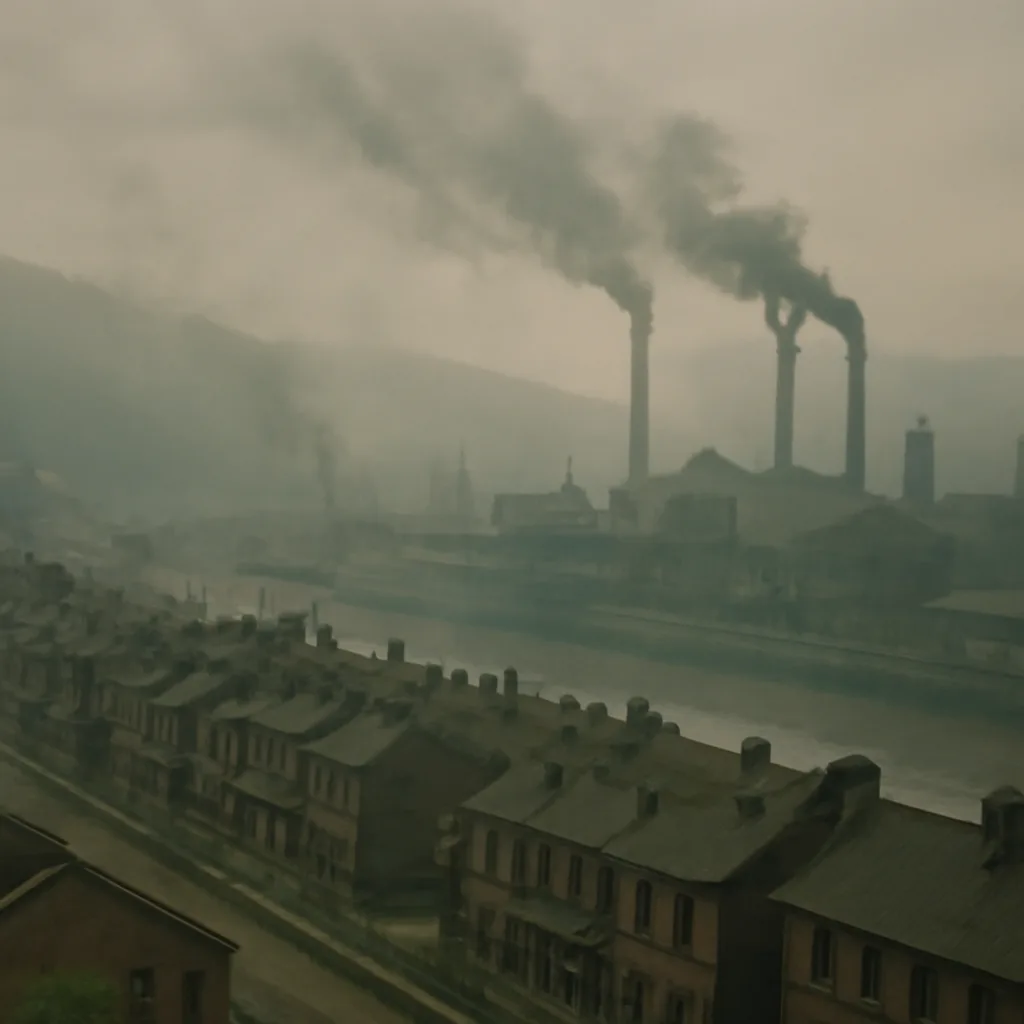
On May 27, 1948, a heavy industrial smog began settling over Donora, Pennsylvania, blanketing the river valley and disrupting daily life as pollutant-laden air accumulated under a temperature inversion.
Throughout the day the haze thickened. Visibility fell, outdoor activity declined, and sooty deposits began to appear on windowsills and clothing. The town’s industrial sources, including the American Steel and Wire Company and the American Zinc Company, were operating normally and releasing fumes typical for the era; what made May 27 notable was the meteorological trapping of those emissions. Residents reported respiratory irritation and eye discomfort; local medical facilities began to see increased cases of bronchitis and other respiratory complaints. Many people stayed indoors or reduced travel as conditions worsened.
Donora’s population in 1948 included large numbers of millworkers and their families who lived close to the plants. Housing density, prevailing employment patterns, and reliance on local industry meant that a significant portion of the borough was exposed to the polluted air. The town’s topography — a narrow valley bordered by hills — amplified the inversion’s effects by limiting air circulation.
Scientific understanding at the time recognized the links between industrial emissions and local smoke, but ambient air pollution standards and controls were limited compared with later decades. The conditions on May 27 initiated a multi-day event during which toxic concentrations built up and affected health across Donora; subsequent days saw worsening symptoms for many residents, culminating in the severe impacts historically associated with what came to be called the Great Smog of Donora.
Accounts from the period describe progressively poorer air quality, increasing numbers of people seeking medical attention, and disruptions to normal life. While municipal and company records from the time document plant operations and medical visits, contemporaneous national policy did not yet provide frameworks for preventing such episodes. The episode in Donora became a focal point for later public health and environmental investigations, informing mid-20th-century understanding of the health risks of concentrated industrial air pollution and contributing to the impetus for air-quality regulation in later decades.
This summary focuses on the onset of the event on May 27, 1948, and avoids unverified specifics about individual experiences or direct quotations. The sequence — inversion, accumulation of industrial emissions, declining visibility, and early health complaints — is supported by historical records of the Donora smog episode and by subsequent analyses linking the town’s geography, industrial activity, and weather conditions to the pollution buildup.