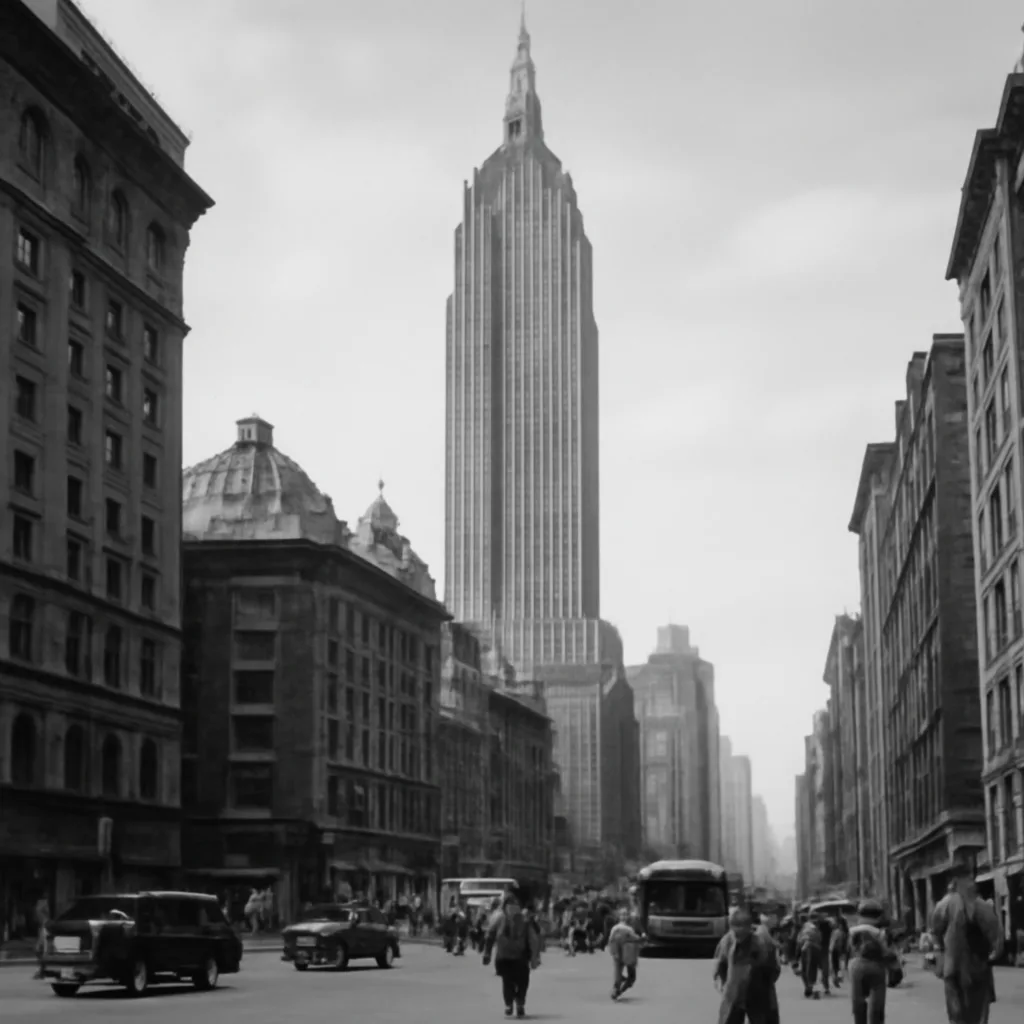
Empire State Building Opens Its Observation Deck to the Public
On May 1, 1931, the Empire State Building officially opened in New York City, offering the public access to its observation decks atop what was then the world’s tallest skyscraper—a symbol of modern engineering amid the Great Depression.
On May 1, 1931, the Empire State Building opened to the public in New York City, completing a rapid construction program that began in 1930. Designed by the architectural firm Shreve, Lamb & Harmon and financed in part by John J. Raskob and former New York governor Al Smith, the 102-story limestone-and-granite tower rose to a roof height of 1,250 feet (381 meters) and 1,454 feet (443.2 meters) to the tip of its antenna and mast, making it the world’s tallest building at the time.
The building’s opening occurred in the depths of the Great Depression, a context that shaped both public perception and the building’s early economics. While intended as a sign of confidence in American industrial capability and metropolitan progress, the tower initially struggled to attract tenants. For several years it was derisively nicknamed the "Empty State Building" in popular press because large portions of its office space remained unleased.
Despite slow tenancy, the Empire State Building’s observation decks—located on the 86th-floor open-air promenade and the enclosed 102nd-floor deck—quickly became a major public attraction. Visitors paid a fee to ride the building’s elevators to panoramic views of Manhattan, the Hudson and East Rivers, and the surrounding region. The decks offered a new way for residents and tourists to experience the city from an unprecedented vertical vantage point.
Architecturally, the building exemplified the Art Deco style that was popular in the late 1920s and early 1930s. Its stepped setbacks, vertical emphasis, and decorative but restrained ornamentation reflected zoning laws and aesthetics of the period. The tower’s steel-frame construction and use of setbacks allowed sunlight to reach the streets below, complying with the 1916 Zoning Resolution that influenced skyscraper design across New York City.
The Empire State Building also embodied advances in construction logistics and organization. The superstructure went up remarkably quickly: framing crews set thousands of tons of steel in weeks, and construction practices were coordinated to maintain a steady, efficient workflow. This speed of assembly became part of the building’s legend and was reported widely at the time.
From the opening onward, the building played a multifaceted role in New York life. It became an international symbol of American modernity, a focal point for tourism, and later, a cultural icon appearing in photographs, films, and popular imagination. Over subsequent decades the building’s observation decks remained among the city’s most visited attractions, even as taller structures were constructed elsewhere.
Historical records note that the official dedication and opening events were modest compared with later celebrations of urban landmarks; public access to the observation decks was a central feature of the opening day. Newspaper coverage from the period emphasized both the technical achievement and the symbolic message of resilience amid economic hardship.
The Empire State Building’s early years were not without hardship: slow occupancy and the economic environment of the 1930s challenged owners and managers. Yet the structure endured and, through restorations and reconfigurations of tenancy and public spaces over the decades, came to be preserved as an architectural and cultural landmark. It was designated a National Historic Landmark in 1986, reflecting its significance in American architectural and urban history.
While some contemporary observers criticized the building’s practicality as office space in its first years, consensus over time has recognized the Empire State Building as a landmark achievement in engineering and design whose observation decks made a lasting contribution to how millions experience New York City from above.