
← Back
05/01/1959 • 7 views

Mattel debuts the first modern Barbie doll
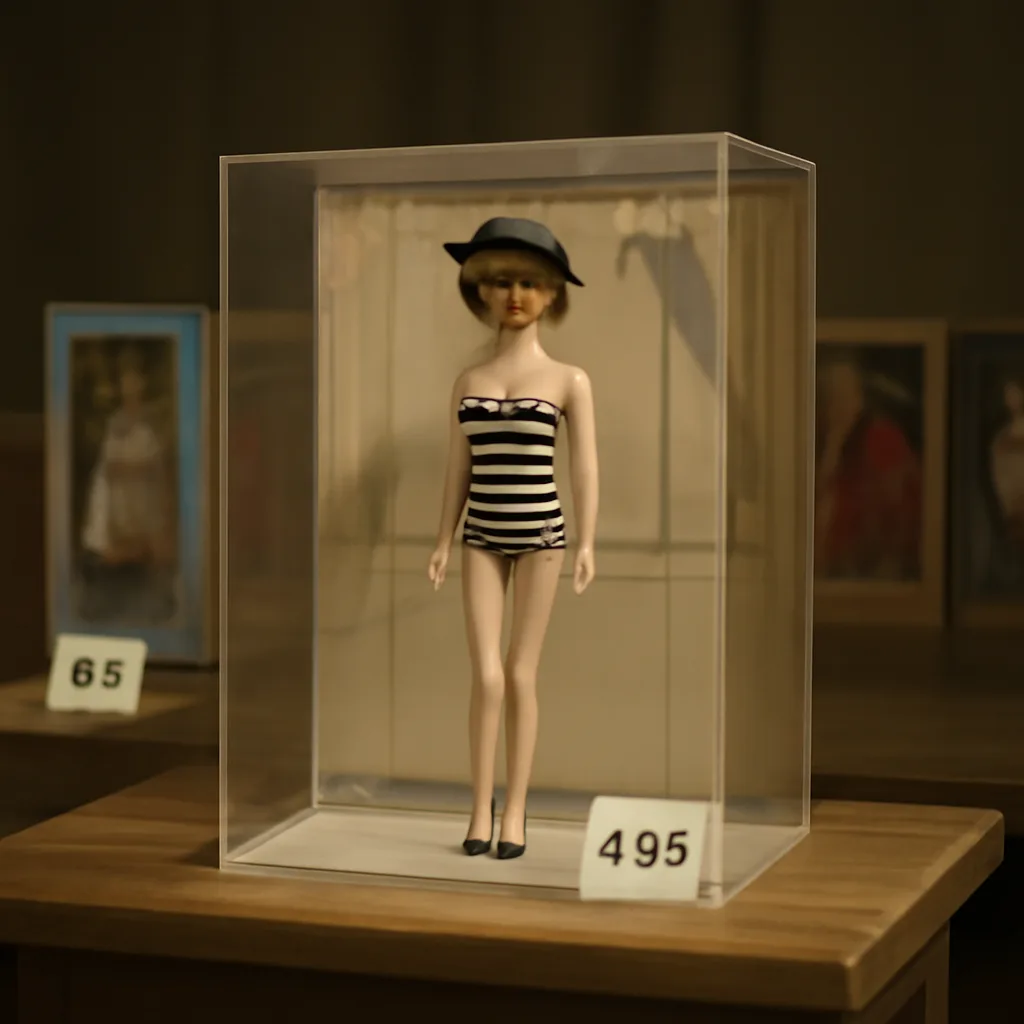
The original 1959 Barbie doll in a black-and-white striped swimsuit posed in a simple mid-20th-century toy display box with sunglasses and a small hat.

On May 9, 1959, Mattel introduced Barbie at the American International Toy Fair in New York, marking the debut of a fashion doll intended for older children and shaping decades of toy design and popular culture.


On May 9, 1959, Mattel unveiled the first Barbie doll at the American International Toy Fair in New York City. Created by Ruth Handler and named after her daughter Barbara, Barbie represented a departure from the baby dolls that dominated the mid-20th-century toy market: she was an adult-figured fashion doll marketed to girls as a way to imagine adult roles and fashions.

Design and production
The original Barbie, often referred to now as the 1959 Barbie, wore a black-and-white striped swimsuit, had blonde hair in a ponytail, and carried sunglasses and a black hat. The doll’s body was made of vinyl with a hard plastic torso and limbs, and the face featured arched eyebrows, prominent lashes, and red lips. Mattel produced the first Barbies with both blonde and brunette hair; the blonde version proved the most iconic. Barbie was sold as “Teen-age Fashion Model” in a clear plastic-paneled box, emphasizing her adult appearance and fashionable wardrobe rather than infant care.

Commercial context
Mattel positioned Barbie for an emerging postwar market in which families had higher disposable incomes and manufacturers sought to diversify toys for different age groups. Ruth Handler conceived Barbie after observing her daughter Barbara play with paper dolls and imagine adult female roles; she believed a three-dimensional adult-figured doll would offer similar play possibilities. Handlers’ idea followed existing European adult dolls but was distinct in its focus on contemporary fashions and the marketing of a glamorous, aspirational lifestyle.

Reception and impact
Barbie sold briskly after her introduction, quickly becoming a staple of Mattel’s product line and a cultural touchstone. Early advertising targeted girls ages six to twelve and emphasized fashion, travel, and careers as play themes. Over subsequent decades, Barbie’s range expanded to include outfits, accessories, vehicles, and careers, reflecting and influencing changing social attitudes and consumer trends.

Controversies and evolution
From the start and increasingly over time, Barbie generated debate. Critics argued that her unrealistic body proportions and emphasis on appearance could affect body image and gender roles; others praised the doll for offering girls a way to imagine careers and independence. Mattel responded across decades by introducing diverse skin tones, body types, and careers for Barbie, while also altering face sculpts and materials. These changes reflect both commercial strategy and responses to cultural critiques.

Historical significance
The 1959 Barbie is significant as a product innovation that helped redefine fashion dolls and girls’ play in the latter half of the 20th century. As both a commercial success and a focal point for cultural discussion about gender, beauty, and consumer culture, Barbie’s debut marked the start of a lasting and contested legacy in toys and popular imagination.

Notes on date
Contemporary accounts and Mattel documentation identify the doll’s public introduction at the Toy Fair in May 1959; Mattel later cites the product year as 1959 for the original Barbie release. The event date widely referenced for the launch is May 9, 1959.

Share this

Email Share on X Facebook Reddit

Did this surprise you?