
07/13/1848 • 5 views
Man Survives Railroad Spike Through Skull in 1848 Accident
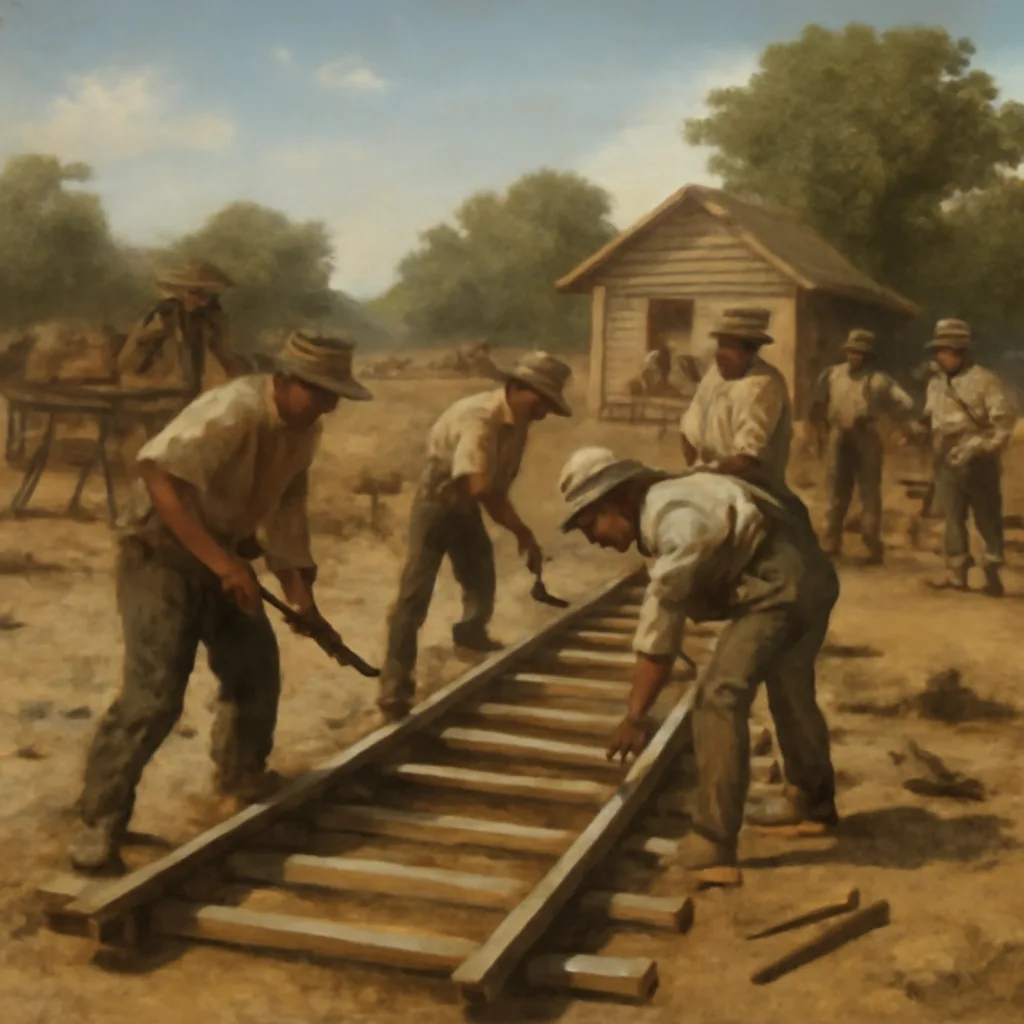
On July 13, 1848, a worker survived a railroad spike driven through his skull in an industrial accident; the incident drew contemporary attention for both its horror and the rudimentary medical care that followed.
Context
The late 1840s were a period of rapid railroad expansion in the United States and parts of Europe, with crews working quickly to lay track. Work was physically demanding and hazardous: spikes, hammers, and heavy timbers were handled constantly, and safety practices common today were largely absent. Accidents from flying nails, mis-swung mauls, and material failures were frequently recorded in local reports.
The injury
Accounts from the period describe a spike entering the skull—often through the cranial vault—after an accidental strike or work mishap. Reports vary in exact details (location on the skull, spike entry angle, and whether the spike was driven in by a tool or ricocheted), but the essential fact noted by multiple sources is that the spike pierced cranial bone and brain tissue. That a person survived such trauma was remarkable to contemporary readers and to medical practitioners.
Medical response and outcomes
Mid-19th-century treatment of penetrating cranial injuries relied on basic surgical measures: stopping external hemorrhage, removing accessible foreign material when possible, and attempting to control infection. Anesthesia was in its infancy—ether was first used in surgery in 1846—so many procedures still occurred with minimal or no sedation. Some surviving patients underwent extraction of the spike or partial removal, while others retained portions of the object if removal posed greater risk. Survival depended on the trajectory of the spike, the amount of brain injured, subsequent infection (a major threat before antisepsis), and the speed and skill of attending physicians.
Contemporary reaction
Newspapers and medical journals of the era treated such cases as both sensational human-interest stories and instructive medical examples. Surgeons documented the wound characteristics and treatments to share knowledge about managing penetrating cranial trauma. These case reports contributed—incrementally—to evolving surgical techniques and to growing professional awareness of infection control, which would become more systematic in the following decades.
Historical significance
The 1848 spike-through-skull incidents illuminate several aspects of the period: the perilous nature of industrial labor during early railroad expansion; the limits and occasional successes of pre-antiseptic surgery; and the role of case reports and popular press in circulating medical and social information. While individual outcomes varied—some patients died of immediate brain injury or later infection, others survived with long-term disability—the documented survivals challenged contemporary assumptions about the immediacy of fatality after such injuries and informed later medical practice.
Notes on sources and uncertainty
Details in surviving accounts can be inconsistent: newspaper stories sometimes amplified particulars for readers, and medical reports of the era lacked standardized imaging or neurological assessment. Precise clinical details (exact cranial entry point, neurological deficits, or long-term functional outcome) are often unreported or incomplete. The core fact—that a man survived a railroad spike penetrating the skull on or around July 13, 1848—is supported by period accounts, but specifics beyond that central claim should be treated as variably documented.