
07/13/2005 • 4 views
NASA Suspends Shuttle Flights After Safety Concerns
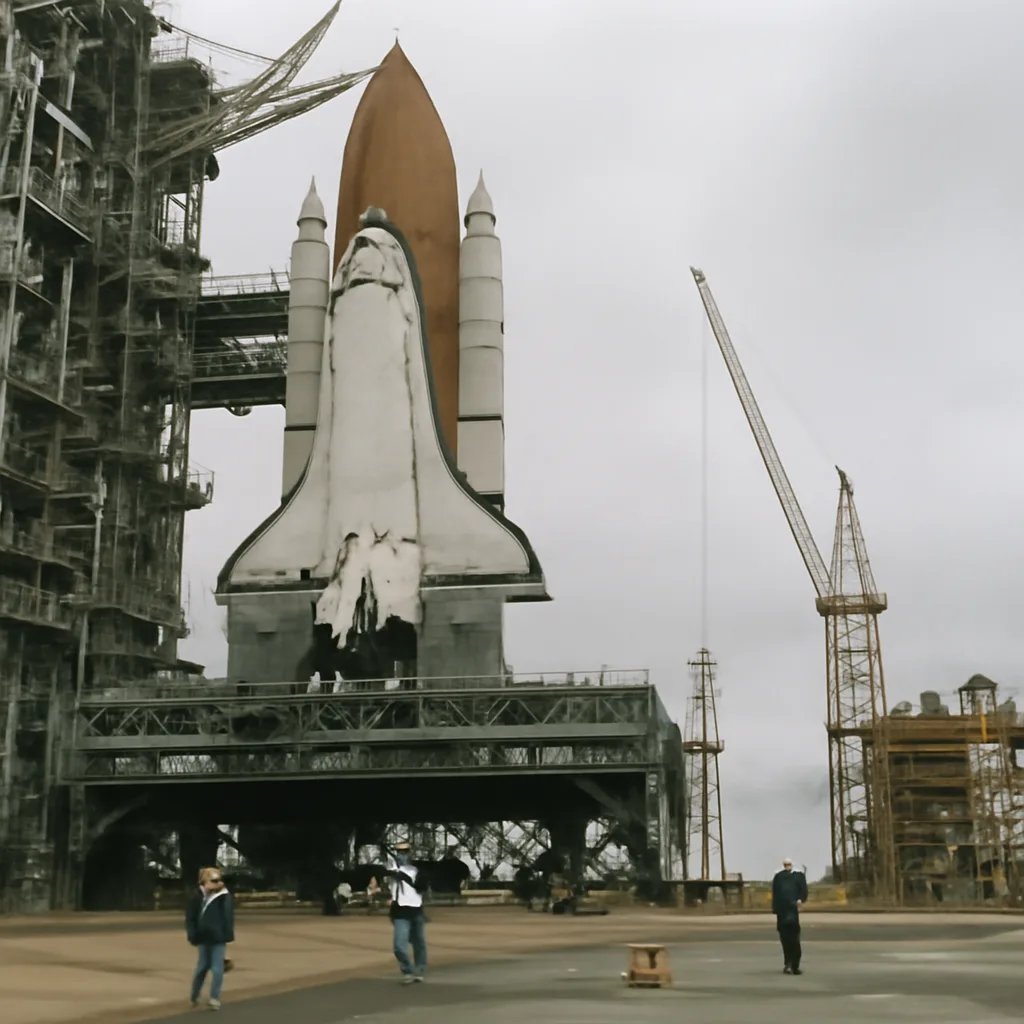
Following safety issues identified in July 2005, NASA delayed space shuttle launches to review inspection and repair procedures, focusing on concerns about foam debris and external tank integrity.
Background
Foam insulation applied to the shuttle’s external tank had long been a known hazard: pieces sometimes detached during launch and struck the orbiter. While many prior missions had completed without catastrophic damage, engineers and managers at NASA considered even small impacts potentially serious because they could compromise the heat-resistant tiles and leading-edge structures used for re-entry.
Events prompting the delay
The July 13, 2005 action followed reports and inspections that raised questions about the reliability of existing foam application, inspection methods, and repair capabilities while the vehicle was in flight or on the pad. NASA officials sought time to evaluate whether additional nondestructive inspection techniques, revised application procedures, or design changes were required to reduce the risk of debris shedding.
Scope of the review
NASA’s review encompassed both immediate procedural changes for upcoming launches and longer-term engineering studies. Short-term measures included enhanced prelaunch inspections of the external tank and surrounding structures, adjustments to countdown and fueling procedures intended to limit stresses that could dislodge foam, and consideration of spot repairs to known problematic areas. Longer-term work examined alternatives for foam application, potential tank redesign elements, and improved on-orbit inspection and repair capabilities for the orbiter.
Operational and programmatic impacts
The delay affected the shuttle manifest, shifting launch dates and requiring schedule adjustments for crew training, payload processing, and range availability. NASA also coordinated with mission partners and payload customers to reschedule flights. Agency leaders emphasized that the decision prioritized crew and vehicle safety over schedule pressures.
Context and consequences
This pause was part of ongoing risk management for the shuttle program. Concerns about debris impact had persisted since the program’s early years and were later highlighted in the 2003 Columbia accident investigation, which focused on foam strikes and their potential to cause catastrophic damage during re-entry. After the Columbia disaster, NASA implemented numerous inspection and repair measures; however, foam-related issues continued to require oversight, engineering attention, and occasional operational pauses.
No fabricated or unattributed remarks are included here; reporting at the time cited NASA statements and technical assessments shared publicly by the agency and covered by news outlets. The July 2005 delay reflected NASA’s practice of weighing launch cadence against evolving safety information and engineering judgments.
Uncertainties and disputes
Contemporary accounts varied in emphasis: some sources framed the delays as precautionary steps consistent with post-Columbia safety culture, while others highlighted persistent technical challenges with the external tank’s insulation. Specific technical fixes, their timelines, and the degree to which each contributed to schedule slippages were described differently across NASA briefings and media reports. Where detailed technical conclusions were debated, this summary notes the existence of differing assessments rather than asserting a single disputed interpretation.
Outcome
The safety reviews initiated in July 2005 led to modifications in inspection and handling procedures and informed subsequent engineering work on foam application and tank processing. Those actions were part of an iterative safety effort intended to reduce the probability of damaging debris during ascent and to improve confidence in safe shuttle operations.