
07/20/1969 • 4 views
Neil Armstrong and Buzz Aldrin Walk on the Moon
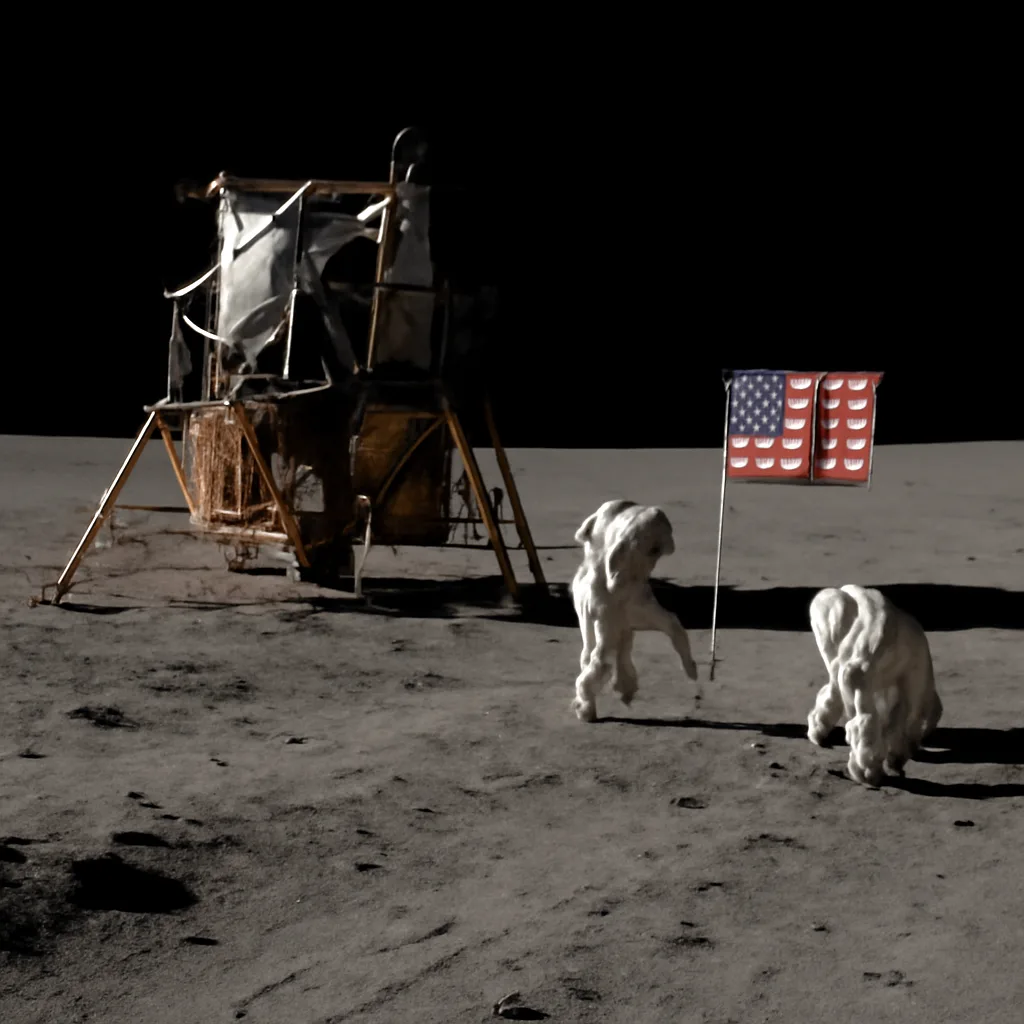
On July 20, 1969, Apollo 11 astronauts Neil Armstrong and Buzz Aldrin became the first humans to walk on the Moon, marking a pivotal achievement in the U.S. Apollo program and human space exploration.
The lunar extravehicular activities (EVAs) lasted about two and a half hours. During this time Armstrong and Aldrin collected 47.5 pounds (21.6 kilograms) of lunar material, deployed scientific experiments—including the Passive Seismic Experiment and the Laser Ranging Retroreflector—and photographed the surroundings. Their movements were carefully choreographed and constrained by the limitations of the pressure suits, life-support systems, and the lunar module’s design. The mission fulfilled President John F. Kennedy’s 1961 goal of landing a man on the Moon and returning him safely to Earth, a central objective of NASA’s Apollo program.
Apollo 11 launched from Cape Kennedy (now Cape Canaveral) on July 16, 1969. After translunar injection and a coast to the Moon, the crew entered lunar orbit on July 19. On July 20, Armstrong and Aldrin transferred into Eagle and began their descent. The landing was manually guided by Armstrong during the final minutes to avoid a boulder-strewn area; Eagle landed with only seconds of fuel remaining. The mission’s success was the result of years of engineering, testing, and the contributions of tens of thousands of people across government, industry, and academia.
The astronauts’ time on the surface also had symbolic and geopolitical significance amid the Cold War, offering a demonstration of technological and scientific capability. Public interest was immense: an estimated 600 million people worldwide watched or listened to the televised or radio-broadcast portions of the event. Following the EVA, Armstrong and Aldrin reentered Eagle, and after a 21½-hour stay on the lunar surface they launched back to dock with Columbia. The crew returned to Earth on July 24, 1969, splashing down in the Pacific Ocean and entering quarantine upon recovery.
Documentation of Apollo 11 includes mission transcripts, flight data, photographic records, rock samples, and video recordings archived by NASA. These primary sources, along with subsequent analyses and peer-reviewed scientific studies of lunar samples and mission performance, form the basis of historical and technical understanding of the mission. While the broad facts of the landing and EVAs are well documented, some peripheral details—such as exact phrasing in informal moments or impressions recorded later by participants—are subject to differing personal recollections and should be treated accordingly.
Apollo 11’s lunar walk remains a landmark in human exploration, influencing later crewed and uncrewed missions and continuing to inform scientific study of the Moon. The mission demonstrated complex mission planning, lunar surface operations, and sample-return techniques that shaped subsequent Apollo missions and future plans for lunar exploration.