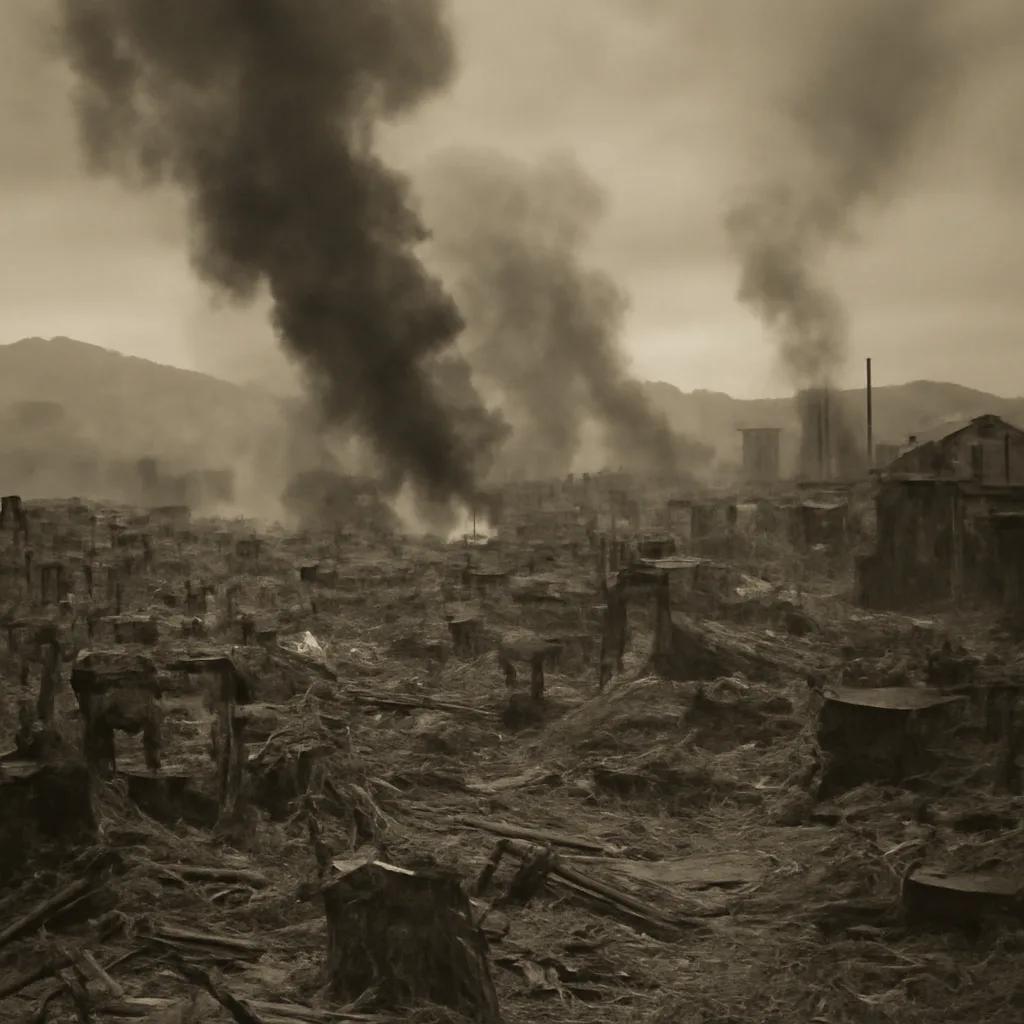
On August 9, 1945, the city of Nagasaki was struck by an atomic bomb, causing immediate massive destruction, tens of thousands of deaths, and long-term suffering—coming three days after the bombing of Hiroshima and accelerating Japan's decision to surrender.
On August 9, 1945, at approximately 11:02 a.m. local time, an atomic bomb was detonated over Nagasaki, Japan. The device exploded over the Urakami Valley area of the city, producing an enormous blast, intense heat, and widespread fires that obliterated much of the urban landscape. Immediate casualties numbered in the tens of thousands; precise figures vary, but estimates commonly cited by historians indicate roughly 40,000–75,000 people were killed by the end of 1945 when combining initial deaths and those who died from injuries and acute radiation effects. Many more were injured, and survivors faced long-term health consequences from radiation exposure.
The bombing came three days after the atomic bombing of Hiroshima on August 6, 1945. The Nagasaki target had not been the first choice that day; weather conditions and aiming difficulties influenced the mission. The bomb—delivered by a U.S. aircraft—exploded over a hilly, industrial area of Nagasaki, which reduced the radius of total destruction in some directions but still resulted in catastrophic damage to factories, residences, hospitals, and cultural sites. Areas of dense wooden housing and industrial facilities contributed to widespread fires and building collapse. Medical facilities were quickly overwhelmed, and many of those killed included workers, civilians, and those seeking shelter.
Beyond the immediate physical devastation, survivors suffered from burns, traumatic injuries, and acute radiation sickness. In subsequent months and years, increased rates of cancer, chronic illness, and congenital effects were documented among survivors and their descendants—outcomes that have been the subject of extensive medical and epidemiological research. The humanitarian crisis included displaced populations, ruined infrastructure, and the collapse of essential services.
The bombing of Nagasaki occurred in the context of World War II’s final days. It intensified pressure on Japan’s leadership and contributed to the Emperor’s decision to accept the terms of the Potsdam Declaration. On August 15, 1945, Japan announced its surrender, and the formal surrender took place on September 2, 1945, ending World War II.
Historically, the Nagasaki bombing is linked with intense ethical, legal, and strategic debates. Scholars, veterans, survivors, and governments have examined whether the use of atomic weapons was necessary to end the war, whether alternative means could have achieved surrender, and the moral implications of targeting areas with large civilian populations. Discussions also focus on the long-term legacy: peace activism, arms control treaties, survivor advocacy, and Japan’s postwar pacifist constitution.
Nagasaki itself has memorialized the event while rebuilding. The city’s peace park and museums document the bombing, commemorate victims, and promote nuclear disarmament. Historical accounts of the event rely on primary sources, survivor testimony, government records, and medical studies; casualty figures and specific details may vary among sources, and some aspects—such as exact counts of the dead and the full extent of long-term radiation effects—remain subjects of ongoing research and revision.
This account limits itself to established historical facts: an atomic bomb was detonated over Nagasaki on August 9, 1945, causing massive immediate loss of life and destruction, contributing to Japan’s surrender, and producing long-term humanitarian and health consequences that have shaped international discussions about nuclear weapons ever since.