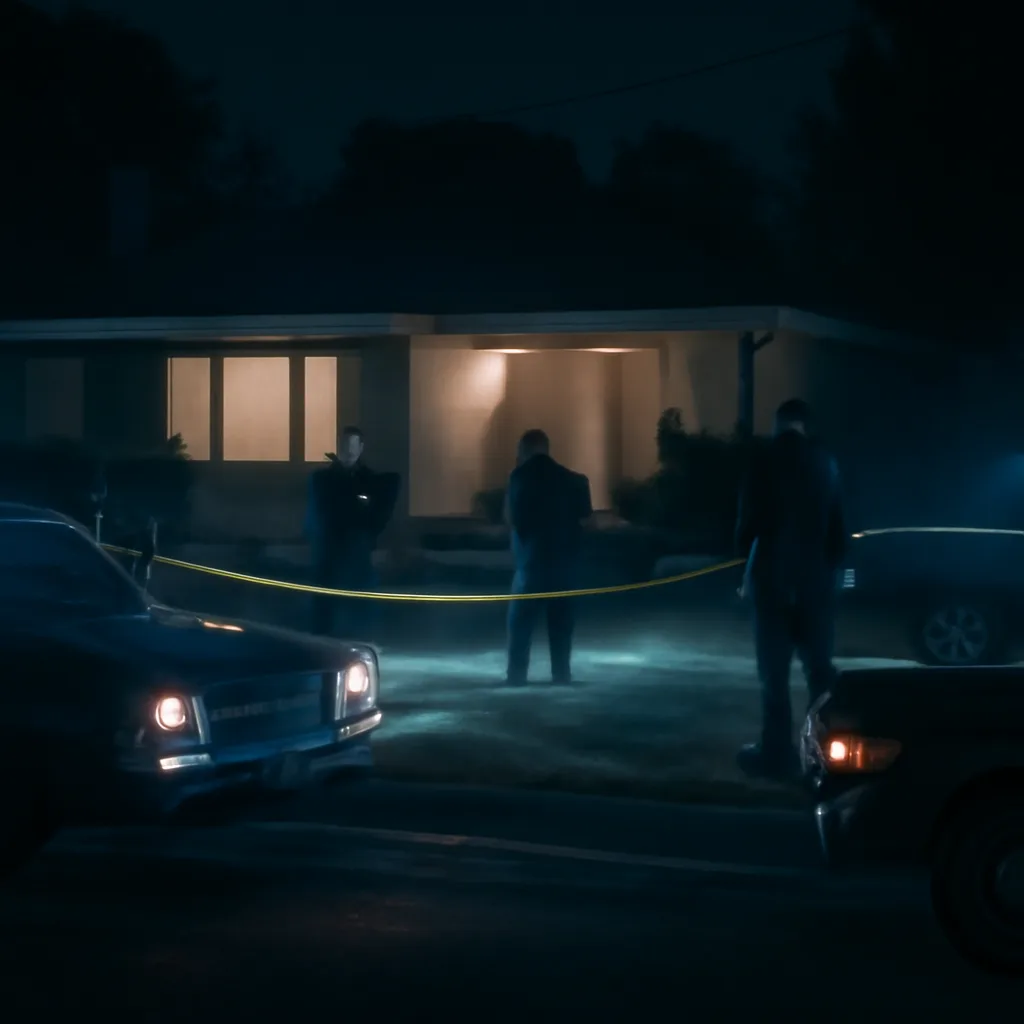
Manson Family Killings at Sharon Tate’s Home, August 9–10, 1969
On the night of August 8–9, 1969, members of the Manson Family entered the home of actress Sharon Tate in Los Angeles and murdered Tate and four others; the killings marked the start of a series of brutal crimes that led to the arrest and 1971 conviction of Charles Manson and several followers.
On the night of August 8–9, 1969, a group of followers of Charles Manson entered a rented house at 10050 Cielo Drive in the Benedict Canyon area of Los Angeles. The house was the home of actress Sharon Tate and director Roman Polanski; Tate, who was eight months pregnant, had invited friends to a gathering earlier in the evening. Late that night, four people left the home to buy food; shortly afterward, members of the Manson Family arrived and forced their way inside.
Sharon Tate (26), Jay Sebring (35), Abigail Folger (25), Wojciech Frykowski (also known as Voytek; 32), and Steven Parent (18) were killed that night. The methods and scene were violent: some victims were shot and others stabbed. The perpetrators left messages scrawled on the house and nearby car using the victims’ blood; those inscriptions and the extreme brutality drew extensive media attention and alarm.
The murders at Cielo Drive were the first in a sequence of killings carried out over the following days by members of the Manson Family. Authorities eventually connected the Tate murders to subsequent homicides, including the August 10 murders of Leno and Rosemary LaBianca in Los Feliz. The crimes were driven by the actions of a small group of Manson’s followers acting under his influence; Manson himself was not present at the Tate murders but later was found to have directed and orchestrated a broader campaign of violence.
Investigations by the Los Angeles Police Department and other agencies gathered physical evidence and witness testimony that linked specific members of the Family to the scenes. Several individuals were arrested and tried in a single high-profile trial that began in 1970 and concluded in 1971. Charles Manson and three female followers—Susan Atkins, Patricia Krenwinkel, and Leslie Van Houten—were convicted of first-degree murder and conspiracy to commit murder in connection with the killings. Other defendants received various convictions and sentences. Initially sentenced to death, Manson and the convicted women had their sentences commuted to life imprisonment after California temporarily abolished and later revised capital punishment in the early 1970s.
The Tate–LaBianca murders had an enduring cultural and legal impact. They intensified public concern about cults, violent crime, and youth counterculture in late-1960s America, and prompted changes in police procedures and home security awareness. The case has been the subject of extensive reporting, books, documentaries, and legal study; historians and journalists continue to analyze the social context, Manson’s manipulation of followers, and the criminal-justice response.
Some details of motive and Manson’s exact intent remain the subject of analysis and debate among scholars and journalists. Multiple perpetrators confessed at various times, later recanted, or gave varying accounts, complicating a full, unambiguous reconstruction. The central facts—who the victims were, where and when the killings occurred, and the eventual convictions of Manson and key followers—are well documented in court records and contemporary reporting.