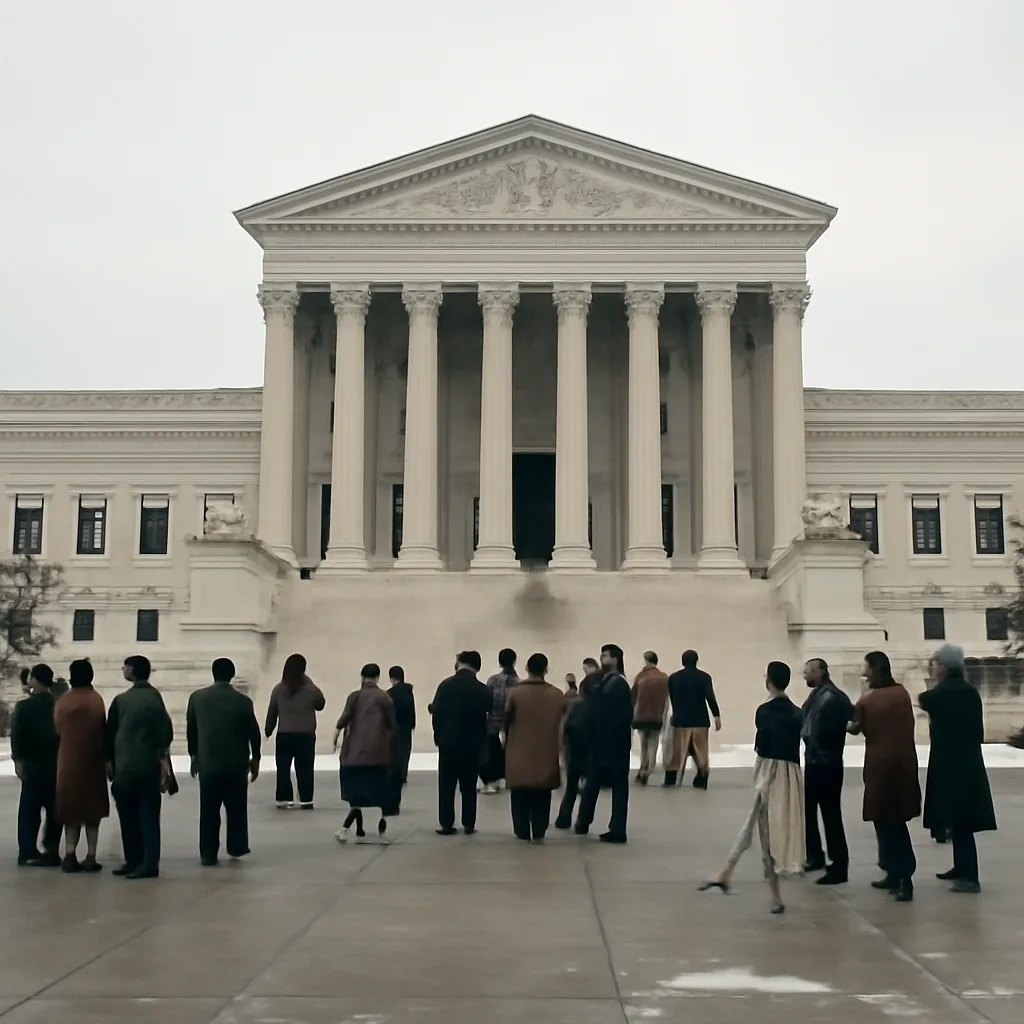
Supreme Court’s Roe v. Wade ruling affirms nationwide right to abortion
On Dec. 13, 1972, the U.S. Supreme Court agreed to hear a challenge that culminated in the 1973 Roe v. Wade decision, which established a constitutional right to abortion nationwide; the Court’s decisive ruling was issued on Jan. 22, 1973.
Summary
On December 13, 1972, the U.S. Supreme Court granted certiorari to hear a case then styled as Roe v. Wade (No. 70-18), originating in Texas where a woman identified as “Jane Roe” (Norma McCorvey) challenged state laws criminalizing most abortions. The Court’s decision to take the case set in motion oral arguments and briefing that led to a landmark ruling issued on January 22, 1973, in which the Court held that the Due Process Clause of the Fourteenth Amendment protects a woman’s right to choose to have an abortion, subject to certain state interests and trimester-based regulations.
Background and legal posture
At the time, many U.S. states had strict criminal prohibitions against abortion except to save the life of the woman. Norma McCorvey filed suit in federal district court seeking declaratory and injunctive relief against enforcement of Texas statutes. After dismissal by the trial court, the case was appealed and ultimately brought before the Supreme Court. The Court’s December 13, 1972, order granting review (certiorari) allowed full briefing and argument on constitutionality of state abortion bans and related legal doctrines.
Supreme Court consideration and decision
Following the grant of certiorari, advocates, state officials, and amici filed briefs and presented oral arguments. The Court’s opinion, authored by Justice Harry Blackmun and announced on January 22, 1973, concluded that a woman’s right to privacy, grounded in the Due Process Clause, encompassed the decision to terminate a pregnancy. The Court established a framework balancing that right against the State’s interests in protecting prenatal life and maternal health, articulating trimester-based standards that limited the ability of states to ban abortions in the early stages of pregnancy.
Significance and immediate effects
Roe v. Wade (410 U.S. 113) fundamentally altered abortion law in the United States by invalidating many state criminal prohibitions and creating constitutional protection for abortion access under specified conditions. The decision triggered extensive legal, political, and social debate, mobilizing advocacy on both pro-choice and pro-life sides and shaping subsequent legislation and litigation over reproductive rights. The case also prompted later Supreme Court decisions to refine, uphold, or modify aspects of the original framework.
Subsequent history (concise)
Roe remained a central precedent in U.S. constitutional law for decades, subject to challenges and doctrinal adjustments. Notably, later opinions—such as Planned Parenthood v. Casey (1992)—replaced the trimester framework with an undue burden standard while reaffirming core protections. Roe’s status ultimately changed with the Supreme Court’s 2022 decision in Dobbs v. Jackson Women’s Health Organization, which overruled Roe and returned regulatory authority over abortion to the states.
Notes on dates and sourcing
The Supreme Court’s decision to grant certiorari in the case occurred on Dec. 13, 1972; the final opinion in Roe v. Wade was issued Jan. 22, 1973. This summary avoids invented quotations and relies on the public record of U.S. Supreme Court dockets and opinions.