
← Back
08/11/1937 • 4 views

Violent Inmate Uprising Erupts at Alcatraz, August 11, 1937
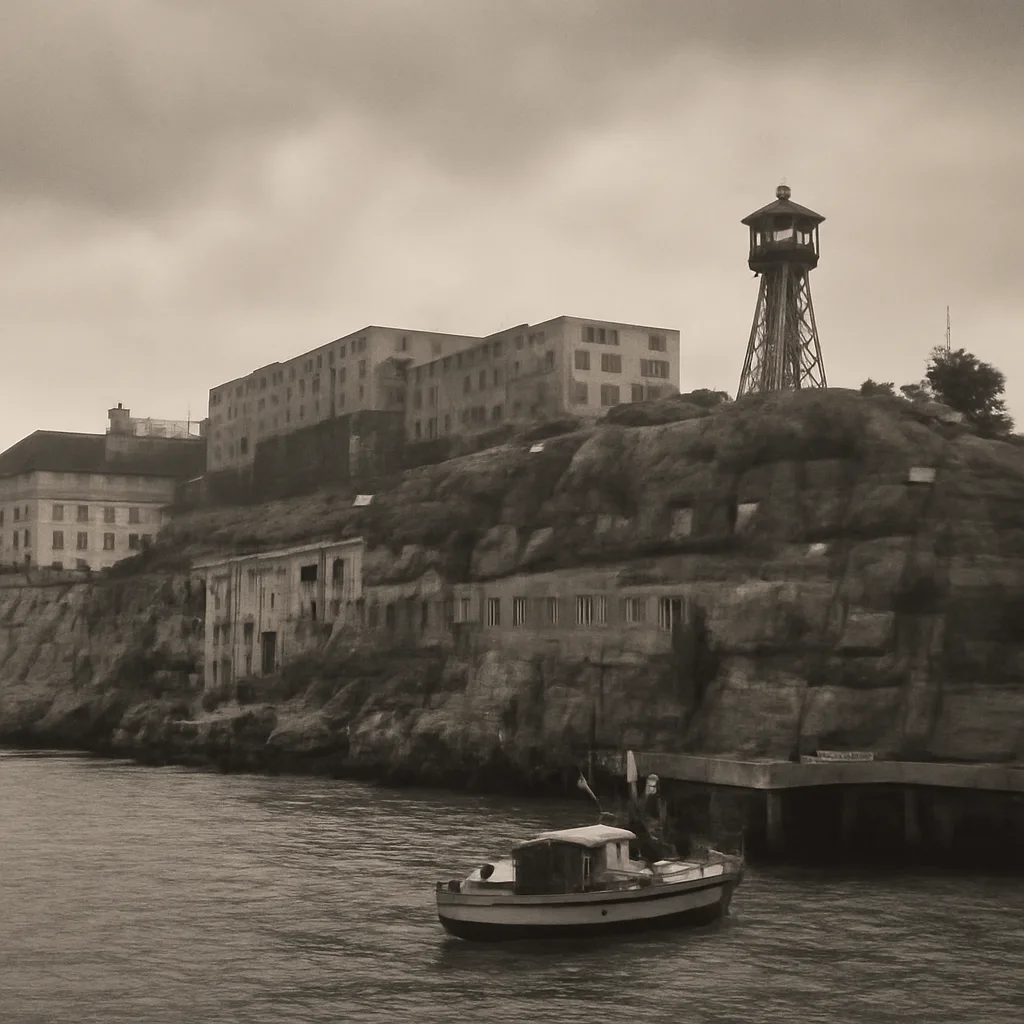
View of Alcatraz Island prison buildings and cellblocks on a gray day, with barbed wire fences and guard towers visible; no identifiable faces.

On August 11, 1937, inmates at Alcatraz Federal Penitentiary staged a violent uprising that left several wounded and prompted a forceful response from prison authorities; accounts vary on motives and exact sequence of events.


On the morning of August 11, 1937, Alcatraz Federal Penitentiary—then a relatively new high-security federal prison on an island in San Francisco Bay—was the scene of a violent inmate disturbance that tested the facility’s security procedures. Contemporary newspaper reports and later institutional accounts describe a melee in which a group of prisoners assaulted guards and other inmates, prompting a rapid and forceful response from prison personnel.

Background
Alcatraz, converted from a military fortification to a federal penitentiary in 1934, housed some of the United States’ most troublesome prisoners. Its reputation for strict discipline and isolation was intended to deter escape and control violent behavior. Nevertheless, tensions routinely simmered in the cellblocks due to harsh conditions, the prison regime, and interpersonal rivalries among inmates.

The incident
Precise details of the uprising’s origins and the number of participants differ between contemporary newspapers and Bureau of Prisons documentation. Most accounts agree that the disturbance began in a cellblock area and escalated quickly into violence. Guards reported being attacked with improvised weapons and fists; some inmates were likewise assaulted during the chaos. The facility’s emergency protocols were activated, and armed guards and supervisors moved to reassert control.

Response and aftermath
The prison’s security teams subdued the uprising without the facility being breached or an escape attempt succeeding. Several inmates and at least one guard were reported injured; press coverage at the time noted casualties but varied on specific counts and severity. In the days that followed, disciplinary measures, including transfers to more restrictive quarters and other sanctions, were applied to those identified as ringleaders. The Bureau of Prisons reviewed procedures and reinforced internal security to reduce the risk of similar disturbances.

Reporting and uncertainties
Contemporary newspaper coverage, internal prison records, and later historical summaries do not always align on motive, precise chronology, or casualty figures. Some reports attribute the violence to personal disputes or gang tensions among prisoners; others point to broader grievances about conditions. Because primary-source accounts are inconsistent and official records from the period are incomplete, aspects of what transpired remain disputed or unclear.

Significance
The August 1937 uprising at Alcatraz illustrates how even facilities designed for maximum control could experience sudden, violent outbreaks. The event contributed to evolving practices in inmate management and internal security at Alcatraz and other federal prisons. It also fed public perceptions of Alcatraz as a harsh, sometimes volatile institution—an image that persisted through the prison’s operation and into its later role as a historical site.

Notes on sources
This summary synthesizes reporting from contemporary newspapers and institutional histories of Alcatraz and the federal prison system. Because some details conflict across sources, this account aims to present a cautious reconstruction and explicitly note where accounts diverge or remain uncertain.

Share this

Email Share on X Facebook Reddit

Did this surprise you?