
← Back
08/11/1934 • 4 views

Game Called When Locust Swarm Invades Ballpark, August 11, 1934
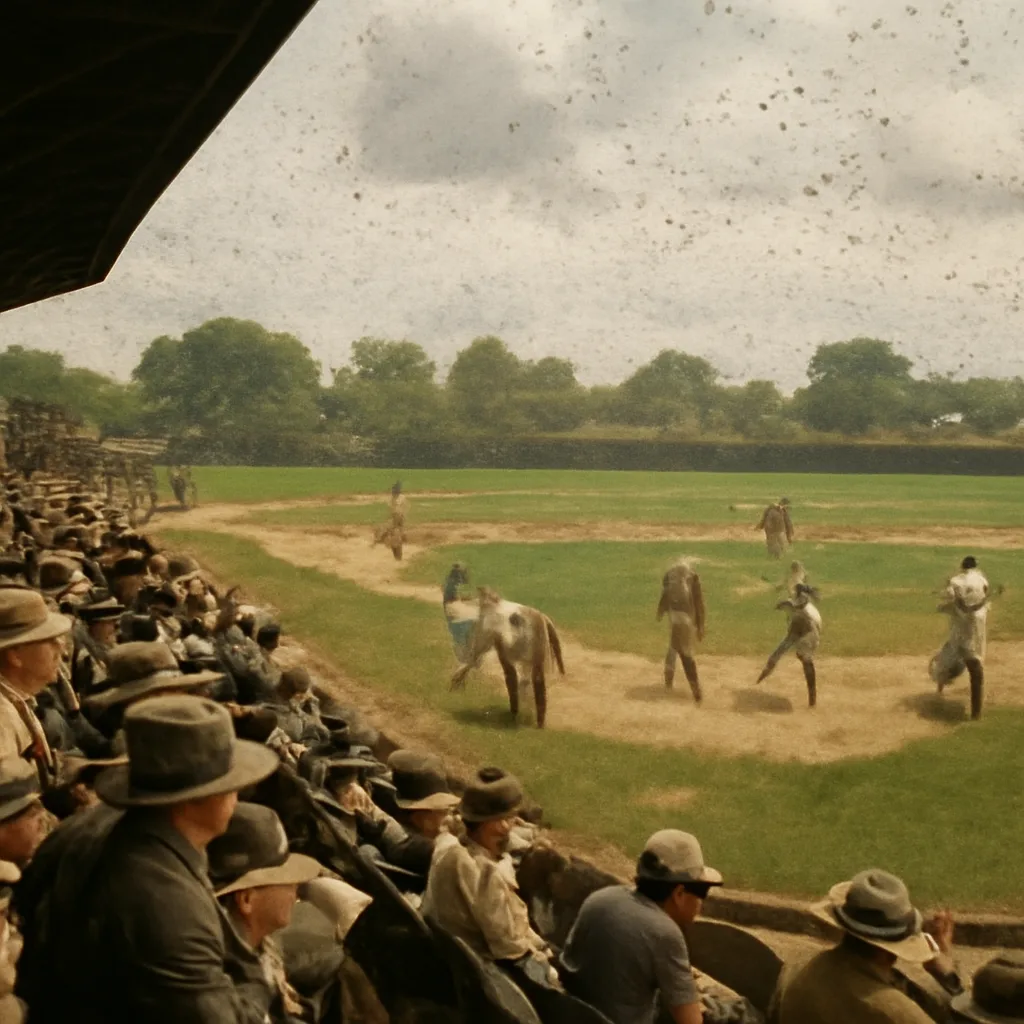
1930s-era baseball field with players, umpires, and spectators amid a dense swarm of grasshoppers settling on the infield and stands.

On August 11, 1934, a professional baseball game was halted and ultimately called off after a sudden invasion of locusts (grasshoppers) swarmed the field, disrupting play and forcing players and umpires to seek cover.


On the afternoon of August 11, 1934, a professional baseball game was interrupted and eventually called when a large swarm of locusts—commonly referred to at the time as grasshoppers—descended on the ballpark. Contemporary newspaper accounts from the era report that the insects settled across the diamond, on players’ uniforms and equipment, and in the stands, making continuation of normal play impossible.

The 1930s were a period when outbreaks of grasshoppers and locusts were still familiar in parts of the United States and Canada. Such swarms could arise quickly under favorable weather conditions and cover large areas, darkening the sky and coating surfaces where they settled. In a crowded, outdoor event like a ballgame, a sudden invasion would have presented an immediate, practical nuisance: insects interfering with vision, clinging to bats, balls and gloves, and unnerving both players and spectators.

According to press coverage from the day, players and umpires initially tried to continue but soon found play impractical. Grounds crews attempted to sweep or brush the insects from the infield, and some players reportedly wiped their gloves and faces before resuming. Ultimately, the umpires decided to suspend and then call the game because the conditions made safe and orderly play untenable. The game’s status—whether it was declared official, suspended for resumption, or postponed—varied in different reports and depended on league rules and the point in the contest when it was halted.

This incident was not a unique phenomenon in the era. Before modern pest control and changes in land use, episodic swarms of grasshoppers affected agriculture and daily life across wide regions. Newspapers of the 1930s sometimes carried human-interest stories about such events disrupting public gatherings, from outdoor markets to sporting events.

Contemporary accounts limit what can be known precisely about this specific game: surviving reports are often brief, differ on exact details such as attendance and the immediate administrative outcome, and may conflate local or regional terminology for the insects. No authenticated first-person quotations or official league documents from that single game are widely cited in secondary sources. The broad outline—an August 11, 1934 ballgame interrupted and called due to a swarm of locusts—appears in multiple period newspapers and summaries of unusual sporting events from the era.

The episode illustrates how environmental and biological factors could abruptly intrude on public life in the early 20th century, affecting even well-ordered recreational activities. It also reminds historians that everyday disruptions recorded in local papers can offer vivid glimpses into the lived experiences of the period—from the practical responses of stadium staff to the ways spectators and players coped with unexpected natural events.

Where precise administrative outcomes are important (for example, how the league recorded the result), researchers should consult the specific league’s game logs, contemporary local newspapers, or archived official scorebooks for that date. Those primary sources can clarify whether the game was declared official under the rules then in force, rescheduled, or otherwise adjudicated.

Share this

Email Share on X Facebook Reddit

Did this surprise you?