
← Back
06/16/1945 • 4 views

Trinity Test Site Secretly Activated on June 16, 1945
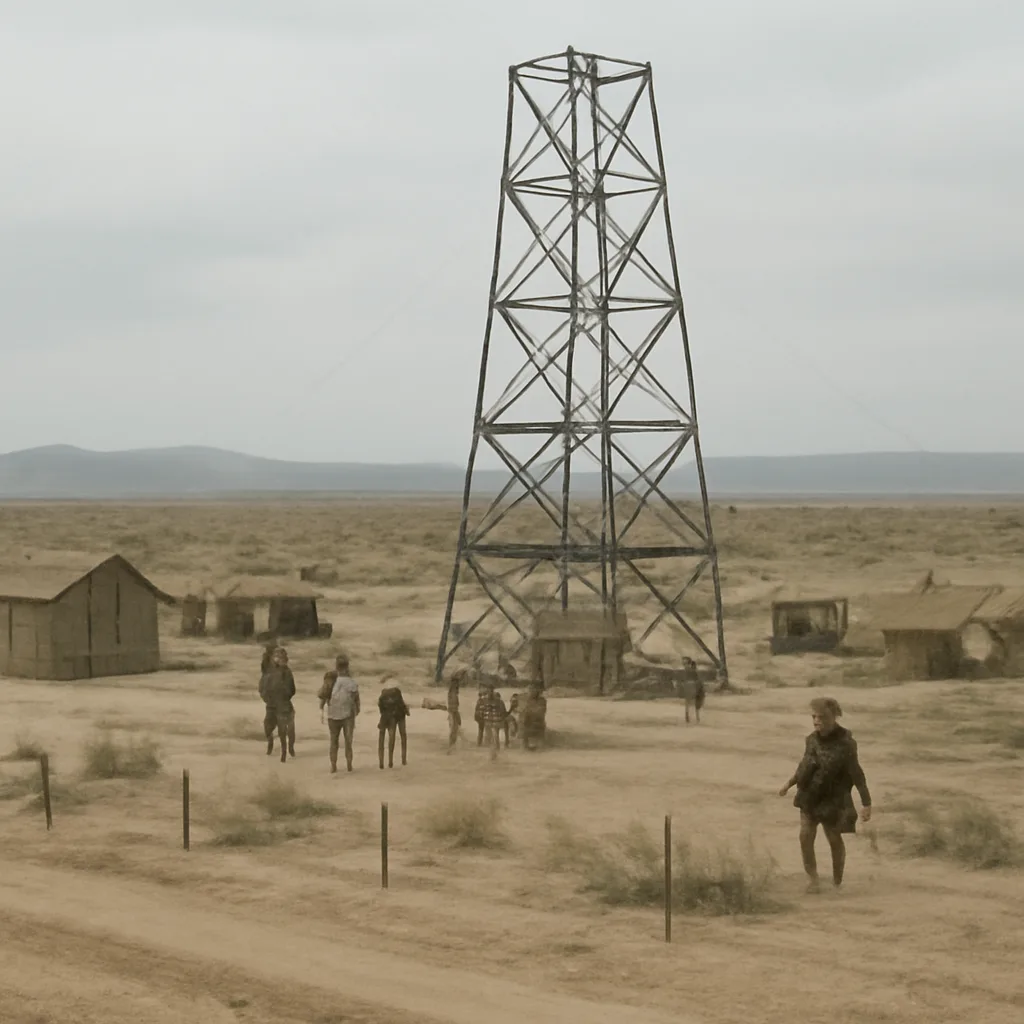
Temporary instrument shelters, wooden scaffolding and a steel test tower under construction on a barren New Mexico desert range in 1945, with tents and military vehicles nearby.

On June 16, 1945, the Trinity test site in New Mexico was quietly brought online as U.S. Army and Manhattan Project teams prepared for history’s first atomic detonation; the activation preceded the July 16 test by one month and involved final instrument checks, security measures, and assembly rehearsals.


In mid-June 1945 the isolated desert range in New Mexico that would become known as the Trinity test site was being covertly prepared for the nation’s first atomic detonation. Records from Manhattan Project planning and later historical accounts show that in the weeks before the July 16, 1945, test, technical crews, military security, and civilian scientists converged on the site to complete final instrumentation, logistical arrangements, and device assembly rehearsals. The activation of the site in mid-June was a deliberate, tightly controlled step in an operation that remained classified even within many parts of the U.S. government.

Location and security: The Trinity site was located on the Alamogordo Bombing Range (later part of White Sands Missile Range), in a remote area of southern New Mexico chosen for its sparse population, flat terrain, and control by the Army. In June 1945, access was restricted; sentries, patrols, and fencing were used to enforce exclusion zones. Military and civilian personnel arriving at the site were subject to secrecy protocols typical of the Manhattan Project, including compartmentalization of information and limited disclosure of the site’s ultimate purpose.

Technical preparations: By mid-June teams were installing and calibrating diagnostic instruments, high-speed cameras, pressure gauges, radiochemical samplers, and seismographs that would record the explosion’s physical effects. Structures such as observation bunkers, instrument shelters, and the steel tower intended to hold the plutonium implosion device were erected or finalized. Engineers conducted rehearsals for device assembly and arming procedures using non-nuclear mockups or inert components to minimize risk while practicing the complex sequence of operations required for the test.

Logistics and personnel: The activation phase included staging facilities for personnel, fuel and supply deliveries, medical arrangements, and temporary housing such as tents and prefabricated buildings. Scientific staff included physicists, chemists, and engineers from Los Alamos Laboratory and other Manhattan Project units, while Army units provided security, communications, and logistical support. Transport of sensitive components to the site was done with security measures; some materials had been moved earlier under secrecy to nearby depots and then brought to the site as needed.

Atmospheric and environmental monitoring: Preparations included procedures to monitor weather and atmospheric conditions, as meteorological factors were crucial for timing the test to limit fallout downwind of inhabited areas. Teams were monitoring wind, temperature, and humidity forecasts, and contingency plans existed to postpone the test if conditions were unfavorable.

Context and secrecy: The June activation occurred against a backdrop of rapid developments in 1945: Germany had surrendered in May, and attention was increasingly focused on the war in the Pacific and the potential role of atomic weapons. The Manhattan Project’s leadership maintained strict secrecy about the test’s purpose; many local residents and even some military personnel in the region were unaware of the project’s true aims. Documentation compiled after the war, including official reports and memoirs by key participants, confirms that the final period before the Trinity detonation was marked by concentrated, covert activity at the site.

Aftermath: The visible culmination of these preparations was the Trinity shot on July 16, 1945—the world’s first nuclear explosion. The June activation period therefore represents the final operational phase in which the site was converted from a controlled range into an armed testbed capable of supporting a nuclear detonation. Historians rely on Manhattan Project records, technical reports, and participant accounts for much of this chronology; some operational details remain classified or were never fully documented publicly, so specific movements and decisions in that preparatory month are not always precisely recorded.

This account focuses on verifiable aspects of the June 1945 activation—security, instrumentation, logistics, and weather monitoring—while avoiding speculation about classified operational minutiae that are either disputed or remain undocumented in public records.

Share this

Email Share on X Facebook Reddit

Did this surprise you?