
← Back
02/20/1953 • 5 views

First Successful Open-Heart Operation Using Direct Vision Performed
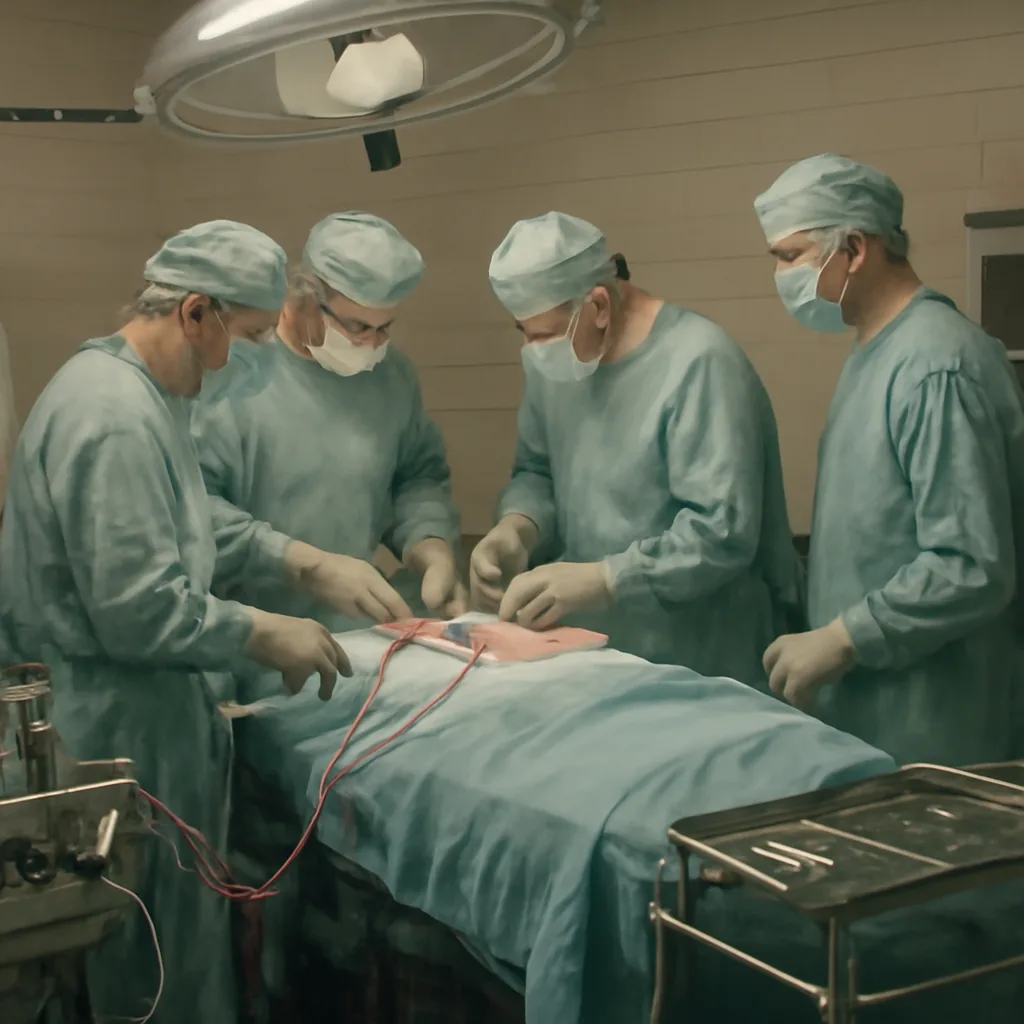
Operating room in the early 1950s with surgeons and nurses around an open-heart surgery patient, early heart–lung machine and tubing visible; surgical attire and equipment consistent with the era.

On February 20, 1953, Dr. John Gibbon and his team performed a landmark open-heart operation using the heart–lung machine, marking a major advance in cardiac surgery and extracorporeal circulation.


On February 20, 1953, a pivotal milestone in surgical history was reached when Dr. John H. Gibbon Jr. and his team at the Jefferson Medical College (now Thomas Jefferson University) in Philadelphia performed what is widely recognized as the first successful open-heart operation using a heart–lung machine to provide extracorporeal circulation. The procedure demonstrated that a patient’s circulation and oxygenation could be maintained mechanically while the surgeon repaired intracardiac defects, opening a new era in cardiac surgery.

Background
By the mid-20th century, congenital and acquired heart diseases posed surgical challenges because many intracardiac lesions could not be repaired safely while the heart continued to pump. Earlier efforts to operate on the heart used hypothermia or brief periods of circulatory arrest; these techniques limited operative time and scope. John Gibbon had first conceived the idea of an extracorporeal, oxygenating pump in the 1930s and spent years developing and refining a machine capable of taking over cardiopulmonary function to allow prolonged, bloodless access to the heart.

The operation
Gibbon’s heart–lung machine provided both oxygenation and circulation outside the body (extracorporeal circulation). On February 20, 1953, he used this device to close an atrial septal defect in an adult patient. The machine maintained systemic blood flow and oxygen delivery while the heart was opened and repaired. The procedure demonstrated that complex intracardiac repairs could be performed with direct vision and without the severe time constraints of previous methods.

Significance and aftermath
The success of Gibbon’s operation validated the concept of cardiopulmonary bypass and encouraged rapid refinement of techniques, machines, and surgical approaches. Over the subsequent decade, improvements in heart–lung machines, anticoagulation management, myocardial protection, and surgical instrumentation expanded the range of treatable cardiac conditions. Other surgeons and centers adopted and adapted extracorporeal circulation, leading to the widespread development of modern open-heart surgery for congenital defects, valvular disease, and coronary artery surgery.

Context and caveats
Historical accounts sometimes vary in how they describe “first” achievements in cardiac surgery. Several surgeons had performed pioneering intracardiac procedures earlier using hypothermia, inflow occlusion, or direct vision under limited conditions; examples include operations by Clarence Crafoord, Dwight Harken, and others. Gibbon’s 1953 operation is specifically notable for being the first widely reported successful intracardiac repair performed with prolonged extracorporeal circulation via a heart–lung machine designed for that purpose. Sources differ in emphasis and chronology, so descriptions that claim a single absolute “first” may overlook related earlier advances.

Legacy
The principles demonstrated in 1953 underpin contemporary cardiac surgery. Modern cardiopulmonary bypass machines are far more sophisticated, but they trace their lineage to Gibbon’s work. The operation on February 20, 1953, stands as a turning point that made feasible the routine surgical treatment of many previously inoperable heart conditions.

Sources and further reading
Primary and secondary historical accounts, surgical textbooks, and medical journal retrospectives document Gibbon’s development of the heart–lung machine and the 1953 operation. For detailed, sourced histories consult peer-reviewed histories of cardiac surgery and archives at Thomas Jefferson University and major medical journals that have published retrospectives on cardiopulmonary bypass. If specific citations are needed, I can provide them on request.

Share this

Email Share on X Facebook Reddit

Did this surprise you?