
← Back
02/20/1998 • 7 views

Vatican Opens Historic Inquisition Archives to Scholars
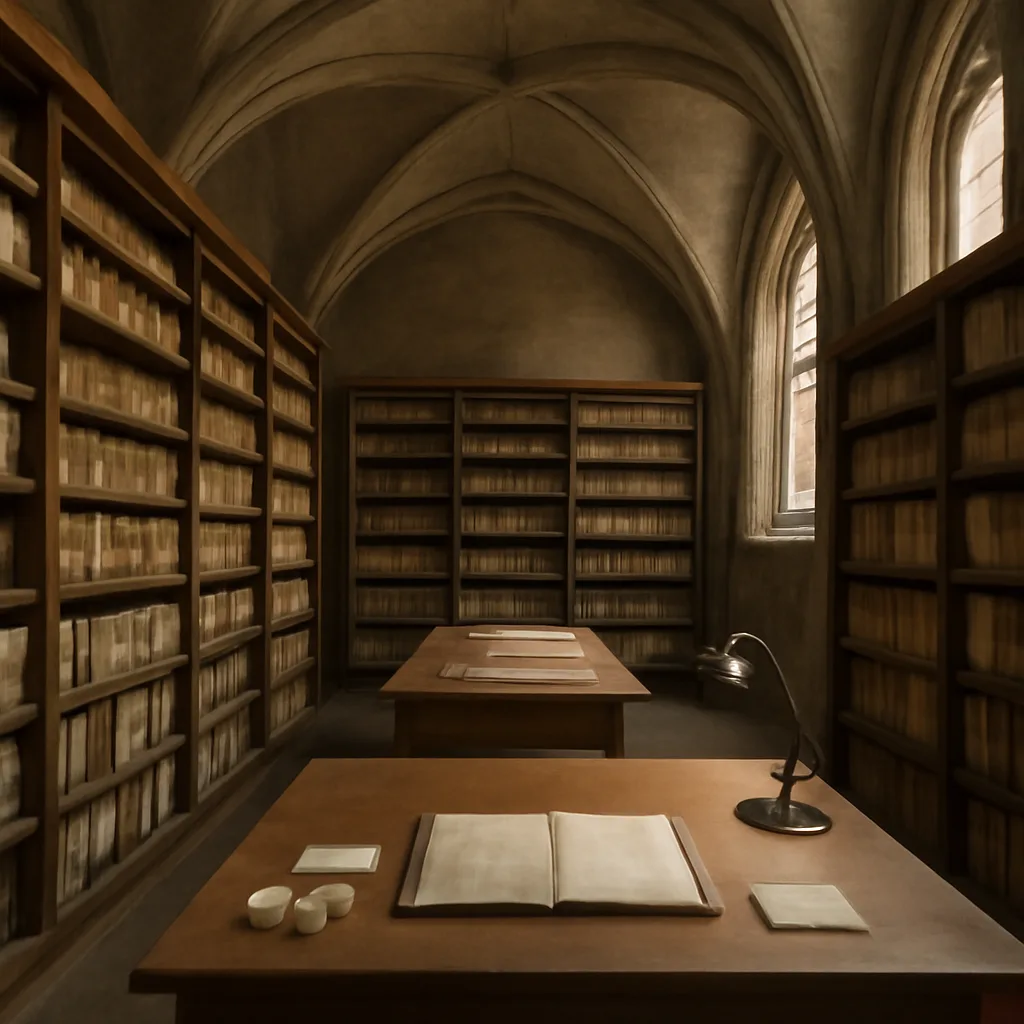
A wide interior view of a historic stone archive room with wooden shelving holding labeled bundles and parchment boxes, soft natural light from high windows, and a long wooden table with conservation tools and gloves.

On 20 February 1998 the Vatican announced that it would open parts of its Inquisition archives to qualified researchers, a move aimed at enabling fuller scholarly study of the Church’s historical legal and doctrinal proceedings while balancing access and preservation.


On 20 February 1998 the Vatican announced that it would open previously restricted portions of the archives of the Congregation for the Doctrine of the Faith (historically the Roman Inquisition) to accredited researchers. The decision marked a significant shift in archival policy by the Holy See, intended to facilitate scholarly investigation into the Church’s judicial and doctrinal activities from the early modern period through more recent centuries.

Background
The archives in question hold a wide range of documents arising from the Roman Inquisition and related ecclesiastical tribunals: correspondence, trial records, depositions, theological assessments, and administrative papers. For much of the twentieth century, access to these materials was limited, in part because they were considered sensitive for doctrinal, diplomatic or privacy reasons and in part because cataloguing and conservation needs required restricted handling.

The 1998 announcement followed mounting scholarly and public interest in closer study of Church history, including the Inquisition’s procedures and its interactions with intellectual, social and political developments in Europe and beyond. Opening the archives was presented as a step toward greater transparency and a recognition of the importance of primary sources for rigorous historical research.

Scope and limitations
The Vatican’s opening was not an unrestricted release of all documents. Access was generally limited to qualified researchers with specific projects and was subject to archival rules designed to protect fragile materials, preserve privacy where living persons were implicated, and respect diplomatic or canonical considerations. Some categories of files remained closed for set periods or required special permissions. The exact boundaries and timelines for releases varied and were often governed by internal Vatican regulations and the state of conservation and cataloguing.

Scholarly impact
Historians welcomed expanded access while noting that careful editorial work and contextualization would be necessary. The archives provided primary evidence for research into topics such as procedures in ecclesiastical courts, the role of theology in judicial decisions, the experiences of accused individuals, and the interactions between the Holy See and secular authorities. Access to original dossiers allowed scholars to reassess long-standing narratives about the Inquisition’s scale, methods and regional variations.

Public and institutional responses
Reactions to the announcement ranged from praise for increased scholarly openness to calls for still broader access. Some commentators emphasized that archival opening did not equate to institutional apology or reinterpretation; it instead offered material for historians to analyze and interpret. The Vatican framed the move as consistent with its pastoral and scholarly commitments, while also underscoring the need to manage archival integrity and confidentiality.

Ongoing developments
Since 1998, access to Vatican archival holdings has continued to evolve, with additional openings, cataloguing projects and digitization efforts at various times. Researchers have produced new studies based on materials made available after the 1998 announcement, contributing to more nuanced understandings of ecclesiastical institutions and their historical contexts. Debates about the pace and scope of access, and about how to balance transparency with other concerns, have remained part of broader conversations between historians, archivists and church authorities.

Limitations and sources
This summary sticks to established facts about the 20 February 1998 announcement and its general implications for scholarly access. Specifics about which files were opened, subsequent releases, and precise archive rules can vary; researchers should consult the Vatican archival office and published archival guides or peer-reviewed studies for detailed, document-level information.

Share this

Email Share on X Facebook Reddit

Did this surprise you?