
← Back
03/18/1953 • 6 views

First Successful Use of Heart–Lung Machine Tested, March 18, 1953
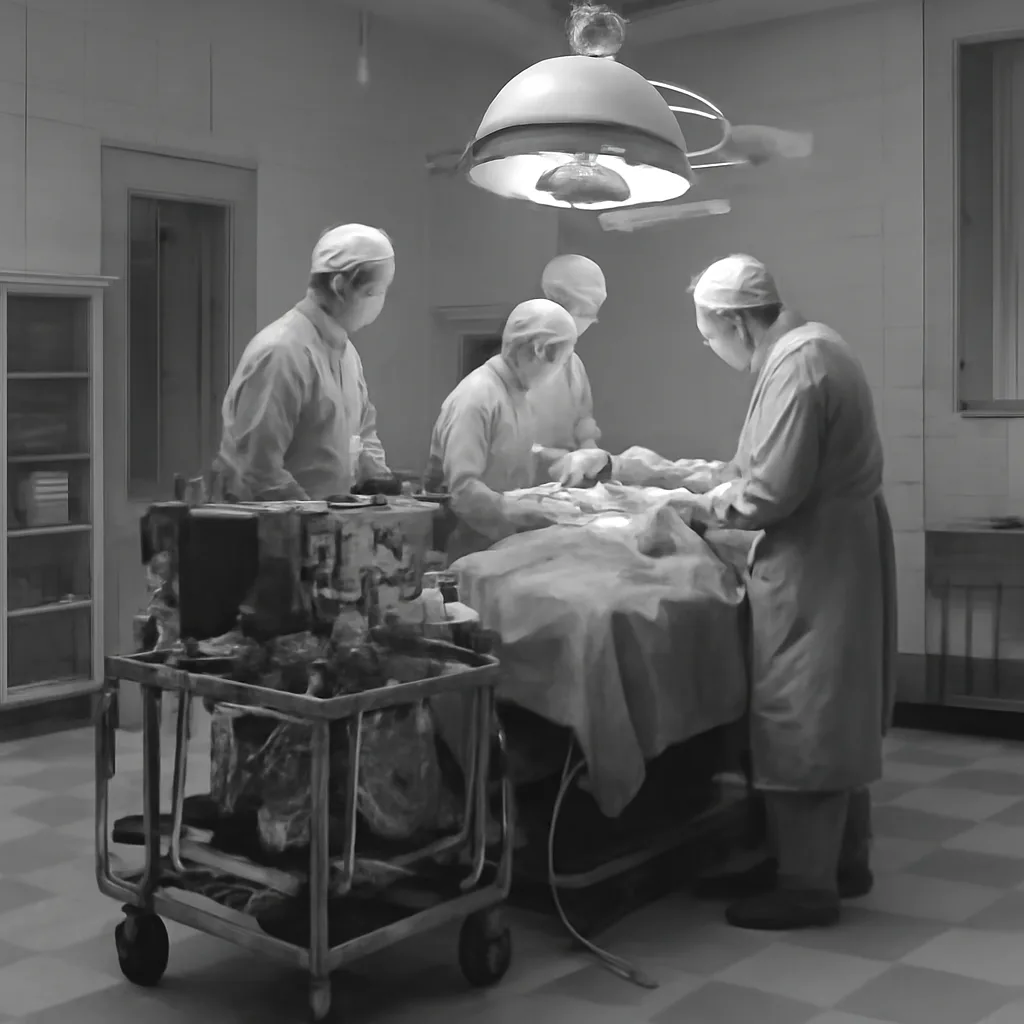
1950s operating theater with surgical team around an early heart–lung perfusion setup: pumps, tubing, and an oxygenator on a wheeled cart; clinicians in period surgical attire; no identifiable faces.

On March 18, 1953, surgeons in the United States reported the first successful experimental use of a heart–lung machine to maintain circulation and oxygenation during open-heart surgery, a pivotal advance that enabled safer cardiac operations in subsequent decades.


On March 18, 1953, an important milestone in cardiac surgery was publicly reported: the first successful experimental use of a heart–lung machine to support a human patient during an open-heart procedure. The development of extracorporeal circulation—mechanically taking over the functions of the heart and lungs—had been pursued for decades by engineers and surgeons aiming to enable more complex intracardiac repairs than could be performed on a beating or externally occluded heart.

The machine used in early trials combined a pump to propel blood and an oxygenator to add oxygen and remove carbon dioxide, effectively maintaining circulation and gas exchange while the surgeon worked on the heart. By temporarily diverting the patient’s blood through the apparatus, surgeons could create a bloodless, motionless field, permitting intracardiac repairs that were previously impractical.

The March 1953 case was the product of incremental innovations in materials, oxygenator design, and surgical technique. Early oxygenators varied in principle—some used film or bubble oxygenation, others relied on membrane designs—and pump mechanisms ranged from roller pumps to other experimental drives. The specific implementation reported in March 1953 represented a convergence of more reliable components and clinical protocols that together produced an outcome judged successful by the surgical team.

Contemporary accounts describe the result as an experimental but convincing demonstration that extracorporeal circulation could be applied safely enough to permit corrective heart surgery. That conclusion encouraged further clinical use and rapid refinement. Over the next few years, surgeons and biomedical engineers improved oxygenator efficiency, reduced hemolysis and clotting, and developed anticoagulation strategies (notably with heparin) and circuit designs that lowered complications. These iterative improvements made cardiopulmonary bypass an increasingly standard tool in cardiac surgery.

Historians note that the pathway to routine use was not instantaneous: early adopters faced significant risks from bleeding, air embolism, infection, and organ dysfunction related to the extracorporeal circuit. Reporting from that period shows a mixture of optimism and caution as teams published case series, technical descriptions, and outcome analyses. By the late 1950s and 1960s, as devices and perioperative care continued to improve, cardiopulmonary bypass enabled the expansion of valve repairs, congenital defect corrections, and coronary bypass procedures.

The March 1953 test is therefore best understood as a catalytic event in a broader, collaborative effort spanning surgeons, engineers, and physiologists. It did not singlehandedly ‘invent’ the heart–lung machine but provided a public demonstration that the concept could work in a clinical setting, accelerating adoption and innovation. Subsequent work standardized many elements of bypass—including roller pumps, membrane oxygenators, and comprehensive anticoagulation—leading to the safer, more reliable cardiopulmonary bypass systems that became central to modern cardiac surgery.

Share this

Email Share on X Facebook Reddit

Did this surprise you?