
← Back
12/04/2012 • 6 views

Supreme Court declines to take up key same-sex marriage cases, leaving lower-court decisions intact
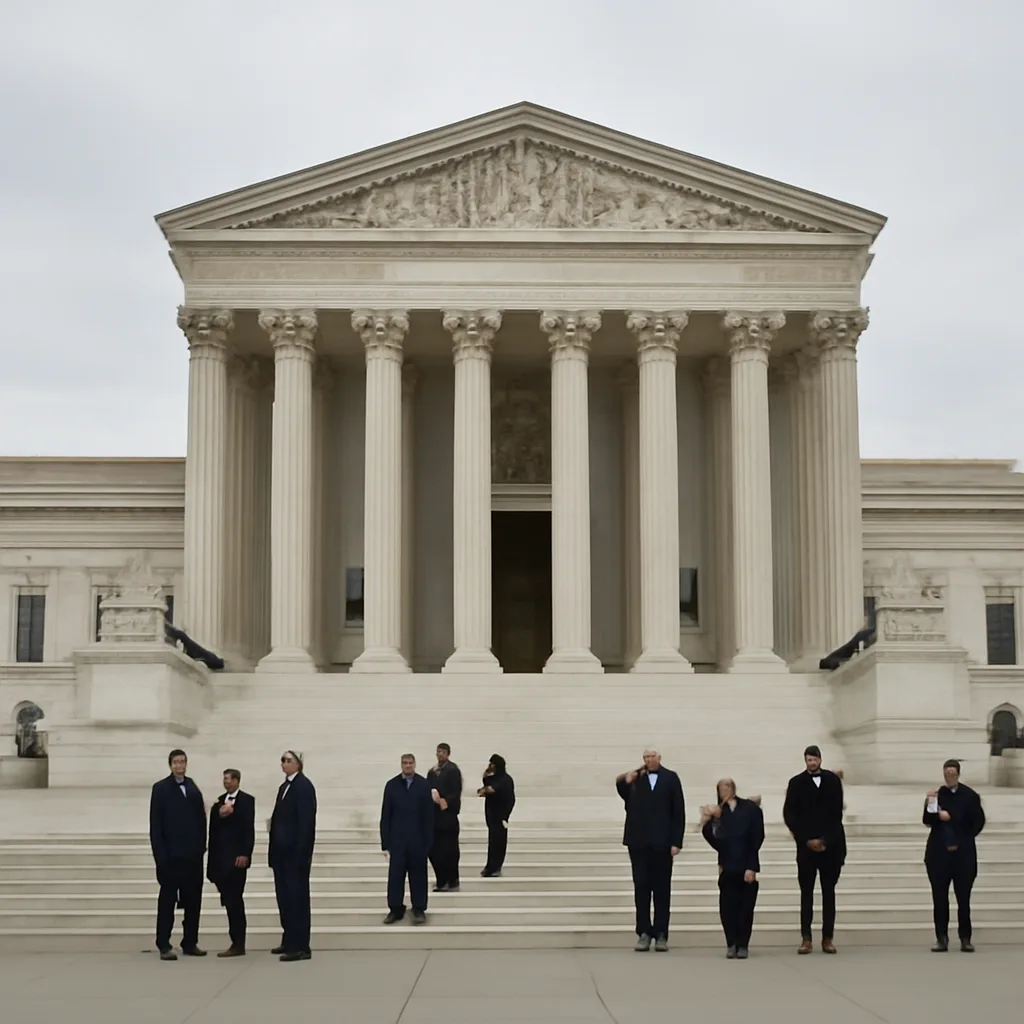
Courthouse steps with people and flags outside the United States Supreme Court building, representing legal proceedings on marriage law.

On Dec. 4, 2012, the U.S. Supreme Court declined to review several federal appeals challenging the Defense of Marriage Act and state bans on same-sex marriage, effectively leaving lower-court rulings that had struck down those bans in place.


On Dec. 4, 2012, the United States Supreme Court issued orders in several cases related to same-sex marriage that had the practical effect of leaving intact favorable rulings from federal appeals courts and state courts without granting a national precedent. The Court denied petitions for writs of certiorari in multiple cases, meaning it chose not to review the appeals. By declining review, the Supreme Court let stand decisions from lower courts that had found particular state bans or federal restrictions on marriage for same-sex couples to be unconstitutional.

Background: In the years after the 2003 Lawrence v. Texas decision, a wave of litigation and legislative changes challenged laws and constitutional amendments defining marriage as between a man and a woman. By 2012, several federal circuit courts and state supreme courts had ruled that bans on same-sex marriage violated constitutional protections such as equal protection and due process. Plaintiffs and state officials in some jurisdictions sought Supreme Court review to resolve divergent rulings and to obtain a definitive nationwide ruling.

What happened Dec. 4, 2012: Rather than grant certiorari and hear full argument, the Supreme Court denied review in certain cases. Denial of certiorari does not constitute endorsement of the lower court opinions on a national level; it simply leaves the specific appellate or state-court decisions in place for the jurisdictions directly affected. In practical terms, same-sex couples in states covered by the favorable lower-court rulings could proceed to marry or have their marriages recognized, while the legal status in other circuits remained unresolved until the Court later addressed the issue.

Legal and political significance: The denials in December 2012 were consequential because they allowed a growing number of same-sex marriages to proceed under binding appellate rulings without a Supreme Court reversal. At the same time, the Court’s choice not to take the cases left legal uncertainty across the country, as different federal circuits remained split on the constitutionality of same-sex marriage restrictions. That split invited further litigation and increased the likelihood the Supreme Court would eventually confront the question to resolve the conflict among circuits.

Subsequent developments: The issue returned to the Supreme Court in later years. Most notably, in United States v. Windsor (decided June 26, 2013) the Court ruled that a key provision of the federal Defense of Marriage Act (DOMA) was unconstitutional as applied to legally married same-sex couples for purposes of federal benefits. Eventually, in Obergefell v. Hodges (decided June 26, 2015), the Supreme Court held that same-sex couples have a constitutional right to marry, resolving the nationwide question the Court had left open in earlier denials of certiorari.

Notes on sources and scope: This summary describes the procedural action taken by the Supreme Court on Dec. 4, 2012—denials of certiorari that left lower-court rulings intact—and the immediate legal consequences. It does not attribute specific fabricated quotes or invent facts about individual litigants beyond the well-documented sequence of appellate rulings and the later landmark decisions that ultimately resolved the national question of same-sex marriage rights in favor of marriage equality.

Share this

Email Share on X Facebook Reddit

Did this surprise you?